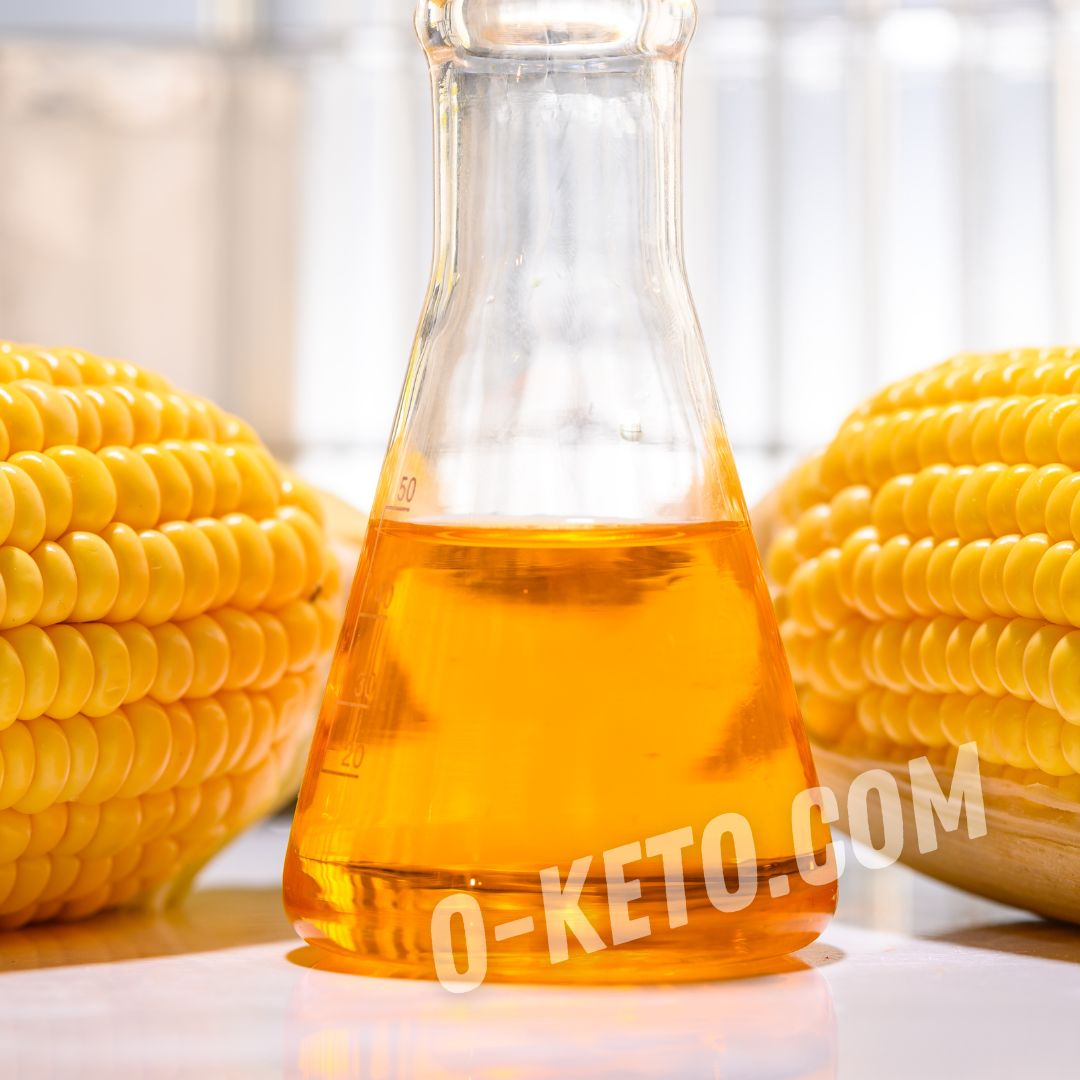

Corn oil is made from the germ of corn kernels. It is a neutral vegetable oil with a mild taste, often used for frying, sauces, marinades, homemade mayonnaise, and industrial food production. Refined oil is the most common version because it is more stable in smell and easier to use with heat.
Although it comes from corn, the oil itself contains no starch and no sugar. Its profile is entirely fat. But for keto, zero carbohydrates are not the only point: fatty acid composition, refining, cooking temperature, and whether the oil becomes the main fat in the diet all matter.
Nutrition
A 100 g portion of corn oil has about 884 kcal and almost 100 g of fat. It contains no protein and no carbohydrates. Most of the fat is usually polyunsaturated, mainly linoleic acid from the omega-6 family. It also contains monounsaturated fat and a smaller share of saturated fat. Unrefined oil may have a stronger aroma, pigments, and accompanying compounds, but it is less convenient for high heat.
One tablespoon provides about 120 kcal. So even a neutral oil changes the calorie level of a dish quickly. In a salad, that may be intentional, but during frying some oil is absorbed into the food, and the real serving can be larger than it looks from the amount poured into the pan.
Is it suitable for keto?
In a formal sense, corn oil fits keto and LCHF because it contains no carbohydrates. Its omega-6 content does not make it automatically harmful: linoleic acid is essential, and its effect depends on the overall diet and the fats it replaces. A practical approach is to use corn oil as one option rather than making it the only fat in the menu.
A practical approach is to use corn oil rarely or moderately when a neutral taste and a specific cooking function are needed. For everyday keto cooking, olive oil, avocado oil, butter, ghee, coconut oil, oily fish, and animal fats are often more useful choices. This keeps the diet more varied in taste and fat profile.
How to use
Refined corn oil can be used for frying over moderate to moderately high heat, as long as it is not pushed to smoking. It barely covers the taste of foods, so it is used for fish, poultry, vegetables, savory pancakes, and sauces. Unrefined oil is better kept for cold dishes or very gentle heat if you like its aroma.
For keto, the important point is not only the oil but what it is used with. Frying fish or vegetables without flour is one thing; breading, corn grits, sweet sauce, or starch next to the same oil creates a very different result. In homemade mayonnaise, corn oil gives a neutral base, but the flavor can be improved by blending it with olive or avocado oil.
How to choose
For frying, choose refined oil with a clear expiration date, no sediment, no harsh smell, and no cloudiness. For cold dishes, unrefined oil can be used if it is fresh and not bitter. A “free from animal sterols” label on vegetable oil is not a special advantage: vegetable oils naturally do not contain them.
A dark glass bottle is preferable, or the oil should at least be stored away from light. A large container is convenient only if it is used quickly. If oil stays open for months near the stove, it changes smell and taste faster. For occasional use, a small bottle is more practical.
What to pair it with
Corn oil is neutral, so it works with eggs, chicken, turkey, white fish, zucchini, eggplant, cauliflower, broccoli, mushrooms, herbs, and salads. In sauces, it can be combined with mustard without sugar, lemon juice, vinegar, garlic, egg yolk, and spices.
If a more expressive taste is wanted, part of the corn oil can be replaced with olive oil, sesame oil, ghee, or butter. For Mediterranean dishes, olive oil usually tastes better, while avocado oil is often more convenient for neutral frying.
Limits and storage
Corn oil is very calorie-dense, so the portion is easy to underestimate. It should not be overheated repeatedly, used after smoking, or kept in a fryer for several cycles. Rancid smell, stickiness, bitterness, and dark color change are signs that the product should be discarded.
Store the oil tightly closed in a cool dark place, away from the stove and direct sun. After opening, use it within a reasonable time, especially if it is unrefined. Do not pour oil into a wet bottle or keep herbs and garlic in it without proper storage control.
Substitutes
For cold dishes, olive oil, avocado oil, macadamia oil, or oil mixed with lemon juice often work better. For frying, use ghee, butter with gentle heat, avocado oil, beef tallow, or coconut oil if the flavor fits. In mayonnaise, corn oil can be replaced with avocado oil, mild olive oil, or a blend of the two.
Sources
Key sources on the product composition, safety, and use:
- Effect of dietary linoleic acid on markers of inflammation in healthy persons: A systematic review of randomized controlled trials
- USDA FoodData Central: Oil, corn