


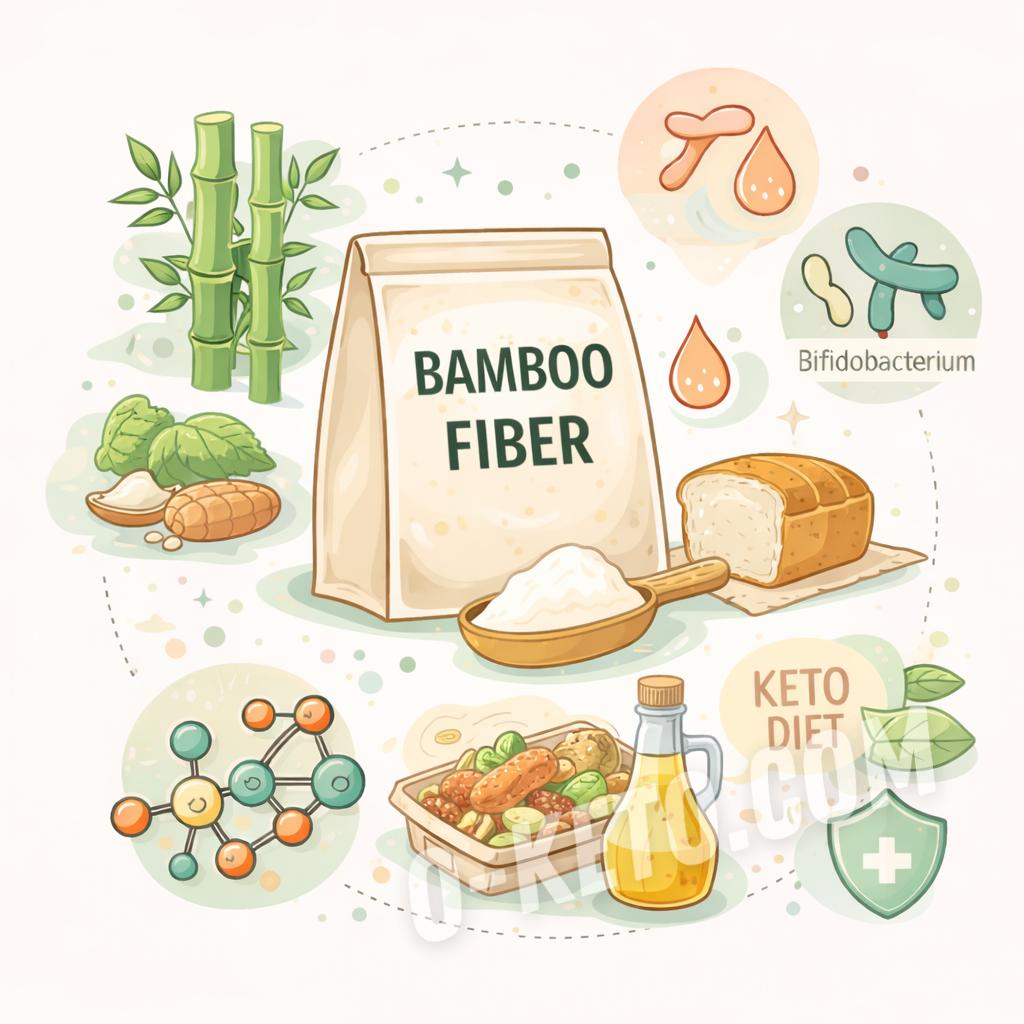

Bamboo fiber in the context of nutrition is primarily insoluble dietary fiber obtained from bamboo and used as a functional ingredient. In cooking and the food industry, it is valued for its ability to retain moisture, improve dough structure, and increase fiber content without noticeably affecting taste.
It is important to distinguish food bamboo fiber from bamboo textile fibers, as their production technologies and properties differ.
What it is and how it is obtained
Food bamboo fiber is obtained from plant raw materials with subsequent purification and standardization. The final product usually appears as a light powder or fine particles with a neutral taste. Essentially, it is fiber that is not broken down by human enzymes and passes through the intestines, performing a mechanical and functional role.
Beneficial properties in the diet
As a source of insoluble fibers, bamboo fiber can be beneficial primarily for the structure of the diet and the digestibility of the diet, but it is not an essential nutrient:
- increases the bulk of the food mass and can support regular bowel movements;
- helps enhance the feeling of fullness due to volume and water retention;
- reduces the energy density of a dish if it replaces part of the flour or starchy fillers;
- can improve the texture of low-carb baked goods, making the crumb denser and more stable.
Daily requirement and ways of consumption
There is no specific daily norm for bamboo fiber. More important is the overall level of dietary fibers and the individual tolerance of a person. In practice, it is usually started with small amounts and the reaction of the gastrointestinal tract is assessed.
Where bamboo fiber is most commonly used:
- in low-carb baking for structure and reducing the proportion of digestible carbohydrates;
- in patties and minced meat for moisture retention and texture stabilization;
- in desserts and creams as a soft structure-forming agent;
- in ready-made products as an added source of fiber.
Symptoms and consequences of deficiency
There is no such thing as a deficiency of bamboo fiber. With low overall dietary fiber intake, some people may experience functional complaints, but this depends on the type of diet, fat intake, drinking habits, and individual intestinal motility:
- tendency to constipation on a mixed diet in some people;
- reduced feeling of fullness and a higher likelihood of overeating;
- worsening of diet tolerance with sharp shifts towards ultra-processed foods.
Possible risks of excess and their manifestations
Like any fiber, excess bamboo fiber can cause discomfort, especially with insufficient fluid intake or in individuals with sensitive gastrointestinal tracts. If added suddenly and in large doses, the body often reacts mechanically:
- bloating and a feeling of fullness;
- increased gas production in sensitive individuals;
- change in stool consistency towards dryness with insufficient water;
- reduced tolerance in IBS and a tendency to constipation.
Bamboo fiber and the keto diet
On a keto diet, bamboo fiber can be a convenient technological ingredient: it has almost no effect on glycemic load, helps to increase fiber intake, and improves the structure of baked goods. However, it is not an essential component of a keto diet, and its usefulness is determined by individual tolerance, overall dietary composition, and how much additional mechanical fiber a person actually needs.


