


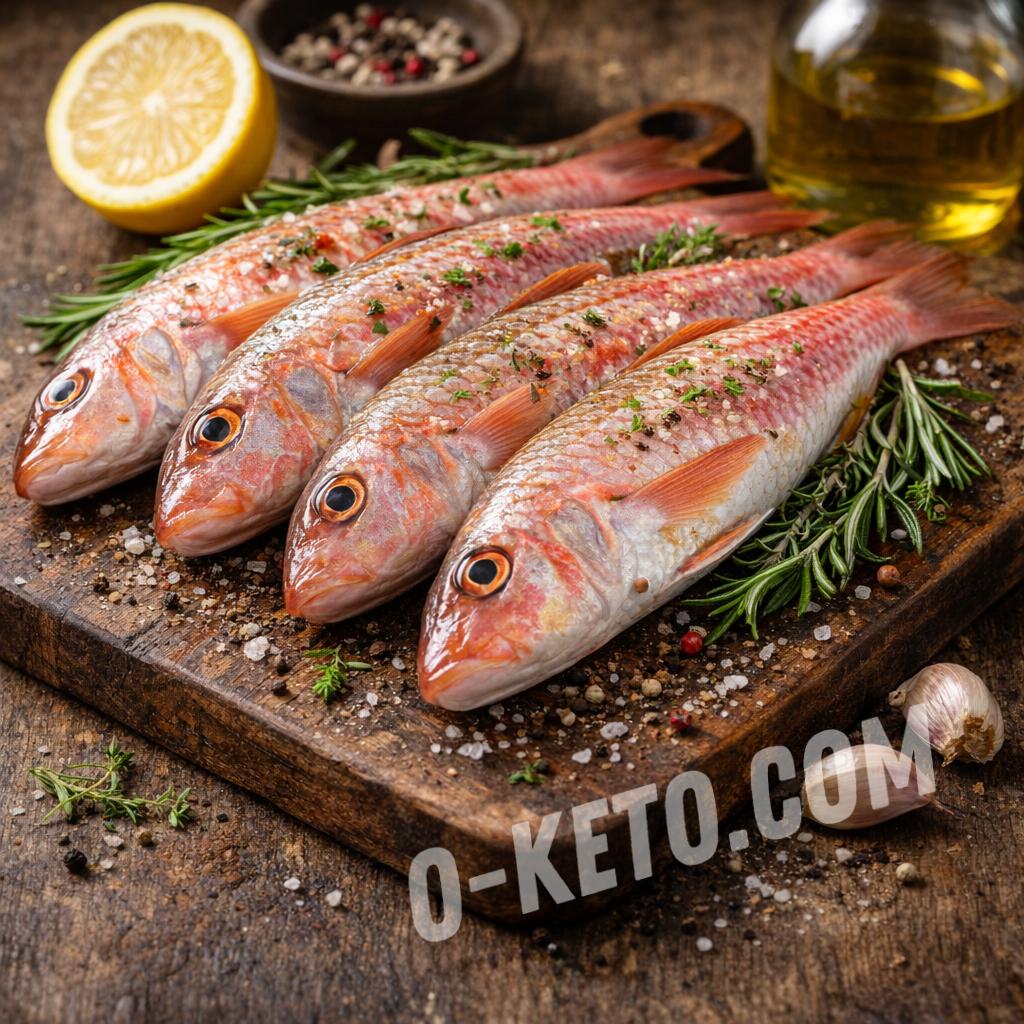

Red mullet, also known as barabulka in some regions, is a small marine fish from the Mullidae family. It is familiar in Mediterranean, Black Sea, and Azov Sea cuisines: the fish is often cooked whole because it is small, cooks quickly, and keeps a delicate texture. Fresh red mullet has pink-red coloring, a clean marine aroma, and soft white flesh.
In cooking, red mullet is valued for its clean flavor without heavy fattiness. It does not need complicated marinades and works well with lemon, garlic, thyme, rosemary, parsley, and olive oil. In southern cuisines, it is pan-fried, baked, grilled, or quickly fried in oil until the skin becomes crisp.
Nutritional value
In 100 g of raw red mullet there are usually about 110–130 kcal, 18–20 g of protein, 4–6 g of fat, and 0 g of carbohydrates. Exact values depend on season, fish size, and catch area. This is a protein-rich marine product with moderate fat, suitable for a light dinner or lunch with a vegetable side.
It contains vitamin B12, vitamin D, phosphorus, iodine, selenium, and marine fatty acids. But in everyday eating, the fish should not be treated like a pill. Red mullet provides protein and flavor, while the fat level of the dish can be adjusted with oil, sauce, or side dish.
Is it suitable for keto?
Red mullet fits keto and LCHF well because it contains no carbohydrates. But the fish itself is not very fatty, so on a keto plate it is often paired with ghee, butter, olive oil, sugar-free mayonnaise, cream sauce, or avocado. This keeps the dish low-carb and makes it more filling.
The cooking method matters. Flour breading, sweet marinades, and thick starch-based sauces quickly change the dish. For keto, it is better to fry the fish without flour, bake it with herbs, or grill it, serving it with green salad, cauliflower, zucchini, mushrooms, or cucumbers.
How to cook it
Red mullet is often cooked whole: scales are removed, the fish is gutted, rinsed, and dried. Its small size is convenient because it cooks in a few minutes. When pan-frying, the skin should be dried well and the oil heated in advance; this helps the surface brown while the flesh stays intact.
For baking, salt, pepper, lemon, garlic, and herbs are enough. Lay the fish in one layer and do not overcook it: thin flesh loses juiciness quickly. On the grill, red mullet is better brushed with oil and handled carefully because the delicate skin can stick.
Small red mullet has fine bones, but that does not mean it should be eaten carelessly. For children and guests who are not used to whole fish, it is better to remove the fillets after cooking or choose larger fish. Heads and frames can be used for fish stock if the fish was very fresh and had no bitter smell.
What to pair it with
Classic pairings are lemon, parsley, garlic, thyme, rosemary, olive oil, capers, and light cream sauces. For a low-carb serving, salad leaves, cucumber, fennel, fried mushrooms, zucchini, eggplant, cauliflower, and broccoli work well. For a brighter taste, olives or a little chili can be added.
Red mullet does not need heavy sweet sauces: they overpower the delicate fish flavor. Acidity and herbs work better, while extra fat should be added moderately. If the fish is served as a main dish, one portion usually includes several small fish or one to two larger ones.
How to choose
Fresh red mullet should smell of the sea, not ammonia or old fish. The eyes should be clear, the skin moist and shiny, and the gills red or pink. The flesh should spring back when pressed. Gray slime, dull skin, strong odor, and sunken eyes are poor signs.
For frying, fish of similar size is convenient because it cooks evenly. If buying frozen red mullet, check the amount of ice and the integrity of the package. A thick ice crust often means long or careless freezing.
How to store it
Fresh fish is best cooked on the day of purchase. In the refrigerator, keep it on the coldest shelf in a closed container, away from ready-to-eat foods. Frozen fish should be thawed slowly in the refrigerator, not in warm water. Refreezing worsens texture.
What can replace it?
If red mullet is unavailable, choose small marine fish with delicate white flesh: garfish, small gilthead bream, small sea bass, smelt, horse mackerel, or small mullet. The taste will differ, but the culinary role is similar: whole fish for quick frying, grilling, or baking.


