


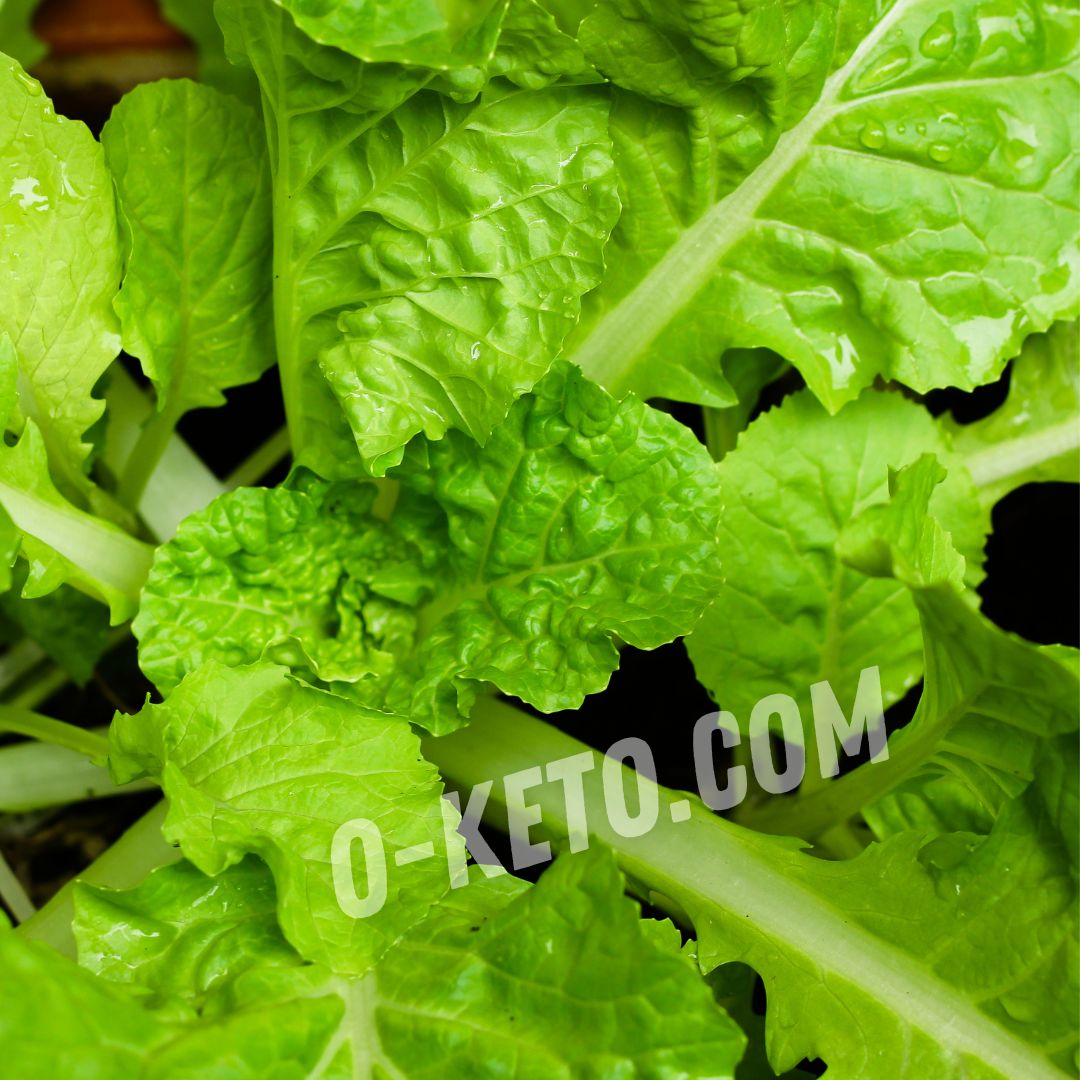

Turnip greens are the leaves of turnip, with light bitterness, grassy flavor and a distinctive cabbage-mustard note. Young leaves can be added to salads, while mature leaves are more often stewed, wilted or quickly sautéed. In cooking, this is a cruciferous green: closer to mustard greens, kale and turnip tops than to neutral lettuce.
Per 100 g of fresh turnip greens, common values are about 30 kcal, around 2.5 g of protein, 0.5 g of fat and 6 g of carbohydrates. The glycemic index is low. Vitamin C, B vitamins, calcium, iron and fiber may be present. Heat treatment preserves part of the nutritional value, but in cooking its main role is softening the leaves and reducing sharpness.
Nutrition
Turnip greens give more flavor than ordinary lettuce while remaining a low-calorie green. Their carbohydrates are modest but not zero, so in strict keto large portions should still be counted. Fiber adds volume and helps make a plate with meat, eggs or fish feel less heavy.
Like other cruciferous greens, they contain natural sulfur and mustard-like compounds that create light pungency. This is a flavor feature, not a reason for treatment claims. In the diet, turnip greens are mainly valuable as a bitter-spicy green with a low carbohydrate load.
Are They Keto-Friendly?
Turnip greens fit keto and LCHF when cooked without sugar, flour, sweet sauces or starchy additions. They pair well with fat: butter, olive oil, bacon, eggs, cream, cheese and rich broth. Fat softens the bitterness and makes the greens more satisfying.
Unlike the root, the leaves are usually easier to fit into a low-carb diet. But if the dish includes a lot of turnip root, potatoes, beans or grains, the keto profile changes because of those ingredients.
How to Use Them
For mature leaves, remove tough stems or slice them separately and cook them longer. Quick stewing with fat, garlic and acid makes the flavor softer. Lemon, sugar-free vinegar or a little mustard balances the cabbage-like note well.
Practical options include:
- stewing with bacon, garlic and pepper;
- a side dish for pork, poultry or eggs;
- an addition to soup with bone broth;
- warm salad with olive oil and lemon;
- a mix with spinach or chard for a milder flavor.
How to Choose and Store
Good greens look fresh, without yellow spots, slime or dry edges. Young leaves are more tender; mature leaves are more aromatic and bitter. If the greens are wilted, they can be briefly refreshed in cold water, but they should not be stored wet.
Keep them dry in the refrigerator, loosely wrapped in a paper towel. They are best cooked within the next few days. For freezing, leaves can be quickly blanched, squeezed and packed in portions, but after thawing they suit soups and stews more than salads.
Limits and Substitutes
Bitterness and fiber may be unfamiliar. With a sensitive stomach, start with a small cooked portion rather than a large bowl of raw greens. With individual vitamin K limits, consider regular intake of any dark leafy vegetables.
Turnip greens can be replaced with beet greens, mustard greens, kale, chard, spinach or broccoli rabe. If mildness is needed, spinach or chard is better. If sharpness and bitterness are needed, mustard greens and broccoli rabe are closer.
Portion and Common Mistakes
For a first serving, 50-100 g of cooked greens is enough, especially if bitter cruciferous greens are unfamiliar. A mistake is boiling the leaves for a long time in a lot of water: flavor becomes empty and texture watery. It is better to wilt them quickly in a pan or stew them in a small amount of broth. Another mistake is adding a lot of sweet sauce to hide bitterness. For keto, fat, salt, garlic, lemon and moderate acidity work better.
Prep Before Cooking
Before cooking, sort the greens: thin leaves cook quickly, while firm stems need more time. If everything goes into the pan at once, the leaves will collapse while the stems may still be tough. It is easier to chop stems smaller, start with them, and add the leaves at the end.
For a milder flavor, brief blanching helps, but the water is usually discarded afterward. Then the greens can be quickly warmed with butter or oil, garlic, lemon or sugar-free vinegar. This keeps them spicy without turning them into a harsh bitter mass.


