


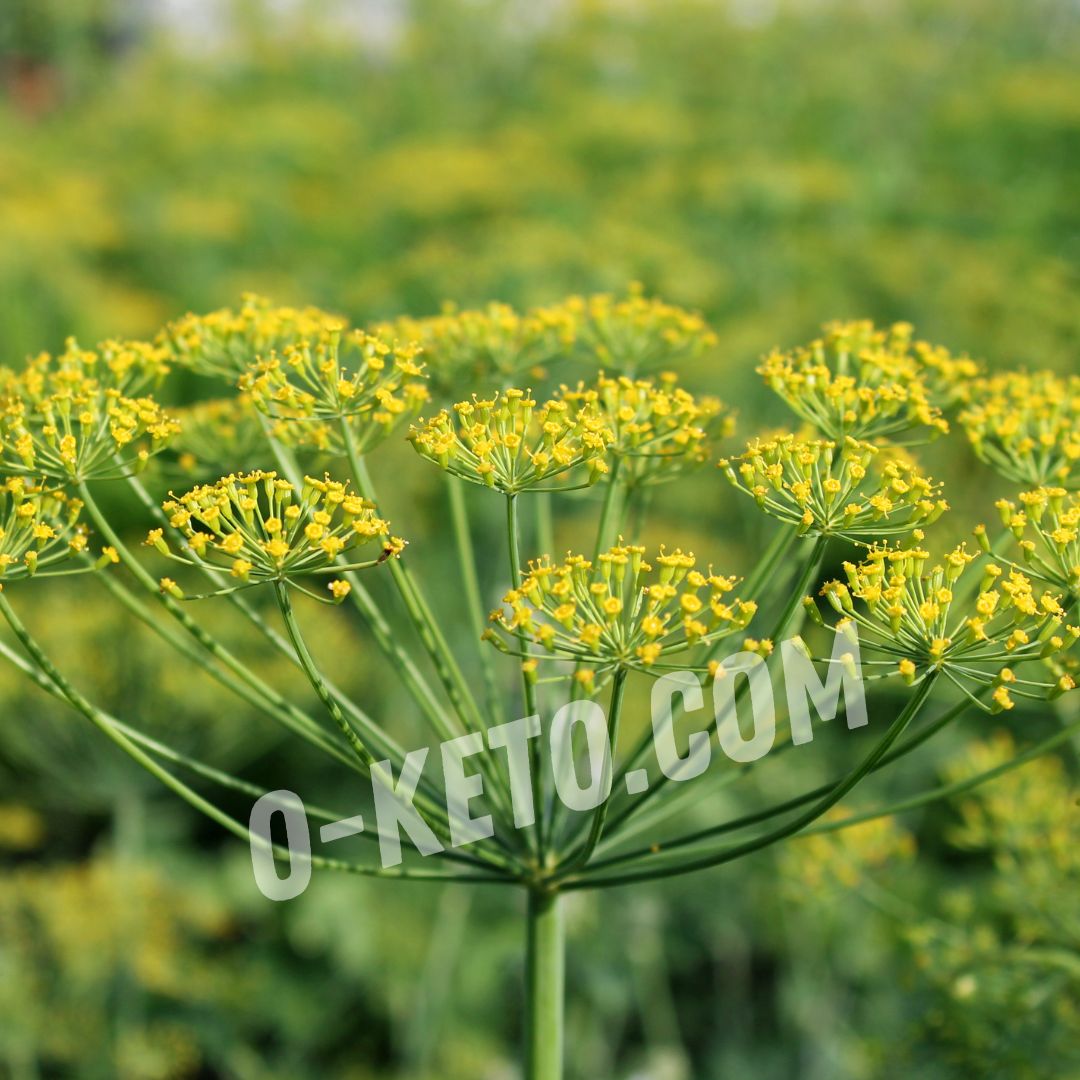

Dill umbrellas are mature dill inflorescences at the tops of the stems. They consist of many small flowers and seeds gathered into rounded “umbrellas,” sometimes up to 15 cm across. In cooking, they are not used like salad greens, but as an aromatic part of the plant for pickling, marinades, broths, fish dishes and homemade preserves.
The main value of dill umbrellas is their essential oils and bright dill-anise aroma. They may contain vitamins A, C and E, calcium, potassium, magnesium and other minerals, but the usual portion is very small. They should therefore not be treated as a major vitamin source: in real food they work mainly as a spice.
Nutrition
There are fewer everyday nutrition tables for dill umbrellas than for dill leaves or seeds. In practical terms, this is an aromatic plant part with little dry matter in one serving. If an umbrella is placed in a jar of cucumbers or a pot of broth, its role is mostly to flavor the liquid, not to add meaningful calories or carbohydrates.
For keto, the whole recipe matters more. Dill umbrellas themselves do not make a dish high-carb, but a marinade may contain sugar, honey, sweet vinegar sauce or a lot of carrot. In homemade cucumbers, zucchini or fish, the brine and other additions matter more than the dill itself.
Are They Keto-Friendly?
Dill umbrellas fit keto and LCHF as a spice. They help create rich flavor in sugar-free pickles, marinated fish, broth, stewed cabbage, sour cream sauces and egg dishes. They can be used whole so they are easy to remove, or added to a jar for a long-lasting aroma.
The main mistake is treating every dill-flavored pickle as low-carb. Store-bought pickles and homemade preserves vary widely. For strict keto, choose brine without sugar or syrups, and if dill is part of a ready seasoning, check for starch, dextrose and salt.
How to Use Them
Fresh umbrellas are especially good in late summer, when the aroma is strong but the seeds have not fully fallen. They are used in cucumber jars, fish marinades, pots with crayfish or shrimp, broth, young cabbage and sugar-free vinegar preserves. Dry umbrellas give a calmer, warmer aroma.
Practical options include:
- cucumbers in sugar-free brine;
- fish marinade with salt, pepper and lemon;
- broth for shrimp or crayfish;
- stewed cabbage with dill aroma;
- sour cream sauce infused with a small piece of umbrella.
How to Choose and Store
Fresh umbrellas should smell like dill, not dampness. Choose whole inflorescences without mold, stickiness or dark wet spots. If the seeds are already falling off, the aroma may still be strong, but they are less convenient. For preserving, mature, dense, clean umbrellas work best.
Fresh umbrellas are best stored briefly in the refrigerator, loosely wrapped in paper or placed in a container without excess moisture. For longer storage, dry them in shade and keep them in a closed jar. If the smell becomes musty, do not use them in brine.
Limits and Substitutes
In ordinary amounts, dill umbrellas are used as an aromatic ingredient. A very strong infusion may taste sharp, especially to people who dislike anise-like notes. In salty dishes, the whole brine should be considered, not only the herb.
They can be replaced with dill seeds, fresh dill, dried dill, fennel, tarragon, bay leaf or a sugar-free herb mix. For pickling cucumbers, dill umbrellas or dill seeds are closest; for sauces, fresh dill is better.
Portion and Common Mistakes
Usually one small umbrella is enough for a jar of cucumbers or a pot of broth. If the umbrellas are large and mature, the aroma can be very strong, so it is better to start with less. A common mistake is finely crumbling the tough parts into a finished salad: stems remain coarse and disturb the texture. Fresh dill is more convenient for salads, while umbrellas are better for brine, marinade or infusion.
Preparing for Brine and Marinade
Before use, dill umbrellas should be checked quickly and shaken free of small debris. Wash them gently and briefly, then dry well: excess water dilutes the brine and can make preserves keep worse. Tough stems are usually left only long enough to make the umbrella easy to remove from a jar or pot.
Whole umbrellas can go into hot brine, while cold infusion may need only half of a large flower head. If the aroma seems too strong, it is better to use less rather than cover it with sugar or a sweet marinade.


