


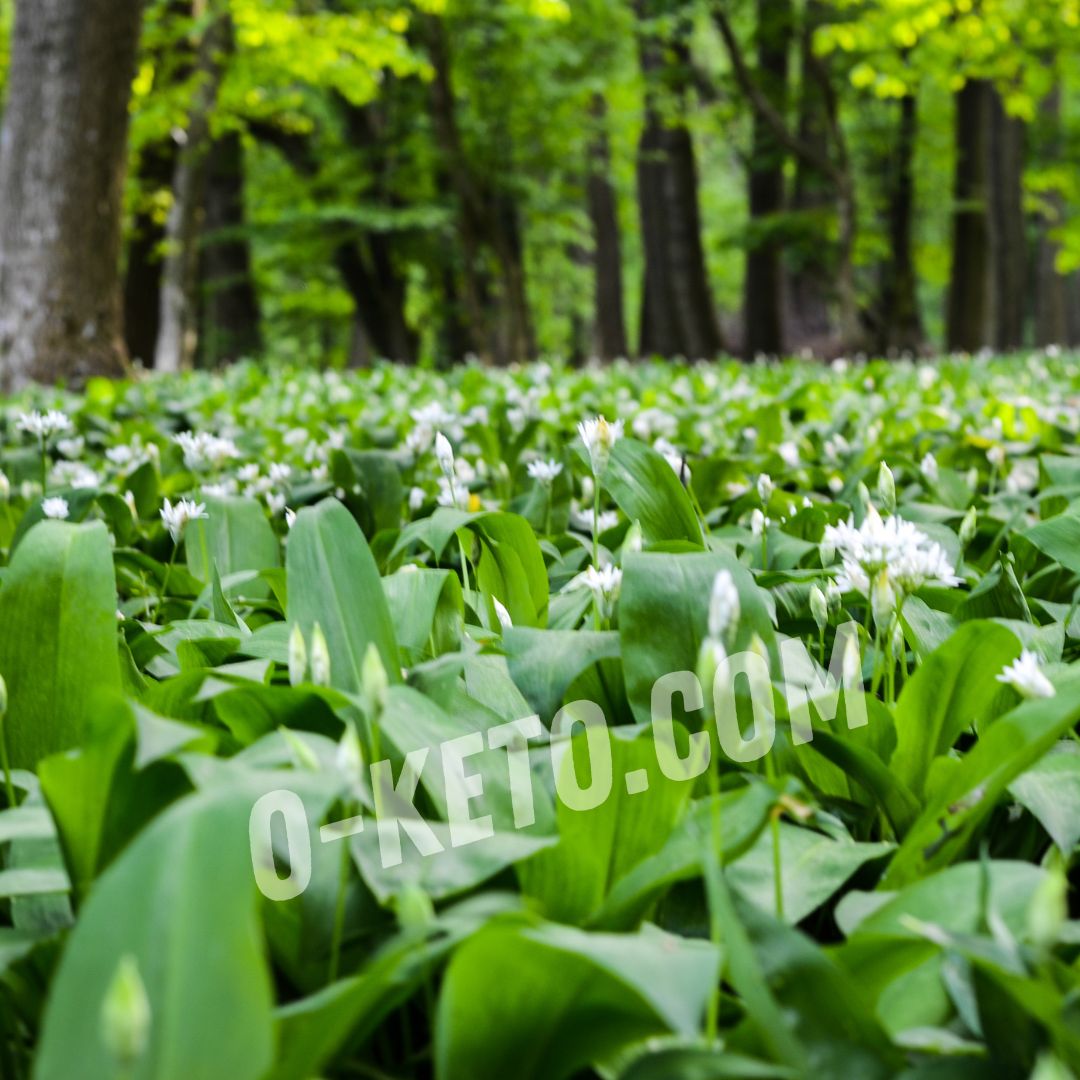

Ramsons are a spring green with a vivid garlic aroma. They are also known as wild garlic, bear’s garlic, or forest onion. The flavor sits somewhere between young garlic, scallion, and tender leafy greens: noticeable, but lighter than raw garlic cloves. In markets, ramsons usually appear in spring, when fresh salads, cold sauces, and sharp green additions to eggs, meat, and fish are especially welcome.
The leaves and young stems are the parts most often used. Ramsons can be eaten raw, briefly warmed in omelets, added to soups at the very end, or mixed with butter, cream cheese, sour cream, lemon, and olive oil. For keto and LCHF, they are convenient because a small amount gives a lot of flavor and makes simple dishes brighter without sugar, flour, or starchy sauces.
Nutritional value
Per 100 g, fresh ramsons may contain about 34 kcal, around 2.5 g of protein, 0.1 g of fat, and up to 7.5 g of carbohydrates. A real serving is usually smaller: a bunch is divided between several dishes, and in a salad or sauce you add only as much as tastes right. For that reason the carbohydrate contribution is often modest when ramsons are used as an aromatic green.
Ramsons contain vitamin C, B vitamins, potassium, magnesium, and sulfur-containing aromatic compounds that create the characteristic garlic smell. That does not make them a special remedy, but it does make them a useful culinary green in a varied diet. Their most practical value is freshness, aroma, and the ability to replace sweeter sauces.
Place in keto and LCHF
Ramsons fit keto when eaten in normal culinary amounts. In a salad, sauce, omelet, or filling, they work as greens and seasoning rather than as the main carbohydrate source. The bigger issue is what they are mixed with: commercial marinades, sweet vinegars, sauces with sugar, and bread-based fillings can quickly change the low-carb profile of a dish.
If you count carbohydrates strictly, weigh the greens before cooking or count the whole bunch across the recipe. Raw ramsons are brighter and sharper; after brief heating, they become softer. Long stewing is usually unnecessary because the aroma fades and the texture turns into ordinary cooked greens.
Unlike dried garlic or onion powder, fresh ramsons add not only aroma but also juiciness. That makes them useful in dishes that need a fresh green note: rich fish, cold meat, eggs, cream-cheese spreads, and salads with sour cream dressing.
How to use
The best approach is to add ramsons at the end or use them raw. Finely chop them into a salad with cucumber, egg, radish, and sour cream; mix with cream cheese for a spread; blend with olive oil, lemon, and nuts for a sauce for fish or chicken; or add to an omelet a minute before it is done.
Ramsons pair well with eggs, rich fish, boiled or fried meat, poultry, mushrooms, cabbage, cucumbers, radishes, cottage cheese, feta-style cheese, butter, and sour cream. If the taste feels too sharp, mix them with parsley, dill, spinach, or lettuce leaves. The garlic note will remain but will not dominate the whole dish.
How to choose
Fresh ramsons should smell like garlic, not dampness or rot. The leaves should be springy and green, without dark slimy spots or yellow dry edges. The stems should not be wet and crushed. If the bunch smells unpleasantly harsh or the leaves are stuck together, it is better to skip it.
If you buy ramsons from a small seller, make sure the greens are correctly identified. Some young wild plants can look similar, and mistakes during foraging can be dangerous. If you cannot reliably distinguish ramsons from similar wild plants, buying from a trusted seller is the safer choice.
Limits and storage
Because of their strong garlic profile, ramsons may bother sensitive stomachs, especially raw and in large portions. Start with a small amount if you have not eaten them for a long time. They also leave a noticeable smell after eating, so for some situations a milder herb may be more convenient.
Store the bunch in the refrigerator, wrapped in a slightly damp towel or placed in a container with some air flow. Wash ramsons right before use; washed leaves spoil faster. For longer storage, chop and freeze them, but after thawing they are better for sauces, soups, and omelets than for fresh salads.
Substitutes
If you need a similar garlic-green character, use scallions with a little garlic, chives, garlic scapes, parsley with garlic, or a mix of spinach and scallions. For fresh salads, dill, parsley, arugula, or basil can be gentler substitutes, though the garlic character of the dish will be weaker.


