


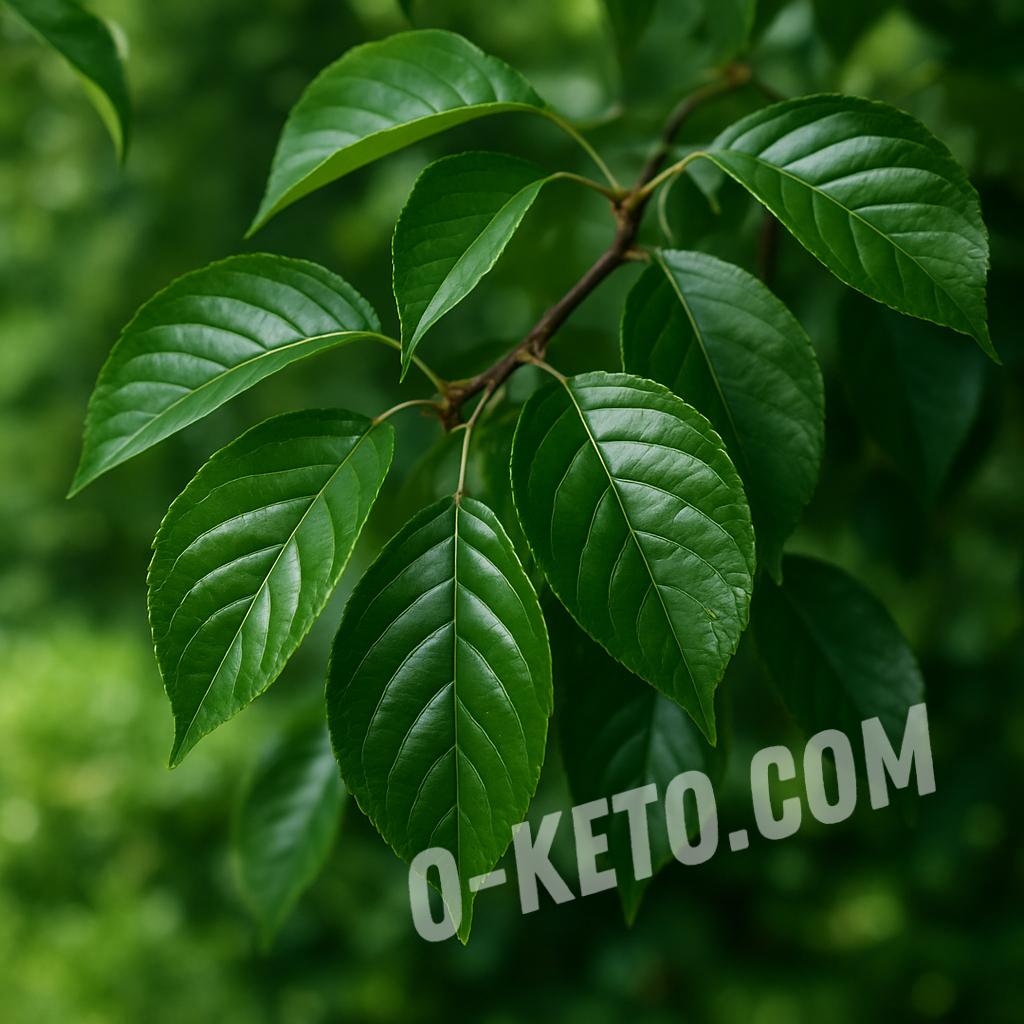

Cherry leaves are rarely purchased as an independent greenery for salads, but in home cooking and preparations, they are quite a recognizable product. They are valued not for a substantial portion of food, but for their aroma, slight astringency, and ability to work well in brines, infusions, and fermentation jars. Depending on the type of cherry, the age of the leaf, and the season, the taste can be milder or harsher, so both the origin of the raw material and the method of application are important.
What is this product
The term “cherry leaves” usually refers to fresh or dried leaves of cherry trees, which are used in cooking as a flavoring additive. In Russian and Eastern European home traditions, they are most often added to cucumber, tomato, and vegetable preparations, as well as herbal infusions. The leaf should not be coarse, spotted, or moldy: for food use, clean, young, or mid-aged raw material without traces of aggressive chemicals is taken.
The product does not have the same culinary role as spinach, sorrel, or salad leaves. It is usually not eaten in large plates but used as a technological and flavor additive. Because of this, the practical value of cherry leaves is more often associated with aroma, tannins, and the method of preparation than with an attempt to obtain a noticeable share of calories or protein from them.
Taste, aroma, and culinary use
Cherry leaves have a grassy, slightly astringent profile with a delicate fruity note. In preparations, they help make the taste of the brine more complex and “garden-like,” and are often used together with currant leaves, horseradish, dill, garlic, and spices. An important point is that the leaf works as a background ingredient: it should support the jar or infusion, not overpower the taste of the main product.
The most common methods of use are simple. Fresh leaves are added to jars during salting and pickling, dried ones are used for flavoring infusions, and sometimes leaves are introduced into homemade marinades for vegetables and mushrooms. For culinary use, clean leaves without coarse petioles, collected away from roads and industrial areas, are best. If the raw material is of unknown origin, it is better not to use it for tea and prolonged infusions.
For keto cuisine, the product is interesting primarily as a way to add flavor with almost no noticeable carbohydrate load per serving. In a jar of pickles or in a teapot for infusion, the number of leaves is usually small, so they do not interfere with a low-carb diet. However, it is important to evaluate not only the leaves but the entire recipe: sugar in the marinade, honey, juices, sweet spices, and the volume of the actual infusion consumed have a greater impact on the outcome than the leaf itself.
Nutritional value and keto context
Cherry leaves contain plant compounds, tannins, and trace amounts of vitamins and minerals, but there is an important limitation for everyday food use: the product almost always comes in very small portions and is often not consumed entirely. Therefore, the usual nutritional table is less indicative here than for vegetables, fish, or meat. It is much more honest to assess the real role of the product in the diet: it is aromatic raw material for preparations, fermentation, and infusions.
From a keto perspective, the leaf is not considered a problematic ingredient. If used in a jar with cucumbers, zucchini, tomatoes, or in a non-sweet herbal drink, the carbohydrate contribution is usually minimal. Restrictions begin when the leaves become part of sweet compotes, syrups, or marinades with a lot of sugar. The product itself is not a source of complete protein and is not used for fat gain.
If a practical conclusion is needed, it is this: in a low-carb diet, cherry leaves are usually acceptable as a supporting ingredient, but one should evaluate not the romance of the “healthy leaf,” but the entire technology of the dish. For keto, the composition of the brine, the amount of sugar, and the volume of actual consumption are more important.
How to choose, prepare, and store
For preparations, the best choice is fresh, firm leaves without yellow spots, holes, signs of fungus, and sticky residue. Too old leaves may be coarser and tougher in taste. If the product is sold dried, the raw material should be dry, clean, without foreign odors and signs of dampness. It is good when it is clear where it was collected and how it was packaged.
Before use, fresh leaves are rinsed in cold water and dried. They are placed in jars whole, without prolonged soaking. For infusions and teas, leaves are usually taken moderately, so that the astringency does not become excessive. Dry raw materials are stored in a tightly closed container, away from light, steam, and strong odors. Fresh leaves are best used quickly, before they wilt and lose their aroma.
Restrictions and safety
Cherry leaves should not be perceived as a harmless “as much as you want” drink. For plant raw materials, the species of the plant, the cleanliness of the collection, and the actual dosage are always important. Leaves from trees treated with unknown substances, as well as raw materials from roadsides, urban yards near roads, and polluted areas, are not used. If a person has a tendency to allergic reactions to stone fruits or pronounced gastrointestinal sensitivity, it is better to start with a small amount.
Particular caution is needed for pregnant women, nursing mothers, and people who regularly use herbal infusions not occasionally, but in courses. In such situations, it is safer to treat the leaves not as a default everyday drink, but as a product with limited and meaningful use. For ordinary cooking, it is primarily an aromatic additive for preparations, not a substitute for full-fledged vegetables, greens, or sources of nutrients.


