


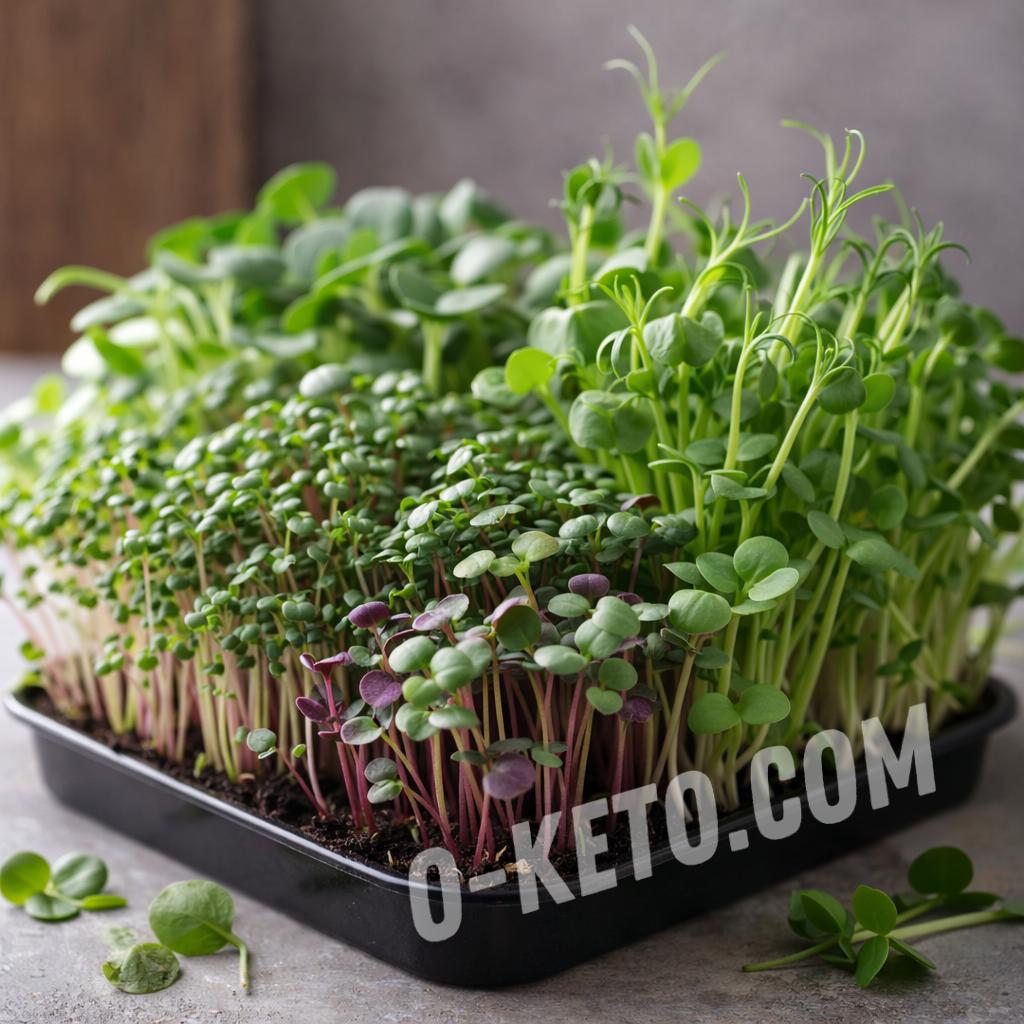

Microgreens are young shoots of vegetables, herbs, legumes, or grain crops, cut at an early stage of growth, usually 7–21 days after germination. They are not jar sprouts and not mature salad greens: microgreens already have a thin stem and first leaves, but the plant is still small, tender, and concentrated in flavor. They are added to salads, omelets, meat, fish, avocado, cream cheese, pureed soups, and cold appetizers.
Different types vary a lot. Radish and mustard bring heat, pea shoots are sweet and fresh, sunflower shoots are juicy and crunchy, broccoli has a mild cabbage note, while basil and cilantro give a bright herbal aroma. Microgreens should therefore be chosen not only as decoration, but as a real flavor accent.
Nutrition profile
Microgreens usually contain few calories and few digestible carbohydrates because portions are small and the product is mostly water, fiber, and plant micronutrients. Depending on the crop, they may contain vitamins A, C, E, K, folate, potassium, magnesium, iron, calcium, polyphenols, and other plant compounds. Exact values depend on seed type, light, growing medium, harvest age, and freshness.
Cruciferous types such as broccoli, radish, and mustard are often valued for their vivid taste and sulfur-containing aromatic compounds. But microgreens should not be treated as a medical supplement. On the plate, their main role is freshness, color, crunch, aroma, and a small amount of plant fiber.
Are they suitable for keto?
Microgreens fit keto and LCHF very well: portions are usually small, carbohydrates are low, and the dish tastes brighter without sugar or starch. They can be placed on eggs, fish, meat, chicken, avocado salads, cucumbers, cheese plates, bunless keto burgers, pates, and creamy sauces. They are especially useful when a dish is fatty and dense because they add a fresh contrast.
The exception is large portions of grain or legume microgreens. They still usually do not compare with porridge in carbohydrate load, but for strict tracking it is better to consider the exact type and amount. A practical portion is a small bunch or handful, about 10–30 g, not a large bowl like leafy salad.
How to use them
Microgreens are best added at the end, on the finished dish. Heat quickly removes crunch and aroma, especially in tender herbs. They do not need long stewing or boiling. For salad, rinse and dry the shoots well, then mix with oil, lemon juice, salt, and the main food. In bread-free sandwiches, microgreens work well with cucumber, cheese, egg, fish, and meat.
Good pairings include radish microgreens with beef and egg, pea shoots with avocado and cream cheese, sunflower shoots with chicken, broccoli microgreens with fish, basil with a small portion of tomatoes and mozzarella, and cilantro with meat and lime. If the flavor is too sharp, mix spicy microgreens with lettuce leaves or cucumber.
How to choose
Fresh microgreens should be springy, without slime, mold, musty smell, or yellowing patches. The stems should not lie as a wet mass. If sold in a container, there should not be much condensation on the bottom. For home growing, use seeds meant for sprouting or microgreens, not treated garden seeds.
Storage
Cut microgreens should be stored in the refrigerator in a container with a paper towel to absorb extra moisture. Wash them just before eating, not in advance: wet shoots spoil faster. The best flavor usually lasts 2–4 days, then the greens lose crunch. A living tray with growing medium can last longer, allowing you to cut portions as needed.
Limits
Microgreens are eaten raw, so growing and storage cleanliness matter. People with stricter food-safety needs should choose a reliable producer or carefully control home conditions: clean trays, fresh water, no mold, and normal ventilation. If you react to cruciferous vegetables, mustard, cilantro, or legumes, choose milder types and start with a small portion.
What can replace them?
For freshness and crunch, use lettuce leaves, arugula, spinach, cucumber, radish, green onion, parsley, dill, basil, or cilantro. If you need a sharp accent, radish, mustard, arugula, and cress are closest. For juicy crunch instead of sunflower or pea shoots, use cucumber, celery, or thinly sliced cabbage.


