


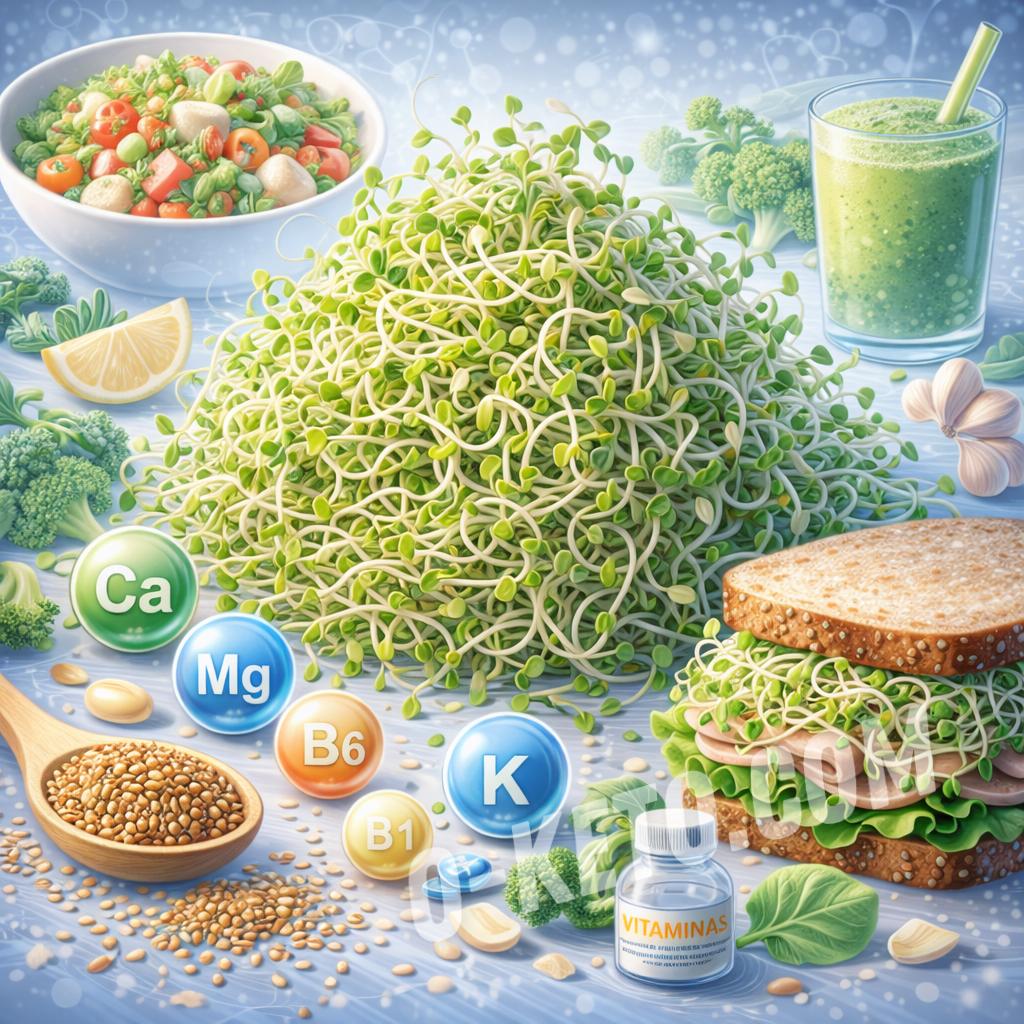

Alfalfa sprouts are young shoots of Medicago sativa with thin pale stems, small green leaves, and a fresh grassy taste. They are eaten raw in salads, added to eggs, meat, fish, cottage cheese, wrap-style plates without flatbread, and cold appetizers. This is a light product for volume and freshness, not the base of a meal.
Alfalfa is known as a forage plant, but its sprouts have also been used in human food for a long time. They are delicate, spoil quickly, and require especially careful hygiene. Unlike mature greens, sprouts are grown in a warm moist environment, so seed quality, water, cleanliness, and storage matter a lot.
Nutritional value
In 100 g of alfalfa sprouts there are usually about 20–35 kcal, 3–4 g protein, less than 1 g fat, and roughly 2–4 g carbohydrates. Fiber is present, but portions are usually small, so the contribution to calories and carbohydrates is moderate. The glycemic load of a normal portion is low.
They contain vitamin K, vitamin C, folates, small amounts of B vitamins, potassium, magnesium, iron, and plant compounds such as saponins and flavonoids. Because portions are small, sprouts are better viewed as a fresh addition to the plate, not as the main micronutrient source.
Are they suitable for keto?
Alfalfa sprouts fit keto and LCHF well by carbohydrates. They add crunch, freshness, and volume without sugar, starch, or high calories. They work especially well with eggs, cheese, fish, chicken, avocado, cucumber, leafy salads, and sugar-free creamy sauces.
At the same time, sprouts provide almost no fat and little satiety by themselves. A plate made only of sprouts and vegetables will be light and may stop being filling quickly. For keto, they are better used as a fresh top layer with protein and fat rather than as a standalone meal.
How to use them
Alfalfa sprouts are usually eaten fresh. They are added to salad at the very end, placed on an omelet after cooking, and used in plates with salmon, chicken, brynza, cottage cheese, avocado, and cucumber. Heat quickly removes crunch and fresh taste, so cooking them is usually unnecessary.
Before eating, sprouts are rinsed with cool water and dried well. In sauces, it is better to avoid extra sugar: olive oil, lemon juice, sugar-free vinegar, sour cream, unsweetened Greek yogurt, sugar-free mustard, dill, and black pepper work well.
How to choose
Fresh sprouts should be crisp and pale, without slime, mold, sour smell, or dark wet areas. There should not be much condensation in the package. If sprouts look stuck together or smell musty, they are not used.
For home sprouting, seeds must be intended specifically for food, not for sowing in soil. Jars, lids, sieves, and water must be clean. Sprouts are rinsed regularly and not kept warm longer than necessary, because a moist environment quickly becomes risky.
Limitations
Raw sprouts are foods with increased microbiological risk. Pregnant people, children, older adults, and people with weakened body defenses are safer avoiding raw sprouts or using only heat-treated versions if they fit the dish.
People with conditions affecting body defenses, use of preparations affecting blood clotting, or individual reactions to legumes and sprouts should be more careful. Vitamin K in greens and sprouts may matter for those who need stable intake of this vitamin.
In ready hot food, sprouts are added just before serving. This keeps them fresh and prevents them from turning into a wet grassy mass.
How to store them
Alfalfa sprouts are kept in the refrigerator and used as quickly as possible. It is better to keep them dry in a container with a paper towel so excess moisture does not collect. Washing the whole package in advance is not worth it: wet sprouts spoil faster. If fermentation smell, slime, or mold appears, the product is discarded.
What can replace them?
Similar freshness can come from microgreens, broccoli sprouts, radish sprouts, cress, arugula, lettuce, thin cucumber strips, or young cabbage. Other sprouts are closer in texture, but the same safety attention applies to them.


