


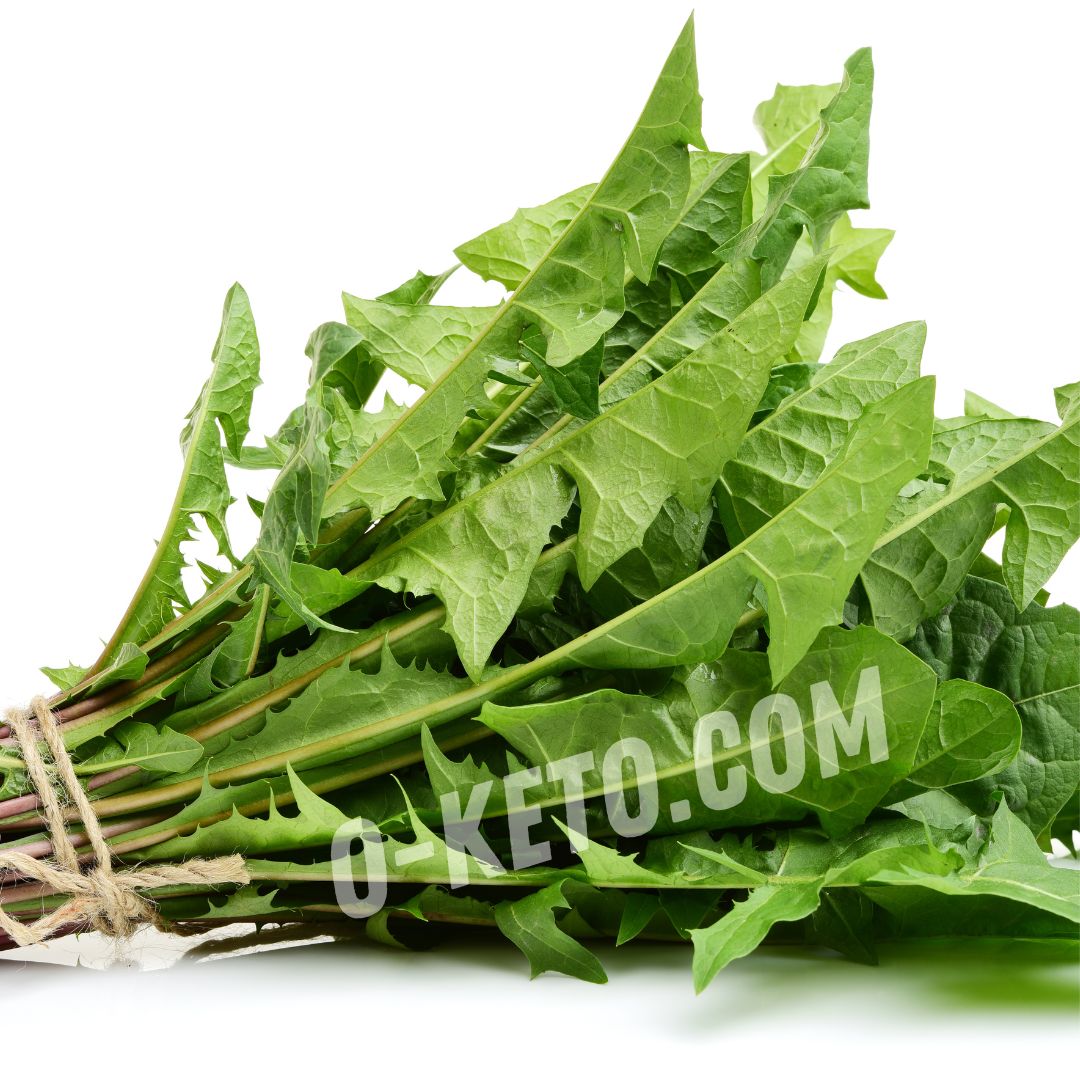

Dandelion leaves are edible bitter greens with a grassy flavor and a light peppery note. Young leaves are used in salads, while mature leaves are more often blanched, stewed or mixed with milder greens. They are not neutral lettuce, but expressive wild greens that need the right portion and flavor balance.
Per 100 g of fresh dandelion leaves, common values are about 45 kcal, 2.7 g of protein, 0.7 g of fat and 9.2 g of carbohydrates. The glycemic index is around 15, and glycemic load is low. Vitamin A, vitamin C, vitamin K, potassium, magnesium and calcium are present. In cooking, this is mainly a bitter leafy green rather than a neutral salad base.
Nutrition
Dandelion leaves contain more carbohydrates than some salad leaves, but the portion is usually small because of their clear bitterness. On keto they work better as a flavor accent than as a huge salad base. Fiber and bitterness make the greens feel intense even in a small amount.
Vitamin K should be considered when portions are large and regular, especially if there are individual limits. Source matters too: leaves from lawns, roadsides, pesticide-treated areas and city yards are not suitable for food. It is better to choose edible greens from a clear supplier or gather them only in a clean place.
Are They Keto-Friendly?
Dandelion leaves can fit keto and LCHF when used moderately and without sweet dressings. They pair well with fat and acid: olive oil, butter, bacon, eggs, goat cheese, lemon, sugar-free vinegar and garlic.
Because of 9.2 g of carbohydrates per 100 g, large portions should be counted. In practice, 20-50 g are more often used as part of a green mix. This keeps bitterness from dominating and makes the carbohydrate load clearer.
How to Use Them
Young tender leaves can be added raw, especially mixed with romaine, cucumber, avocado or egg. Mature leaves are more bitter; they are better blanched, briefly stewed or sautéed with fat. Lemon, vinegar, cream, cheese and crisp bacon balance the bitterness well.
Practical options include:
- salad with egg, bacon and olive oil;
- quick sauté with garlic and butter;
- a mix with arugula, spinach or romaine;
- a side dish for fatty fish or meat;
- an addition to omelet, frittata or green sauce.
How to Choose and Store
Choose young clean leaves without yellow spots, slime or rough damage. The older the leaf, the stronger the bitterness and the tougher the veins. Before cooking, rinse the greens carefully because sand and soil often remain between the leaves.
Store dandelion leaves in the refrigerator, dry and loosely wrapped in a paper towel. Washing in advance is undesirable because wet greens spoil faster. If the leaves are slightly wilted, they can be briefly soaked in cold water and then dried.
Limits and Substitutes
Not everyone likes the bitterness. With a sensitive stomach, reactions to plants from the aster family or medication connected with fluid and electrolyte control, large regular portions should not be used without professional advice. For ordinary cooking, start with a small addition.
Dandelion leaves can be replaced with arugula, radicchio, chicory, endive, mustard greens or spinach mixed with a little bitter green. If mildness is needed, spinach and romaine are better. If bitterness is needed, radicchio, chicory and arugula are closer.
Portion and Common Mistakes
For salad, a small handful of dandelion leaves is usually enough, especially if they are mature and bitter. A large bowl of these greens quickly tires the palate. A common mistake is trying to hide bitterness with sugar or sweet sauce. On keto, salt, fat, acid and mild foods work better: egg, cheese, avocado, sour cream or bacon. Then bitterness stays a pleasant accent rather than the main sensation.
How to Soften Bitterness
The bitterness of dandelion leaves does not need to be hidden completely; it is what makes the greens interesting. But it can be made more balanced. Young leaves are usually enough to mix with milder greens and a fatty dressing. Mature leaves are better soaked for a few minutes in cold water, then quickly blanched or sautéed in butter or oil with garlic.
A warm element works well in salad: egg, bacon, sautéed mushrooms, warm cheese or fish. Warmth slightly relaxes the leaf and rounds the flavor. If the greens are used in sauce, blend them together with oil, nuts, garlic and lemon rather than separately, so the bitterness spreads through the whole mass.


