Fermented vegetable mix with carrots, zucchini, and cauliflower.
Fermented vegetable mix provides probiotics, mild acidity, and a crunchy texture, making it suitable as both a snack and a vegetable side dish. Carrots, zucchini, and cauliflower retain their shape, while garlic, dill, and mustard deepen the flavor.
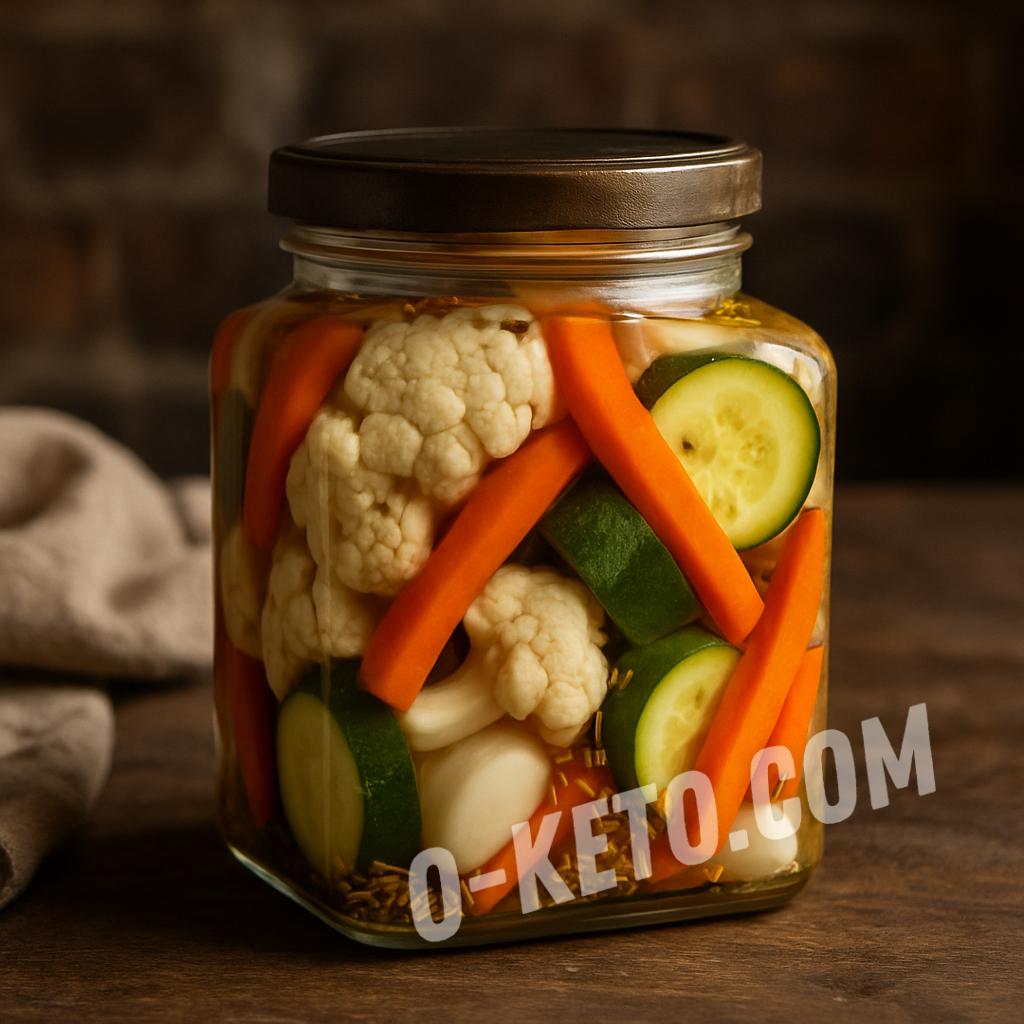

This recipe is conveniently used as a basic scheme for home fermentation of dense vegetables. We wash cauliflower (400 g), zucchini (300 g), and carrots (300 g), peel the carrots, and soak the cauliflower in salted water for 15 minutes.
We break the cauliflower (400 g) into medium florets, and slice the carrots (300 g) and zucchini (300 g) into circles or sticks about 1-1.5 cm thick. In a separate container, we mix water (600 g) with salt (28 g) until completely dissolved.
How to Prepare a Jar
At the bottom of a clean glass jar, place grape leaves (10 g), a dill umbrella (15 g), garlic (16 g), black pepper (2 g), mustard seeds (2 g), and chili pepper (1 g) if desired. On top, layer some vegetables, then repeat the spice layer and fill the jar with the remaining vegetables.
Pour the brine over the vegetables so that it covers the contents and is slightly above the top layer. Press the vegetables down with a leaf and place a weight on top to ensure nothing is above the liquid.
Fermentation and Storage
Keep the jar away from direct sunlight at room temperature. After 2-3 days, the brine usually becomes slightly cloudy, bubbles appear, and a light sour aroma develops — this is a normal sign of active fermentation.
You can taste the vegetables after 2-3 days, but for a more pronounced sourness, leave them longer, periodically checking the flavor. Once the taste is satisfactory, transfer the jar to the refrigerator.
Grape leaves are needed here not only for aroma: the tannins help maintain a crunchy texture. If part of the vegetables rises above the brine, it will spoil quickly, so a weight and daily surface checks are indeed important.

If you have any questions about the recipe "Fermented vegetable mix with carrots, zucchini, and cauliflower.", you can ask them to AI. Please note, a low-cost OpenAI model is used. It may answer questions about disease treatment with errors!


Promo codes for iHerb (6)


We recommend reading
All articles