


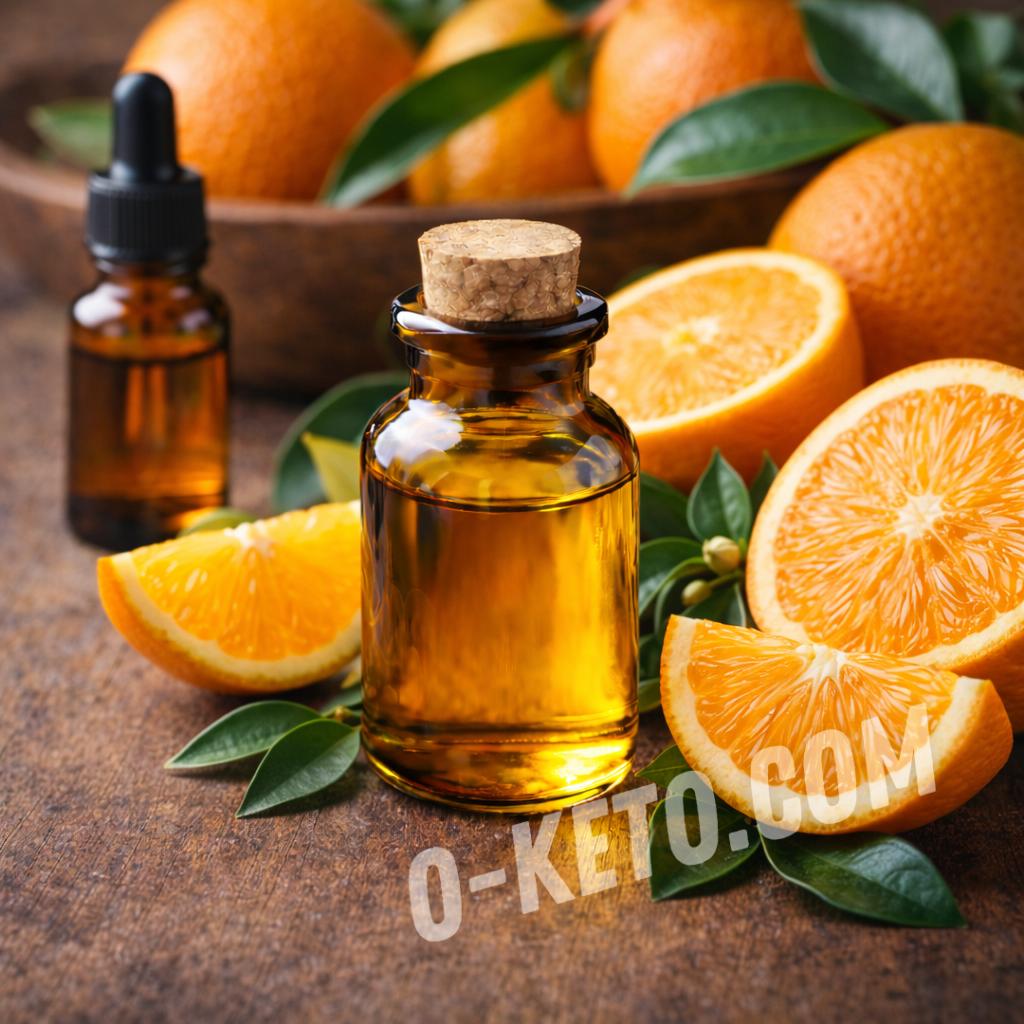

Sweet orange essential oil is obtained from the peel of Citrus sinensis, usually by cold pressing. The aroma is bright, warm, sweet, citrusy, familiar, and easy to blend. The oil is used in diffusers, perfumery, household aromatic blends, soap, and cosmetics, but it should not be confused with orange juice, zest, or a food flavoring.
The main feature of orange oil is its high limonene content. This gives the scent a juicy fresh character, but also makes the oil oxidize fairly quickly when exposed to air. For keto and LCHF, it has no food role: in cooking, zest, small amounts of juice, or food flavorings are used instead of cosmetic essential oil.
Aroma And Composition
Limonene usually dominates the composition; myrcene, linalool, citral, and other volatile components may also be present. The profile depends on the orange variety, region, peel freshness, and extraction method. Cold pressing gives the recognizable scent of fresh peel, but it also makes the oil sensitive to light and air.
Good oil smells clean, sweet-citrus, and fresh, without mustiness, rancidity, or a harsh chemical note. If the aroma becomes flat, sour, or like old peel, the product is better not used on skin or in delicate aromatic blends.
How To Use
In a diffuser, orange oil works as a light top note. It blends with lavender, ylang-ylang, neroli, cinnamon, clove, cedarwood, frankincense, ginger, mint, and other citrus oils. For winter blends it is often combined with spices; for fresh daytime blends, with mint, lavender, or rosemary.
For skin, the oil is used only diluted. Citrus peel oils may increase the skin’s sensitivity to sunlight, so after application to exposed areas it is better to avoid direct sun for the period stated by the producer. For the face, dosage should be especially careful.
In household blends, orange gives a pleasant scent, but it does not dissolve in water by itself. Sprays and cleaning products need a suitable base or solubilizer. In soap and candles, the scent may fade quickly, so it is often supported by longer-lasting base notes.
How To Choose
The label should include Citrus sinensis, plant part, extraction method, country of origin, expiry date, and intended use. Sweet orange should be distinguished from bitter orange, neroli, and petitgrain: they are all related to citrus, but they smell and behave differently.
A dark glass bottle, small volume, dropper, and tight cap are preferable. A low price is not always suspicious for orange oil because it is widely available. But a missing botanical name and wording such as “orange fragrance” may indicate a fragrance oil.
Limits
The oil is concentrated and may irritate skin, eyes, and airways. A patch test is needed before first skin use. Pregnancy, childhood, sensitive skin, citrus allergy, and regular medication use are reasons to discuss application with a qualified professional.
Oxidized citrus oils are more likely to irritate, so older bottles need extra attention. If burning, itching, or redness appears after application, wash the blend off and do not use it again at that concentration.
How To Store
Orange oil should be kept tightly closed in a cool dark place; after opening, refrigeration is often appropriate if the producer allows it. Do not leave the bottle by a window, stove, or in the bathroom. A small volume is more practical than a large one because citrus oils are used slowly and age quickly.
In body oils and creams, orange should be added at low concentration and only to a fresh neutral base. Too high a dose may irritate and create a sticky citrus scent. If the goal is only to scent a room, a diffuser or aromatic blend is usually a better choice than skin application.
What To Use Instead
In aromatic blends, sweet orange can be replaced with mandarin, tangerine, bergamot marked safe for sun-exposed skin, grapefruit, lemon, or a citrus blend with a vanilla-like note. In food, essential oil does not replace zest, juice, or food extract; recipes should use ingredients intended for the kitchen.


