


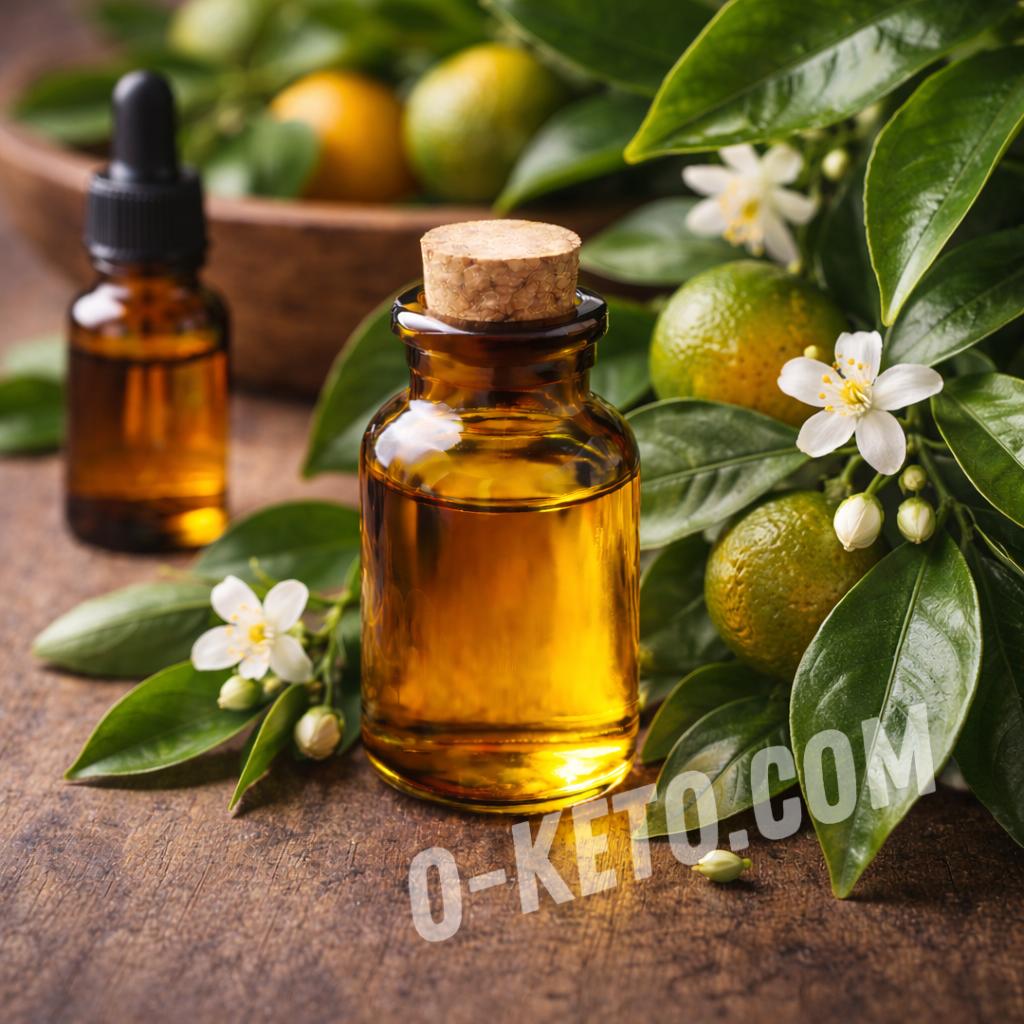

Petitgrain mandarin essential oil is obtained from the leaves and young twigs of the mandarin tree Citrus reticulata.
Unlike oils extracted from the fruit peel, petitgrain has a deeper, softer, and more balanced aroma, combining fresh citrus notes with light woody and herbal undertones.
This oil is valued for its ability to harmonize the nervous system, reduce emotional tension, and gently support the overall condition of the body.
History and Origin
The mandarin tree originally grew in Southeast Asia, where it has been used for thousands of years as a food, medicinal, and ritual plant. The leaves and twigs of the mandarin were used in folk medicine for calming, improving sleep, and recovering from stress.
Petitgrain essential oil began to be actively used in Europe in the late 19th century when steam distillation methods were improved. French perfumers noticed the aroma of citrus tree leaves and began to use petitgrain as a more restrained and refined alternative to bright citrus oils.
Today, petitgrain mandarin is primarily produced in countries with developed citrus agriculture. The oil is obtained through steam distillation, which helps preserve its delicate aroma and functional properties.
Composition and Physiological Properties
Petitgrain mandarin essential oil has a balanced composition, which allows it to act gently and deeply.
The oil has a pronounced effect on the autonomic nervous system, helps reduce overexcitement, and supports the body’s adaptation to stress.
Petitgrain mandarin also exhibits antiseptic and anti-inflammatory properties, making it useful in skin care and supporting the body’s immune responses.
Main Effects of Petitgrain Mandarin Essential Oil
- reduction of stress and nervous tension;
- support for emotional balance;
- improvement of sleep quality;
- antiseptic and anti-inflammatory action;
- support for skin tone and condition.
Use in Aromatherapy
In aromatherapy, petitgrain mandarin essential oil is used to create a state of calmness and inner stability. Its aroma helps reduce anxiety, decrease irritability, and restore emotional balance. The oil is suitable for both daytime and evening use.
Petitgrain mandarin blends well with lavender, neroli, ylang-ylang, rose, and sandalwood. It is used in diffusers, aromatic blends, and individual inhalations.
Use in Skin Care
In cosmetology, petitgrain mandarin essential oil is used for the care of oily, combination, and stressed skin. It helps normalize the work of sebaceous glands, reduce inflammatory reactions, and improve overall skin tone.
The oil is added to creams, lotions, oil blends, and massage products only in diluted form.
Main Areas of Application in Cosmetology
- care for oily and combination skin;
- reduction of inflammatory reactions;
- support for even skin tone;
- aromatization of cosmetic products.
Use in Body Practices
In massages, petitgrain mandarin essential oil is used for muscle relaxation and reducing psychosomatic tension. It promotes improved microcirculation and creates a feeling of gentle warmth and comfort.
Usage Recommendations
- use only in diluted form;
- perform a sensitivity test before first use;
- use moderate dosages;
- avoid prolonged continuous use without breaks.
Contraindications and Precautions
Petitgrain mandarin essential oil is not recommended for individuals with citrus intolerance.
Use with caution during pregnancy and breastfeeding.
The oil is not recommended for use in children without consulting a specialist.
If there are chronic diseases, use should be coordinated with a doctor or aromatherapy specialist.
Petitgrain mandarin essential oil is a gentle, harmonizing, and versatile remedy that supports emotional well-being, improves the atmosphere, and is widely used in aromatherapy and natural cosmetology.


