


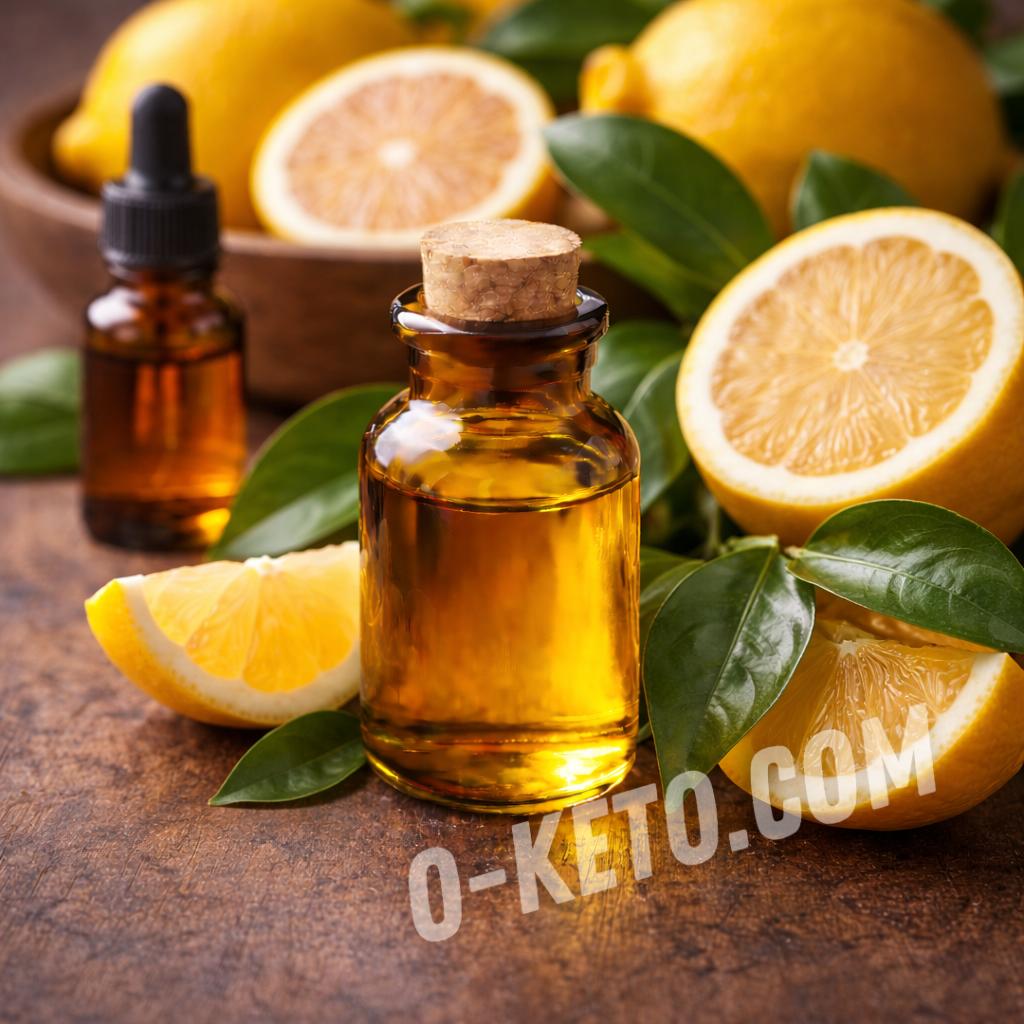

Lemon essential oil is obtained from the peel of Citrus limon fruit, usually by cold pressing. It is a concentrated aromatic product with a bright citrus scent, not lemon juice and not an ordinary edible oil. In cooking, it gives aroma but not acidity: sour taste comes from juice or citric acid, while essential oil works only as a peel-like aromatic note.
For keto and LCHF, this product has almost no effect on carbohydrates because it is used in drops. But it is not a fat source for the diet. Its role is flavoring, room scent, perfumery, and cosmetic blends. For food, only a product clearly marked for food use should be considered, and dosing must be strict.
Composition and aroma
The main component of lemon oil is limonene; in different batches its share may be high, often around 65–75%. Beta-pinene, gamma-terpinene, citral, and trace aromatic compounds may also be present. These volatile compounds give the fresh peel smell, but they evaporate quickly and are sensitive to air, light, and heat.
Good oil smells fresh and clean, close to lemon zest, without heavy rancidity or solvent-like notes. If the aroma becomes flat, stale, or bitter-oily, do not use the product in food or on skin.
Is it suitable for keto?
From a macronutrient perspective, lemon essential oil does not interfere with keto, but it is not a product for large portions. In sweet low-carb recipes it can give aroma to lemon cream, cheesecake, mousse, coconut dessert, or almond dough without adding juice. In savory dishes it is used less often: with fish, creamy sauces, or dressings where a zest note is wanted.
Remember that oil does not replace juice. If a recipe needs acid for taste, baking soda reaction, or marinade, lemon juice, vinegar, or citric acid is needed. If only peel-like freshness without extra liquid is needed, a microdose of oil or fresh grated zest is more appropriate.
How to use it
For food, essential oil should not be dropped directly into a small portion of cream or drink. Dilute it first in a fatty base, alcohol extract, or another suitable mixture, then use part of that dilution. One drop may be too strong for a home portion, so it is safer to start diluted and taste gradually.
In a diffuser, a few drops per room are usually enough, but long diffusion is not always needed. On skin, use only in strong dilution with a carrier oil and consider photosensitivity. After applying it to exposed skin, avoid sun and UV lamps for the period indicated by the producer.
How to choose
The label should show Citrus limon, plant part, extraction method, country of raw material, shelf life, and intended use. For cooking, a separate food-use indication is needed. The bottle should be dark glass with a tight cap and dropper. Suspiciously low price, cloudiness, sticky cap, and missing producer data are poor signs.
Limits
Lemon essential oil is concentrated and may irritate skin and mucous membranes. Do not use it undiluted, near eyes, within reach of children, or in food without food-use labeling. Pregnancy, childhood, citrus allergy, sensitive skin, and regular medication use are reasons to discuss use with a qualified professional.
Storage
Keep the bottle tightly closed in a cool dark place, away from the stove and window. Citrus oils lose freshness faster than many dense spice oils, so a small bottle is often more practical than a large one. After each use, wipe the neck so the cap closes tightly.
If the oil is used rarely, write the opening date on the bottle. This makes it easier to understand why the aroma has become weaker or rougher. For blends with carrier oil, make a small portion rather than storing a dilution for months.
What can replace it?
For food, the best substitutes are fresh lemon zest, lemon juice, lime zest, or orange zest if another citrus note fits. For room scent, lime, grapefruit, sweet orange, or bergamot essential oil may work, but each has its own profile and its own skin and sun-related limits.


