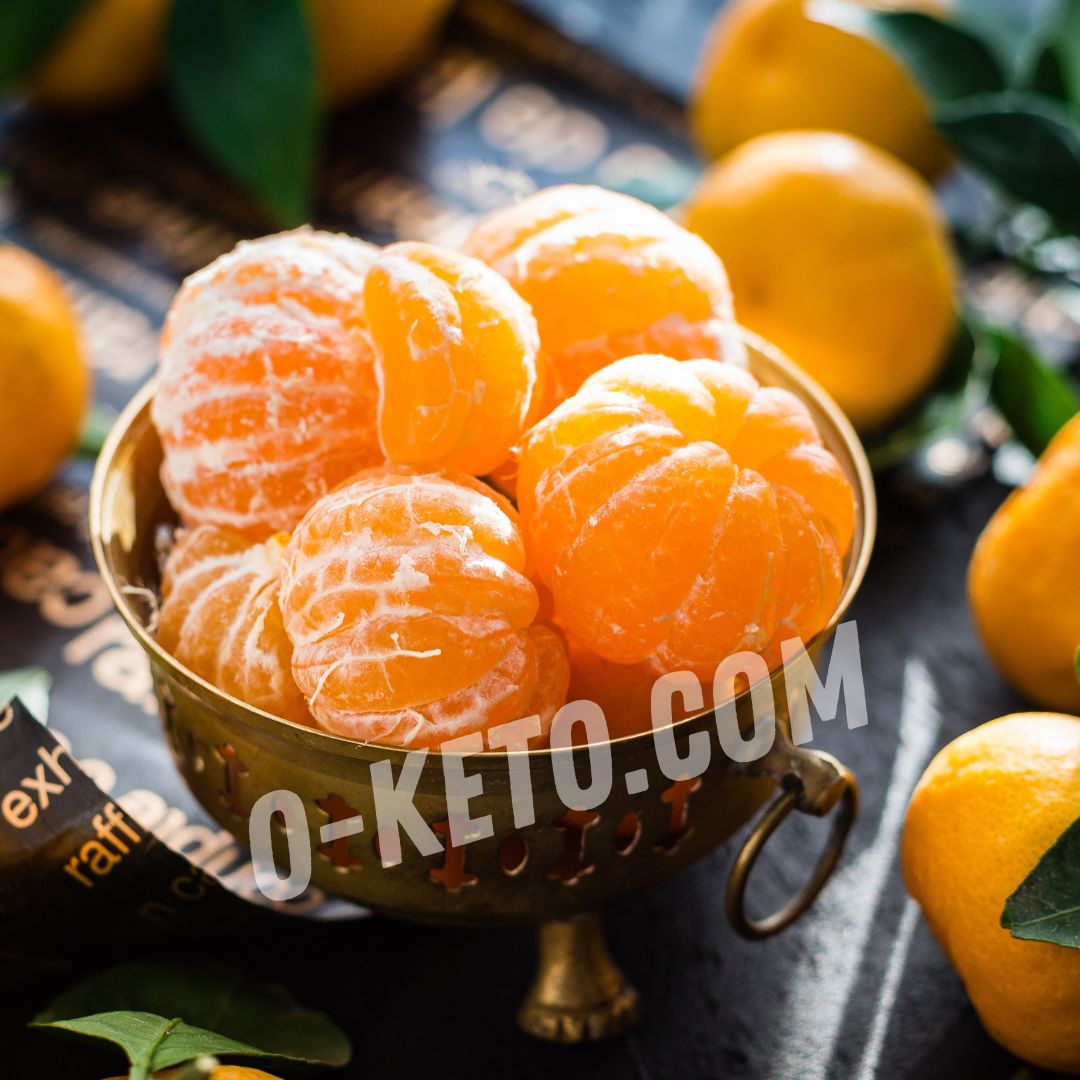

Mandarin is a sweet citrus fruit with thin peel, juicy flesh and a bright aroma. It is eaten fresh and added to salads, desserts, sauces, marinades and holiday appetizers. In an ordinary diet it is a familiar fruit, but for keto and LCHF it needs careful portioning: most of its calories come from natural sugars.
Per 100 g of mandarin, common values are about 53 kcal, 0.81 g of protein, 0.31 g of fat and 13.34 g of carbohydrates. The glycemic index is often listed around 40, and glycemic load per 100 g around 8. It contains vitamin C, folic acid and fiber, but these facts do not remove the carbohydrates. For strict keto, mandarin is not an everyday base food.
Nutrition
Mandarin contains almost no fat and very little protein. Its role on the plate is flavor, acidity, aroma, juiciness and a small amount of fiber. Compared with berries, mandarin usually brings more carbohydrates in a convenient portion, and it is easy to eat quickly: one small fruit rarely feels like a serious part of the daily limit.
Values per 100 g are useful, but real weight matters. A peeled mandarin may weigh 60-100 g, and a large one can weigh more. If the day already includes berries, nuts, dairy, sauces or vegetables with carbohydrates, even one fruit can take a noticeable part of the limit.
Is It Keto-Friendly?
For strict keto, mandarin usually fits only as an occasional small addition, not as a fruit snack on its own. It is more practical to count grams and segments rather than “one mandarin.” One or two segments give aroma and a sweet-sour accent, but a whole bowl of mandarins quickly becomes a normal carbohydrate load.
In a more flexible LCHF menu, mandarin can be included if carbohydrates are planned in advance and it is not combined with other sweet foods. It is better eaten after a main meal with protein and fat, not on an empty stomach as a separate sweet snack. This makes the portion easier to keep under control.
How to Use It
For keto, mandarin works better as an aromatic ingredient than as the base of a dish. A few segments can be added to a salad with poultry, greens, cucumber, avocado and olive oil. Zest gives citrus aroma with almost no carbohydrates if the fruit is washed well and not heavily waxed.
Practical options include:
- 1-2 segments in a salad with chicken and greens;
- zest in a sugar-free olive oil sauce;
- a few pieces with full-fat cottage cheese or unsweetened Greek yogurt;
- a sweet-sour accent for duck, pork or fish;
- aroma for water or tea without adding juice by the glass.
How to Choose and Store
Choose mandarins with bright aroma, firm peel and noticeable weight for their size. Overly soft, dried-out or sticky fruits often have poorer texture. Green areas on the peel do not always mean sour flavor, but mold, wet spots and fermented smell are reasons to avoid the fruit.
Store mandarins in a cool place with airflow. In a closed bag they mold faster, especially if one fruit is already damaged. Peeled segments dry out quickly and become easy to eat mindlessly, so for portion control it is better to set aside the amount needed and put the rest away.
Limits and Substitutes
The main limit of mandarin is sugar and the ease of overeating. Juice and smoothies are worse than whole fruit: there is less fiber and carbohydrates accumulate faster. Canned mandarins in syrup do not fit keto. Dried mandarins and candied peel are even more concentrated in sugar.
If citrus flavor is needed with fewer carbohydrates, lemon or lime juice in a small amount, zest, a few berries or a sugar-free acidic dressing are often easier. If fresh fruit is desired, choose a small portion in advance and include it in the daily count rather than treating mandarin as “safe” only because it is small.
Zest, Juice and Sweetness Control
In low-carb cooking, mandarin is often easier to use in parts rather than whole. Zest gives strong aroma to sauces, cottage cheese desserts, marinades and tea while adding almost no sugar. Juice is different: it raises carbohydrates quickly, especially if several segments are squeezed “for flavor” and not counted as fruit.
When mandarin is added to a salad, it is better to remove tough membranes and cut the segments finely. This spreads the sweetness through the dish while keeping the portion small. A good approach is to pair mandarin with bitter greens, the richness of avocado or duck and lemon acidity instead of making it a separate sweet layer.