


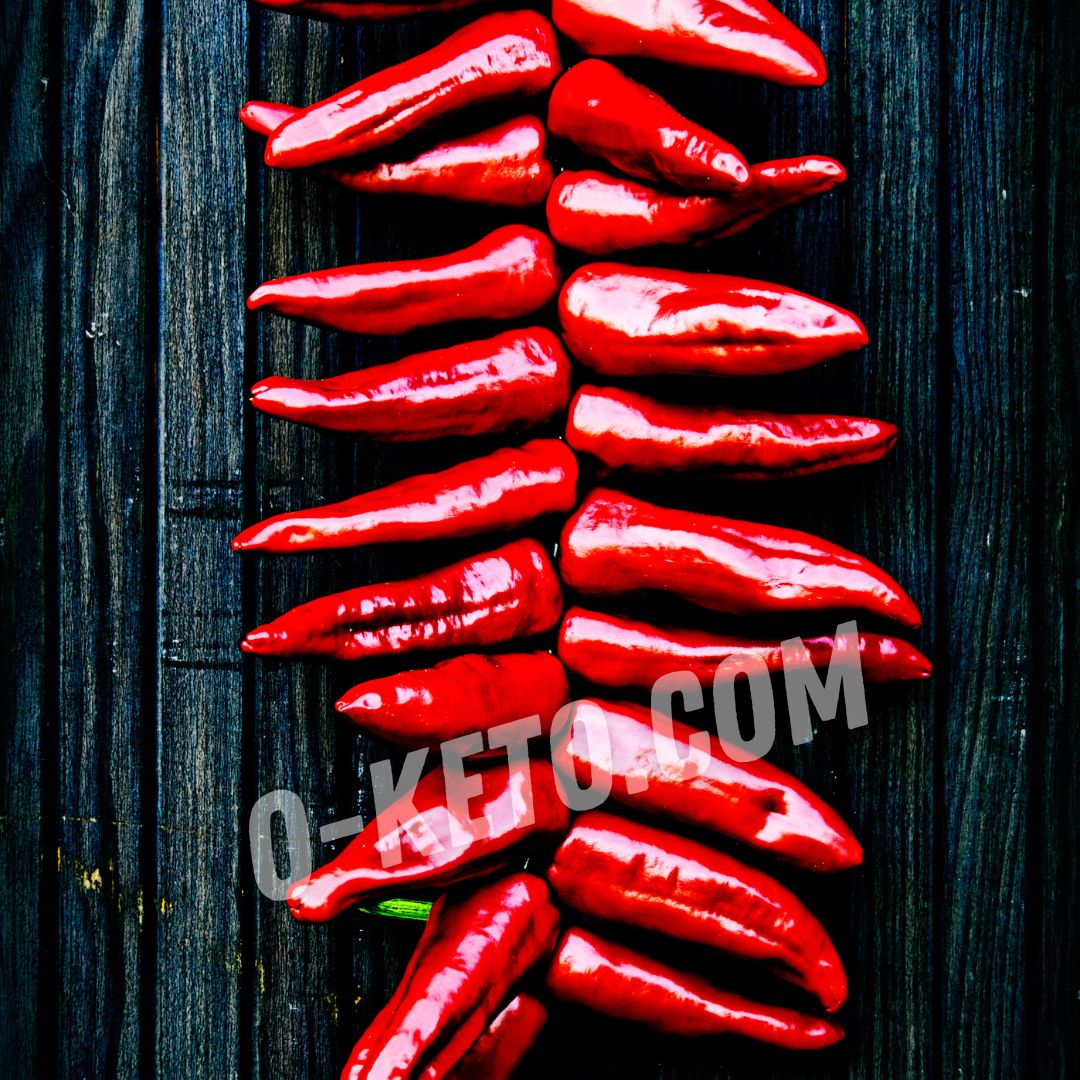

Espelette pepper, or piment d’Espelette, is an aromatic red pepper from the French Basque Country. It is used more as a mild spice than as a fiery chili, with fruity, lightly smoky, and sweet-pepper notes. It gives a dish warmth, color, and Basque character, but usually does not burn like cayenne or very hot chili varieties.
The pepper is linked with the town of Espelette in the French Pyrenees. The fruits are traditionally dried in strings on house fronts, then ground into flakes or powder. For real piment d’Espelette, origin, variety, ripeness, and drying method matter; ordinary “paprika with chili” does not give the same taste.
Flavor and heat
The heat of Espelette pepper is moderate: it is warmer than sweet paprika, but milder than many hot peppers. The flavor is fruity, dry, slightly sweet, with a warm finish. That is why it is often added not for sharp heat, but for depth of flavor.
In powder form, the aroma opens quickly, but with strong heat it may become flat or slightly bitter. Therefore the pepper is often added near the end of cooking or used as a final sprinkle. In oil and fatty sauces, the aroma becomes softer and rounder.
Nutritional value
In 100 g of dried pepper there may be about 250–320 kcal and a noticeable amount of carbohydrates, but that number has little everyday meaning: the real serving is a pinch, half a teaspoon, or a few grams. In that dose, the carbohydrate contribution is small.
The pepper contains carotenoids, aromatic compounds, and small amounts of vitamins and minerals, but it is used mainly as a spice. If a blend with Espelette pepper contains salt, sugar, starch, smoke flavoring, or flavor enhancers, the whole formula should be counted, not only the pepper itself.
Is it suitable for keto?
For keto and LCHF, Espelette pepper works as a spice in a small portion. It makes flavor brighter without sweet glazes, flour, or starchy sauces. It is especially good in dishes that already contain fat: eggs, fish, meat, butter, olive oil, sugar-free mayonnaise, sour cream, or cheese.
The main limitation is usually not carbohydrates, but tolerance of spicy food. If someone reacts to chili, the pepper is better added very gradually and not used on an empty stomach.
How to use it
Espelette pepper is added to omelets, fish, chicken, beef, lamb, seafood, mayonnaise sauces, creamy sauces, olive oil dressings, oven-cooked vegetables, and egg dishes. It is well suited for final sprinkling: a pinch on top gives color and aroma without the risk of burning the spice.
In Basque cooking, it is used with piperade, fish, meat, eggs, cheeses, and sauces. In keto cooking, it can replace part of sweet paprika or mild chili when not only heat but also a fruity pepper note is needed.
If the pepper goes into a marinade, it is better mixed with oil, salt, and a small amount of acidity rather than scattered dry in a thick layer over the surface. This spreads the flavor more evenly. For soups and broths, it is often more convenient to add it to the plate, where heat and aroma can be controlled portion by portion.
How to choose
Good ground pepper should be brick-red, aromatic, without mustiness, dampness, or overly sharp smoke. The package should preferably show piment d’Espelette, origin, and no unnecessary additions. If the color is dull, the smell is almost gone, or the powder has formed damp clumps, quality is already lower.
Flakes usually give a livelier aroma, while fine powder is more convenient for sauces and marinades. Whole dried pods are less common, but they keep aroma better if stored dry and ground as needed.
Limitations
Even a moderately hot pepper may irritate mucous membranes, intensify heartburn, or cause discomfort with a sensitive stomach. It should not be used generously in food for children or people who are not used to heat. After handling pepper, avoid touching eyes and mucous membranes.
How to store it
Ground Espelette pepper is stored in a tightly closed jar, in a dark dry place, away from the stove. Light, air, and heat quickly take away aroma. A small package is better than a large one if the spice is used rarely. The spoon should be dry, otherwise the powder clumps.
What can replace it?
There is no full replacement, but a similar task can be solved. For mild warmth, use a mix of sweet paprika and a small amount of chili. For a fruity note, Aleppo pepper, urfa, mild chili flakes, or smoked paprika in a small dose may work if smoke is appropriate. Ordinary cayenne is much sharper, so much less is needed.
Substitution options in recipes
Paprika. Smoked sweet paprika plus 10% cayenne pepper. It will result in a fruity smoked base with a slight spiciness. The color of the dish will remain bright red.


