


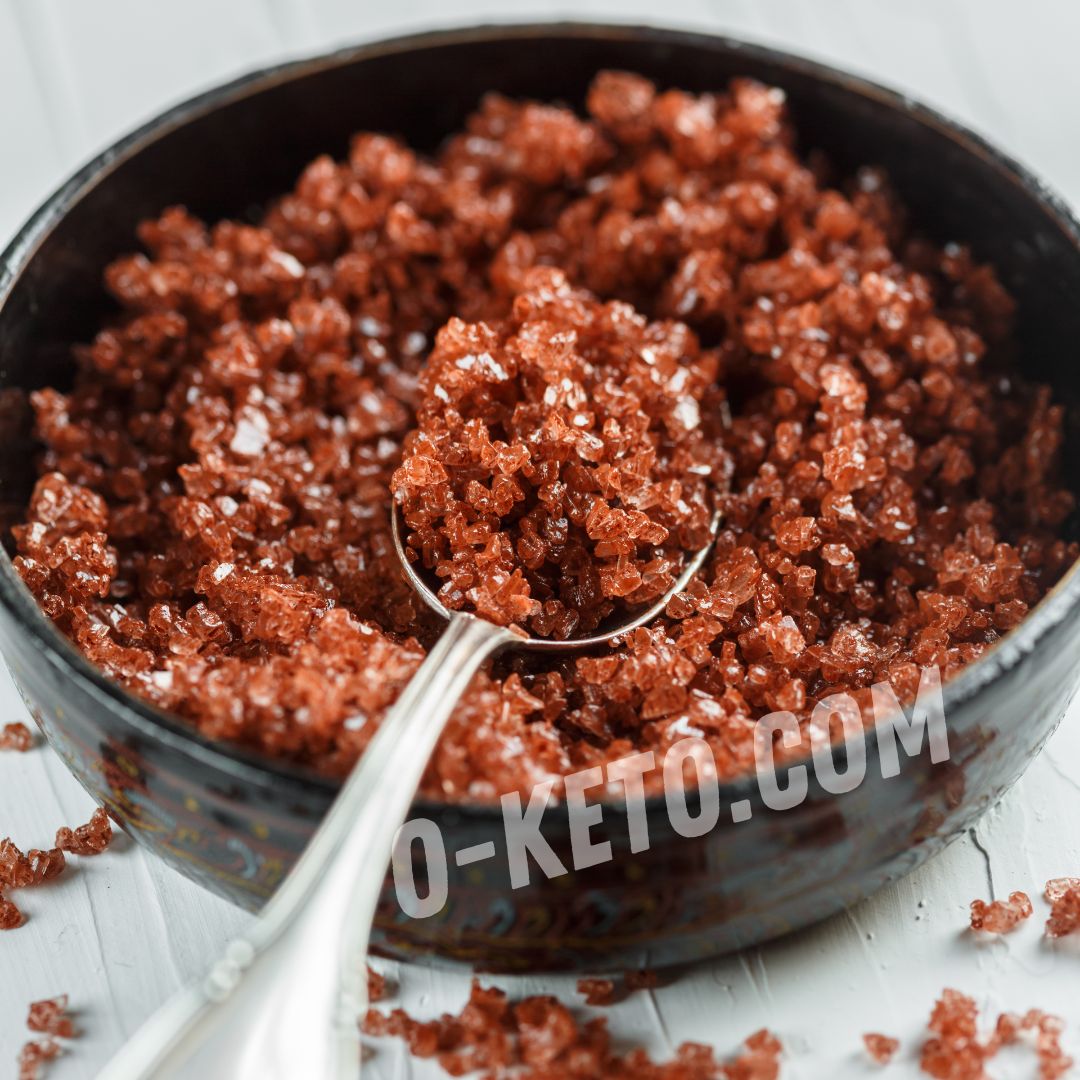

Hawaiian red salt, or alaea salt, is a sea salt with a reddish hue linked to Hawaiian volcanic alaea clay. It is valued not only for its color, but also for a denser, slightly earthy taste. Unlike fine table salt, it is often used as a culinary accent: for meat, fish, poultry, eggs, avocado, vegetables and finished dishes where the crystals should be felt.
Traditionally, seawater is evaporated and the salt then mixes or comes into contact with red clay rich in iron compounds. This gives the characteristic shade. Color, crystal size and intensity vary by producer, so Hawaiian red salt can be brick-red, pinkish-red or darker.
Nutrition
Like any salt, Hawaiian red salt is mostly sodium chloride. It contains no carbohydrates, protein or fat, so it does not affect the carbohydrate count of a keto diet. Trace minerals, including magnesium, calcium and iron, may be present, but this salt should not be treated as a meaningful mineral supplement.
The main nutrition factor is sodium. On keto, some people may feel a stronger need for salt, especially during adaptation, but that does not make salt unlimited. The amount depends on the diet, sweating, blood pressure, kidney function, medicines and individual medical advice.
Is It Keto-Friendly?
Hawaiian red salt fits keto and LCHF: it contains no sugar or starch, adds no calories and can make simple food taste brighter. It can finish dishes without sweet sauces: steak, fish, eggs, avocado salad, cucumbers, broth, homemade mayonnaise or herb butter.
The phrase “use without restriction” is not accurate for salt. It is true that there are no carbohydrates, but sodium still matters. It is better to ask where the salt genuinely improves the dish rather than add it automatically to everything.
How to Use It
Coarse crystals work well as finishing salt, sprinkled over the dish right before serving. Fine grind is more convenient for marinades, minced meat, omelets and sauces. If ordinary fine salt is replaced with coarse red salt, spoon volume can mislead: large crystals take more space and saltiness will differ.
Good uses include:
- steak, roast beef, pork, lamb and chicken after cooking;
- fatty fish, shrimp, scallops and seafood salads;
- avocado, cucumber, radish, leafy greens and a small portion of tomatoes;
- eggs, omelets, herb butter and cottage-cheese spreads;
- homemade sugar-free meat rubs without breading.
How to Choose and Store
The ingredient list should mention sea salt and alaea clay, or clearly indicate Hawaiian red salt. Flavorings, sugar, taste enhancers and anti-caking agents are not always needed, especially when the salt is bought as a finishing salt. For daily cooking, grind size matters as much as origin.
Store salt dry and tightly closed. Moisture turns crystals into clumps, and near the stove salt absorbs steam and odors faster. If red salt is used rarely, keep a small amount in a working jar and store the main package separately.
Substitutes
Functionally, Hawaiian red salt can be replaced with sea salt, pink Himalayan salt, fleur de sel, smoked salt or ordinary rock salt. But the replacement changes more than color: crystal size, saltiness per spoon and mouthfeel will differ. In recipes, add salt gradually.
Common Mistakes
Red salt should not be used as a way to “add minerals” instead of eating a varied diet. Trace elements may be present, but salt servings are too small to build nutrition around them. Its strength is flavor, texture and appearance on the finished dish.
Another mistake is using coarse crystals at the start of cooking and expecting the same even seasoning as fine salt. Coarse salt dissolves more slowly. Fine grind is better for brines, minced meat and dough, while coarse crystals are better for serving.
In recipes with red salt, already salty ingredients matter: cheese, bacon, olives, capers, salted fish, ready sauces and broths. If they are present, finishing salt is best added at the very end in small pinches. This keeps its texture and lowers the risk of over-salting the dish.
For serving, red salt is especially visible on light-colored foods: eggs, butter, cauliflower, fish, chicken breast and sour-cream sauces. In dark stews the color is almost lost, so ordinary salt is more practical there, while red salt can be saved for the final accent.


