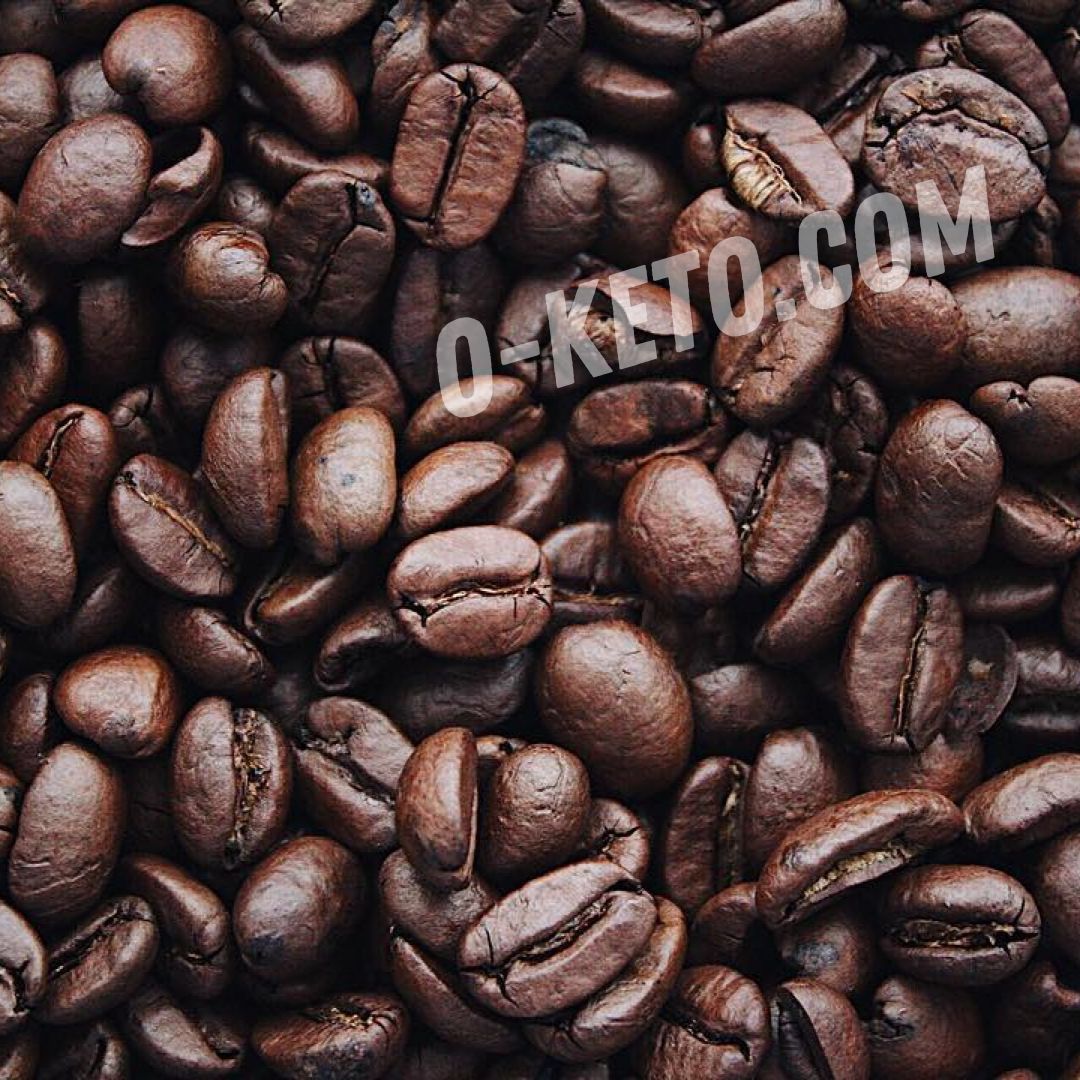

Coffee is a drink made from roasted Coffea beans, valued for aroma, bitterness, acidity, body and the stimulating effect of caffeine. In keto and LCHF it is convenient because black coffee contains almost no calories or carbohydrates. But its keto fit depends less on the espresso or filter coffee itself and more on additions: sugar, syrups, milk, cream, condensed milk, ready mixes and dessert toppings.
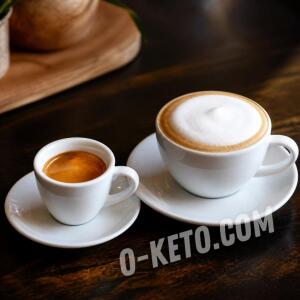
Coffee can be very different. Espresso gives dense flavor and a small volume, filter coffee is clearer, cezve coffee is thick and sediment-rich, and French press coffee has a more oily profile. Robusta is usually stronger and more bitter, while arabica is often more complex in acidity and aroma. For everyday eating, the beans matter, but so do timing, caffeine tolerance and the way coffee affects appetite.
Nutrition
Black coffee without sugar or milk contains almost no macronutrients. A cup of Americano, espresso or filter coffee usually provides only trace energy and carbohydrates. This makes the drink easy to include in a low-carb diet, and it often does not break a fasting window if someone practices intermittent fasting.
The situation changes with additions. Sugar, honey, syrups, oat milk, regular milk and coffee shop drinks can quickly turn coffee into dessert. Cream, butter, MCT or unsweetened coconut milk add very few carbohydrates, but they do add energy. Such a drink is no longer an “empty cup”; it is part of the meal and should be counted.
Is It Keto-Friendly?
Black coffee, espresso, Americano, filter coffee and unsweetened cold brew are the easiest choices for keto. For a softer taste, add a little heavy cream, unsweetened coconut milk or an unsweetened almond drink. A sweetener is best chosen by personal tolerance: it should not trigger cravings or digestive discomfort.
“Bulletproof” coffee with butter or MCT can be used as a separate caloric drink, but it should not be treated like ordinary coffee. It can add several hundred calories and displace food with protein. If satiety is the goal, black coffee alongside a normal breakfast of eggs, fish, cheese or meat may work better.
Caffeine and Serving
Caffeine content depends on the bean, roast, dose, grind, brewing method, and serving volume. A cup therefore has no universal caffeine dose: an espresso is small but concentrated, while a large filter coffee may contain more total caffeine because it uses more water and coffee. For practical tracking, consider the coffee dose, the final beverage volume, and the producer’s information when it is available.
For most healthy adults, the FDA cites up to 400 mg of caffeine per day as an amount not generally associated with negative effects. EFSA considers a single dose up to 200 mg and a total intake up to 400 mg spread across the day generally not a safety concern for healthy adults. These are population-level reference points, not a target for everyone: sensitivity, body size, medicines, and metabolism vary. Pregnancy, cardiac arrhythmias, pronounced anxiety, and regular medication use call for an individual discussion with a clinician.
Use your own response as the practical test. Tremor, palpitations, anxiety, reflux, disrupted sleep, or noticeably increased urination are reasons to reduce the serving, move it earlier in the day, or choose decaf. Decaffeinated coffee is not absolutely caffeine-free, so check the label when caffeine must be tightly limited.
How to Prepare and Pair It
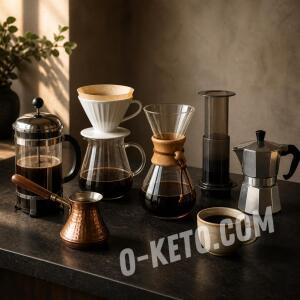
Brewing changes not only strength but also which compounds move into the cup. Direct contact in a French press or cold brew produces more body, while paper filters in a V60 or Chemex give a cleaner drink; AeroPress pressure shortens contact time. A cezve and moka pot need careful heat control because boiling and overheating quickly add bitterness.
| Method | Cup profile | Grind and time | Key point |
|---|---|---|---|
| French press | full and oily | coarse, 4 minutes | separate from the grounds promptly |
| Cezve | dense, with sediment | very fine, several minutes | do not boil the foam |
| V60 | clean and bright | medium-fine, 2.5–4 minutes | pour in even circles |
| Chemex | clean and light | medium, 4–5 minutes | use the thick paper filter |
| AeroPress | clean and concentrated | medium or coarse, 1.5–2 minutes | control the pressure |
| Cold brew | soft and low-acid | coarse, 8–16 hours | use cold water and filter well |
When comparing methods, change one variable at a time. Keep the bean dose stable, then adjust grind, temperature, or contact time. The same coffee and a similar coffee-to-water ratio make differences between brewers easier to understand. Step-by-step versions are available here:
- French press coffee;
- Turkish coffee;
- Chemex coffee;
- V60 coffee;
- cold brew;
- AeroPress coffee;
- moka pot coffee;
- espresso;
- Americano;
- cappuccino.
- latte;
- flat white.
Arabica, robusta, processing, and fermentation
Arabica and robusta are not simply two quality grades; they are different coffee species with different sensory profiles and composition. Arabica more often offers aromatic complexity, fruit or floral notes, and noticeable acidity. Robusta is usually denser, more bitter, and higher in caffeine, so it is often used in blends when a strong body and persistent crema are wanted. The final cup also depends on variety, growing conditions, harvest, and roast.
After harvest, coffee cherries are processed in several ways. In washed processing, the fruit is removed before drying, which often produces a cleaner and brighter cup. Natural processing dries the whole cherry and may create sweeter fruit notes and more body. Honey and pulped-natural methods leave part of the mucilage on the seed and produce an intermediate profile. This is not a universal better-to-worse scale: the right method depends on the desired flavor and the consistency of the lot.
Fermentation takes place while the fruit and mucilage around the seed break down. Controlled fermentation can shape aroma, while excessive or poorly controlled fermentation may create vinegary, musty, or harsh alcoholic notes. The label fermented coffee therefore does not guarantee health value or quality; judge cup cleanliness, processing transparency, and brewing performance.
Coffee Waves
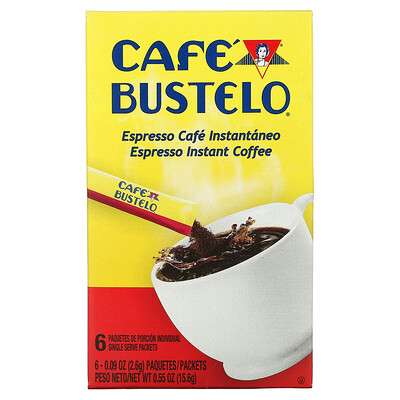
The first coffee wave is commonly associated with the mass spread of instant and packaged coffee, when convenience and availability mattered most. The second wave brought coffee-shop culture, espresso drinks, syrups, milk foam, and more attention to origin. The third wave shifted focus toward raw quality, farms and lots, roast profiles, manual brewing, and professional sensory evaluation.
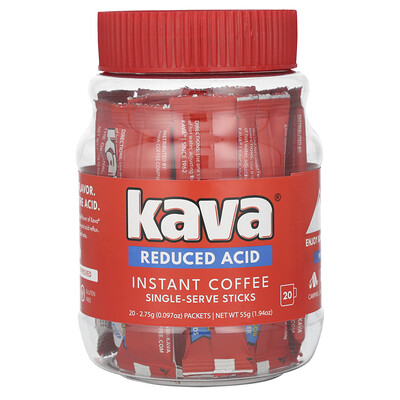
These waves do not replace one another and are not a strict quality ladder. Instant coffee can be useful, a café can be a good place for a milk drink, and specialty beans can be interesting for comparison. Choose the format according to the task, taste, budget, and time rather than the label.
Professional Tasting: Aroma, Body, Acidity, and Aftertaste
Tasting starts with the aroma of dry grounds and the fragrance released after wetting, then continues as the drink cools. Look for fruit, flowers, nuts, chocolate, or spice. Body is the sense of weight and texture in the mouth: a coffee may feel light and tea-like or round and oily.
Acidity is not automatically a defect and is not the same as an unpleasant sour taste. Clean acidity may recall citrus, apple, or berries and gives the cup liveliness; sharp vinegar-like or empty sourness more often signals imbalance or under-extraction. Aftertaste shows how long a pleasant aroma remains and whether dryness, burnt bitterness, or musty notes appear. For a fair comparison, brew samples with the same method, similar dose, and the same water.
Common Mistakes
A common mistake is using coffee as the answer to every kind of low energy. If a person is sleep-deprived, underhydrated, or low on electrolytes, another cup may create a short-lived lift without fixing the deeper cause. On keto this is especially noticeable in the morning, when fatigue and fog often improve after water, salt, or broth rather than after the maximum caffeine dose.
Another mistake is ignoring personal sensitivity. If even small servings of coffee trigger anxiety, tremor, tachycardia, or sleep problems, it does not mean the drink must simply be tolerated. In that situation, both dose and timing matter, and many people do better with coffee early in the day than later in the afternoon.
The first mistake is not counting coffee shop drinks. Latte, mocha, frappe and seasonal drinks often contain sugar even when they do not taste very sweet. The second mistake is using coffee instead of water and food. The drink does not replace protein, minerals or a proper meal.
The third mistake is using coffee every day simply to push through hunger. It may work once, but constant undereating can lead to overeating later. If coffee is needed only to suppress appetite, check the main meals: protein, salt, water and fats may be insufficient.
How to Choose and Store
Choose whole beans with a stated roast date rather than relying only on a best-before date. Arabica usually offers more aromatic complexity and acidity; robusta gives more body, bitterness, and crema. Light roast highlights fruit and floral notes, medium roast is versatile for filter coffee and AeroPress, and dark roast emphasizes chocolate and roasted flavors but can become bitter quickly. Roast level is not the same as strength: strength also depends on dose, grind, and the coffee-to-water ratio.
Buy a pack small enough to use within a few weeks after opening. Keep beans in an airtight opaque container in a dry, cool cupboard away from the stove, spices, light, and steam. Refrigeration is usually unhelpful because coffee absorbs odors and condensation speeds aroma loss. Grind immediately before brewing; ground coffee loses aroma faster and needs especially good packaging.
A flat aroma, stale-oil taste, damp clumps, or an off smell indicate that the coffee has lost freshness. It may not be unsafe, but the cup will taste dull and unbalanced. Discard beans if the package is damaged, the coffee was stored in damp conditions, or mold is visible.
Sources
- FDA caffeine guidance;
- EFSA caffeine safety assessment.