


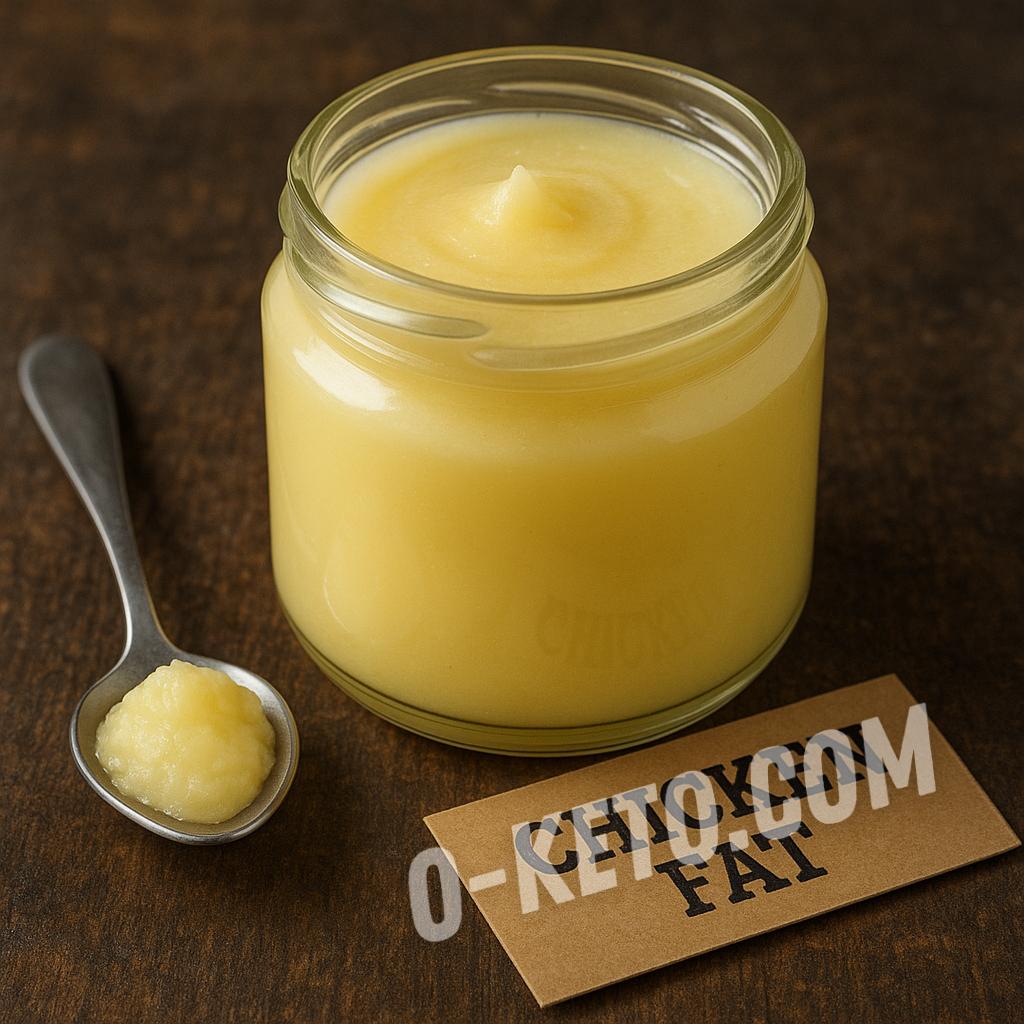

Chicken fat is fat rendered from chicken skin, subcutaneous tissue, and fatty trimmings. In home cooking it is used for frying, roasting, broths, pâtés, sauces, vegetables, and poultry dishes. It has a mild flavor that works well with onions, mushrooms, cabbage, eggs, and, in ordinary cooking, buckwheat or potato dishes.
For keto, chicken fat is convenient as a pure fat source without carbohydrates. But it is not a magic ingredient, just a culinary fat with high calorie density. It helps make lean foods more filling, but it is easy to overpour, especially straight from the jar.
Nutritional value
In 100 g of chicken fat there are about 880–900 kcal and almost 100 g fat. There is no protein or carbohydrate, so the glycemic index is zero. One tablespoon contains roughly 110–120 kcal, depending on density and whether there are bits of cracklings in the fat.
The fatty acid profile depends on poultry feed and rendering method. It usually contains saturated, monounsaturated, and polyunsaturated fatty acids, including omega-6 linoleic acid. Fat-soluble components may be present in small amounts, but chicken fat should not be treated as a vitamin supplement.
Is it suitable for keto?
Chicken fat fits keto and LCHF by macronutrients: it has no carbohydrates and maximum fat content. It can be convenient in dishes with chicken breast, turkey, lean fish, vegetables, mushrooms, and eggs, when mild meaty flavor and fat need to be added.
The overall fat balance of the diet still matters. If the menu already contains a lot of bacon, cheese, mayonnaise, butter, and fried foods, extra chicken fat may be unnecessary. If the food is lean, a small spoon of fat in a hot dish can make the portion more complete.
How to render it
For home rendering, chicken skin and fat are cut into small pieces and warmed over low heat in a heavy-bottomed pan. A little water can be added at the start so the fat does not burn before it begins to melt. When the pieces turn golden, the fat is strained.
The lower the temperature, the cleaner the taste. High heat quickly gives dark cracklings and an overfried smell. Finished fat should smell of chicken and fried skin, not smoke, bitterness, or old oil. Cracklings can be used separately if they are not burnt.
After straining, it is better to let the fat stand for a few minutes and pour off only the clear part without taking sediment from the bottom. The less water, protein flakes, and small crumbs get into the jar, the smoother the taste will be and the easier the product is to store without off odors.
How to use it
Chicken fat is good for frying eggs, mushrooms, cabbage, zucchini, onion, chicken patties, poultry offal, cauliflower, and root vegetables in ordinary cooking. In keto dishes, it is especially suitable where a meaty feeling is needed without sweet sauces or breading.
In soups and broths, a small spoon of fat rounds out flavor. In sauces, it works better with acidity: lemon juice, vinegar, sugar-free mustard, pickles, or sauerkraut. This keeps the fat from tasting flat.
How to choose
Store-bought chicken fat should have a clear ingredient list without flavorings, sugar, starch, or vegetable oils. Color can range from pale yellow to golden. The smell should be clean and meaty, without rancidity, sourness, or mustiness.
If fat is rendered at home, fresh skin and trimmings matter. Fat from old poultry or poorly stored raw material will have an unpleasant smell that spices will not remove. After straining, no water or wet pieces should remain in the jar because they shorten storage time.
Limitations
The main limitation is calorie density. Chicken fat is easy to add unnoticed, and one or two spoons already change the energy density of a dish. For people tracking weight, the portion is easier measured with a spoon.
Frying on the same fat many times is not a good idea. With repeated strong heating, taste worsens, dark particles appear, and the smell of old frying develops. If the fat smoked, became bitter, or darkened, it is better not used.
How to store it
Chicken fat is stored in a clean dry jar, tightly closed, in the refrigerator. It is better taken with a dry spoon. For long storage, fat can be frozen in small portions. If a sour, rancid, or moldy smell appears, the product is discarded.
What can replace it?
For frying, chicken fat can be replaced with goose or duck fat, ghee, pork lard, beef tallow, avocado oil, or refined olive oil. By taste, poultry fat is closest; by neutrality, ghee and refined oils are easier.
Sources
- USDA FoodData Central: composition of edible fats and oils
- Food safety and quality of fats and oils during heating and storage
- Saturated fatty acid intake and cardiovascular disease: systematic review and meta-analysis


