


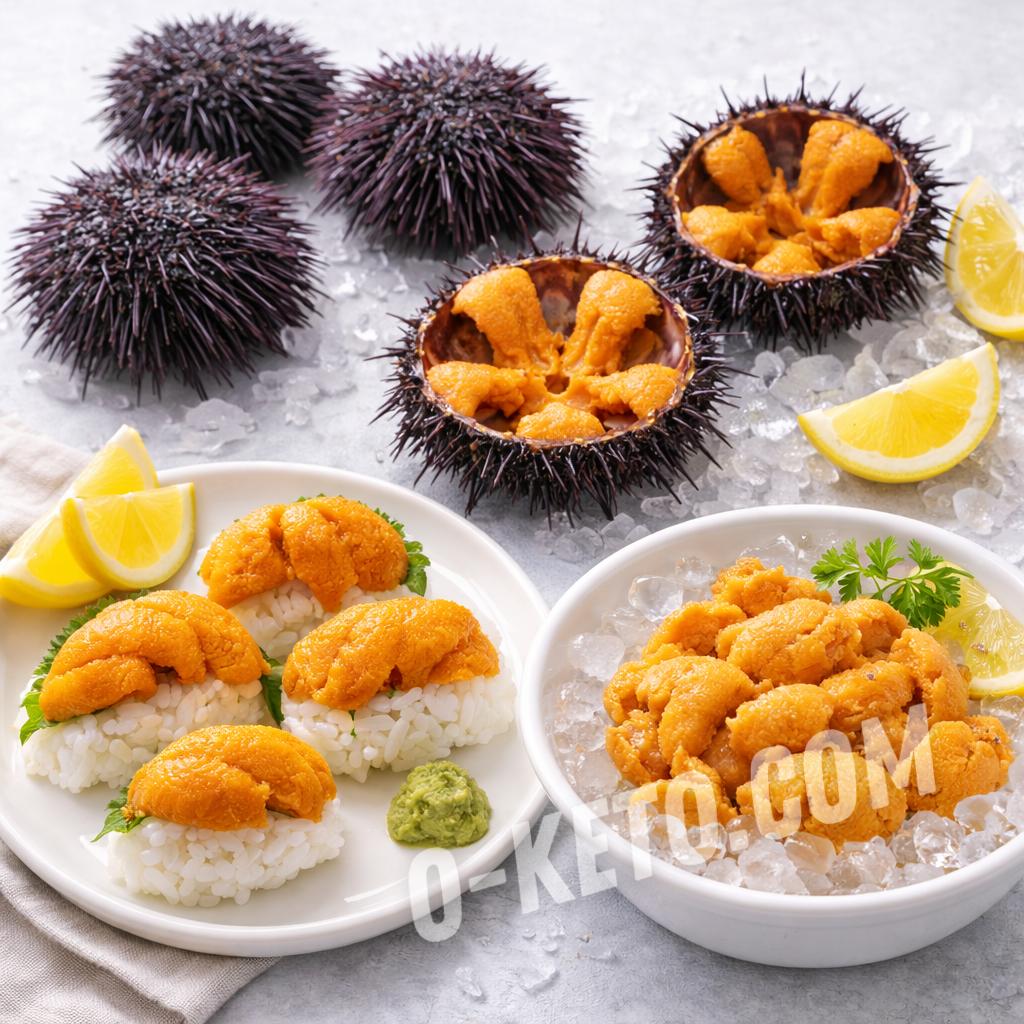

Sea urchins are echinoderms with a hard shell and movable spines. In cooking, the whole animal is not eaten; the edible part is the gonads, called uni in Japanese cuisine. This is a delicate marine delicacy with creamy texture, iodine-like aroma, slight sweetness, and a taste that depends strongly on freshness, season, and harvest area.
Good uni should not smell of ammonia, old fish, or dirty water. The taste may be salty, creamy, slightly nutty, or seaweed-like. Poor-quality product quickly becomes bitter, watery, and sharp. Sea urchins are therefore not an ingredient where bad quality can be hidden with hot sauce or frying.
In nature, sea urchins feed on algae and influence coastal ecosystems. For the buyer, other details matter more: species, region, season, cold chain, and processing method. Uni may be sold fresh in the shell, chilled in trays, pasteurized, frozen, or already included in sauces.
Season has a visible effect on taste. In a good period, the edible part is firmer, sweeter, and cleaner in aroma; outside that period it may be watery or slightly bitter. Restaurants with good turnover often mention origin and serve uni in a small portion so the product is not hidden under a heavy dressing.
Nutritional value
In 100 g of the edible part there are usually about 100–140 kcal, 12–18 g of protein, 4–8 g of fat, and roughly 2–4 g of carbohydrates. Values vary by species, season, and maturity. A restaurant portion is often smaller than 100 g, especially when uni is served as sashimi, topping, or part of an appetizer.
Sea urchins contain protein, EPA and DHA fatty acids, vitamin B12, vitamin A, iodine, zinc, selenium, magnesium, phosphorus, and sodium. Still, this is a delicacy, not a basic everyday product. Because portions are small and the price is high, it is best seen as a bright marine addition to the diet.
Is it suitable for keto?
For keto and LCHF, sea urchins fit in a moderate portion: carbohydrates are low, protein and fat are present, and the flavor is intense. Problems more often come from serving. Uni on rice, with noodles, sweet sauce, tempura, or bread is no longer a low-carb dish.
Better keto options are uni with avocado, cucumber, egg, flour-free cream sauce, sugar-free seaweed, fish, scallop, or a thin omelet. If the product is very delicate, it is better not to overload it with garlic, vinegar, and hot sauces.
How to choose
A fresh sea urchin in the shell should be alive or recently opened, with a clean marine smell. The spines of a live urchin may move slightly. After opening, the edible part should hold its shape and be moist, but not collapse. Color may be yellow, orange, golden, or brownish and does not prove quality by itself.
In trays, check the date, storage temperature, processing method, and ingredients. Salt, alum, or other texture stabilizers may be used. Too even bright color, lots of liquid, sharp smell, and bitterness are poor signs. Frozen uni is more convenient, but after thawing it is often softer and more watery.
How to use it
The simplest serving is raw, in a small amount, with a neutral base. Uni can be placed on cucumber, avocado, egg, a thin slice of fish, or eaten on its own. In hot dishes it is added at the end because strong heat destroys the creamy texture and makes the taste rougher.
For a sauce, uni can be mixed with cream, butter, egg yolk, a little lemon, or sugar-free soy sauce. This sauce works with fish, shrimp, zucchini noodles, cauliflower, or omelet. It should not be boiled for long: it may split and lose aroma.
Limitations
Sea urchins are seafood, so individual reactions are possible. A raw product requires especially strict freshness and cold storage. People who should not eat raw seafood are better choosing cooked dishes or skipping it. If sodium is limited, the saltiness of the serving and sauces should be counted.
How to store it
Fresh uni is best eaten on the day of purchase. Chilled product is kept in the coldest part of the refrigerator and not left at room temperature. An opened tray quickly loses aroma and texture. Thawed product should not be frozen again. If the smell becomes sharp, slime appears, or bitterness develops, it should not be eaten.
What can replace it?
There is no full replacement: uni has a special texture and marine taste. By role in a dish, scallop, roe, crab meat, oysters, a rich cod-based spread in a small portion, or creamy anchovy sauce can work. For keto serving, it is more important to keep the marine accent and soft fattiness than to repeat the taste exactly.


