


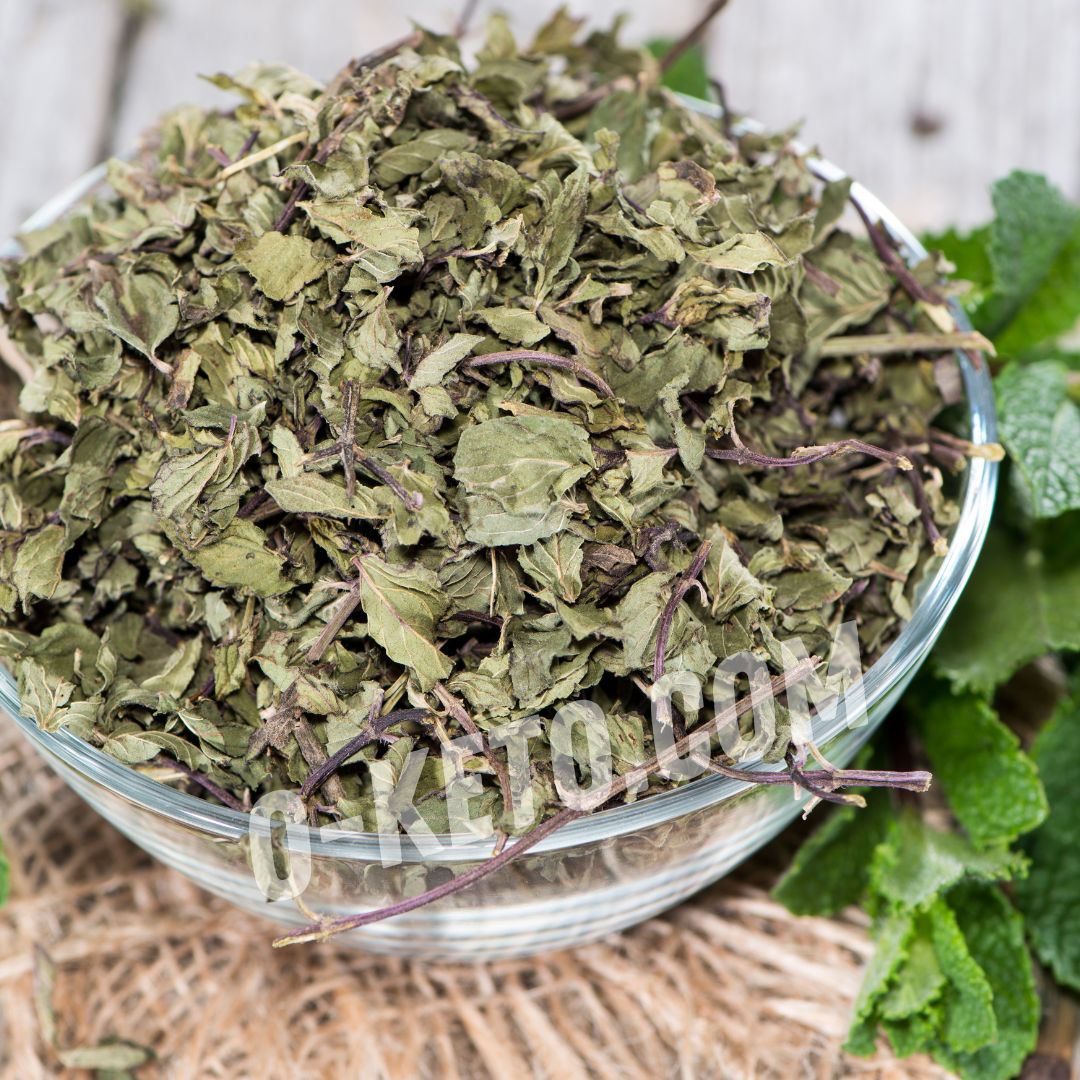

Dried peppermint is dried Mentha piperita leaf with a bright cooling menthol aroma. Unlike fresh herbs, it stores for a long time, takes little space, and quickly releases flavor into hot water, sauces, marinades, and desserts. It is used as a tea herb, a kitchen spice, and an aromatic addition.
Peppermint differs from milder garden mints by its sharper, cooler, slightly bitter profile. It is good where a clean mint accent is needed, but it can easily overpower delicate foods. In keto cooking, it is a convenient way to add a fresh impression without sugar, syrups, or fruit juices.
Nutrition
Per 100 g, dried mint tables show plenty of fiber and carbohydrates, some protein, minerals, and aromatic compounds. But such a portion is almost impossible in real food: usually 0.5-2 g is used for a cup of tea or a pinch in a dish. The contribution to calories and carbohydrates is therefore minimal.
The main role is not macronutrients but essential oil with menthol and other volatile compounds. They provide the cooling taste and strong aroma. During long storage, aroma gradually fades even if the leaves still look normal, so old mint may taste almost flat.
Place in keto and LCHF
Dried peppermint itself fits keto and LCHF: portions are tiny, it contains no sugar, and the glycemic load is practically negligible. It works well in unsweetened tea, cold drinks with lemon, desserts with cream, cottage cheese, mascarpone, chia, cocoa, and coconut milk.
Ready mixes need checking. Mint tea with fruit pieces, drink powders, syrups, candies, chocolate mixes, and flavored lattes often contain sugar, maltodextrin, or starch. If you want a low-carb mint product, choose plain dried leaves without additions.
How to use
For tea, use about a teaspoon of dried mint per cup, pour hot water over it, and steep for 5-10 minutes. Long boiling is not needed: the aroma becomes rougher and extra bitterness may appear. For a cold drink, chill the infusion and mix it with ice, lemon, cucumber, or sugar-free sparkling water.
In food, mint pairs with lamb, cucumber, plain yogurt, feta, zucchini, eggplant, cauliflower, lemon, lime, cocoa, vanilla, and small portions of berries. It is added to yogurt or sour cream sauces, marinades, salads, low-carb desserts, and chocolate creams.
How to choose
The leaves should be green or gray-green, with a clean mint smell. Very brown color, dust, mustiness, hay-like odor, or mold notes point to old or poorly dried material. Whole or coarsely cut leaves often keep aroma better than fine dust in bags.
If mint is bought as tea, check for sugar, candied fruit, flavorings, and sour fruit additions. For cooking, plain peppermint is easier: it is simpler to dose and the flavor is more predictable.
Limits
Mint does not suit everyone in large amounts. In some people, strong mint infusion may worsen heartburn or discomfort with reflux. Caution is sensible with individual reactions to menthol and essential oils. Concentrated mint products for children should be used only with age and professional guidance in mind.
Peppermint should not be treated as a replacement for care for pain, colds, anxiety, or digestive problems. In the diet, it is an aromatic herb: it makes drinks and dishes brighter and can reduce the desire for a sweet flavor, but it does not solve medical tasks.
Storage and substitutes
Store dried mint in a tightly closed jar, in a dark dry cupboard, away from the stove, sunlight, and humidity. Do not keep it next to coffee, spices, or strongly scented foods: the leaves absorb odors quickly. If the aroma has become weak, use the mint in larger culinary blends or replace it with fresh leaves.
The closest substitute is fresh peppermint, though more volume is needed. For a softer taste, use spearmint, lemon balm, lemon verbena, basil in selected recipes, or lemon zest. For chocolate desserts, sugar-free mint extract can be used, but it should be dosed by drops.


