


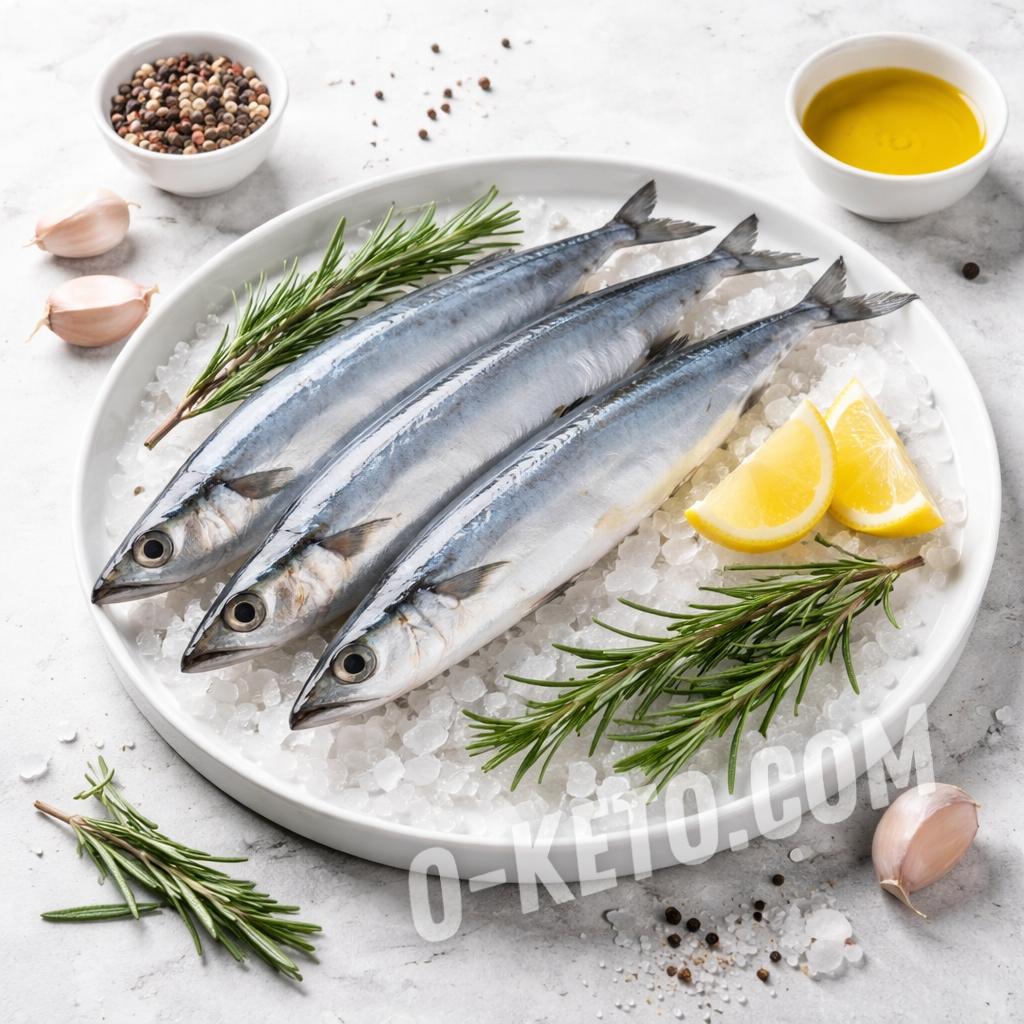

Pacific saury is a small marine fish with an elongated body, silver skin, and a rich flavor. The name usually refers to the Pacific species caught near Japan, Korea, China, and the Russian Far East. It is fattier than many white fish, so even a simple serving with salt, lemon, and herbs tastes expressive.
In cooking, saury can be prepared whole, filleted, added to salads, fish soups, spreads, and cold appetizers. In Japan it is often cooked on a grill and served with daikon and citrus. In Eastern European kitchens, canned saury is familiar in salads and soups; it is convenient, but its salt level and flavor differ greatly from fresh or frozen fish.
Nutrition
Saury contains complete fish protein, fat, vitamin D, vitamin B12, iodine, selenium, and phosphorus. In 100 g there are usually about 200-250 kcal, 20-25 g of protein, 10-18 g of fat, and 0 g of carbohydrates. Exact values depend on season, fish size, and preparation method: autumn fish is often fattier, while canned fish in oil brings more calories.
Fat is a major part of saury’s flavor. It is not as neutral as cod or pollock, but it handles grilling, oven cooking, acidic sauces, and spices better. If the fish tastes too intense, balance it with lemon juice, radish, cucumber, herbs, a vinegar dressing, or sugar-free pickled vegetables.
The bones of a small saury are thin, but they still matter when the fish is served whole. For children, salads, and spreads, it is better to separate the flesh carefully with a fork. In canned fish, some small bones may become soft, but the backbone and firmer pieces should be removed if a delicate texture is wanted.
Keto and LCHF
Saury fits keto and LCHF macros well: the fish has no carbohydrates, enough protein, and more fat than many white fish. It can be the center of a meal with salad, low-starch vegetables, avocado, olive oil, or a sour cream sauce without sugar.
The main thing is to check not only the fish but what comes with it. Canned fish in tomato sauce may contain sugar or starch, prepared salads often include potato, rice, or sweet dressing, and breading changes the dish completely. For strict tracking, choose fresh, frozen, or canned saury in water, oil, or brine with a clear ingredient list.
How to choose
Fresh saury should smell clean and marine, not sharply fishy. The skin should be shiny, the eyes not cloudy, and the belly free from tears and sticky slime. For frozen fish, look for intact glazing, no yellow fat spots, and no dry white patches. If the fish looks dried out, the cooked texture will be flat and tough.
For canned saury, check the ingredients, production date, salt level, and packing liquid. The can should not be swollen, rusty, or heavily dented. After opening, the fish should smell clean, without metallic bitterness or mustiness. If it is packed in oil, remember that part of the calories comes from the oil, not only from the fish.
How to cook it
Saury handles short, intense cooking well. A whole fish can be rubbed with salt, pepper, and a little oil, then cooked in the oven or on a grill. The skin becomes aromatic, while the fat under it keeps the flesh juicy. To soften the smell, add lemon, ginger, green onion, parsley, or a little sugar-free soy sauce.
For salads, canned saury should not be mashed into paste. Larger pieces give a better texture. It pairs with egg, cucumber, celery, green onion, lettuce, avocado, and sugar-free mayonnaise. In soups, add saury near the end so the fish does not fall apart completely and does not make the broth too heavy.
Storage and substitutes
Fresh fish is best cooked on the day of purchase. If it needs to wait, keep it in the coldest part of the refrigerator and do not leave it sitting in extra liquid. Thaw frozen saury in the refrigerator, not in warm water. Move opened canned fish to a glass or food-safe container and eat it soon.
Saury can be replaced with mackerel, sardines, herring, horse mackerel, or another fatty sea fish. Sardines and mackerel are closest for salads; mackerel and horse mackerel are good for grilling. White fish gives less fat and a calmer flavor, so sauces and sides need to be adjusted.
If the fish is needed for soup, choose a species with firm flesh and add it after the vegetables. For a cold appetizer, clean aroma and neat pieces matter more, so a can packed in water or brine is often easier to use than one in a thick sauce.


