


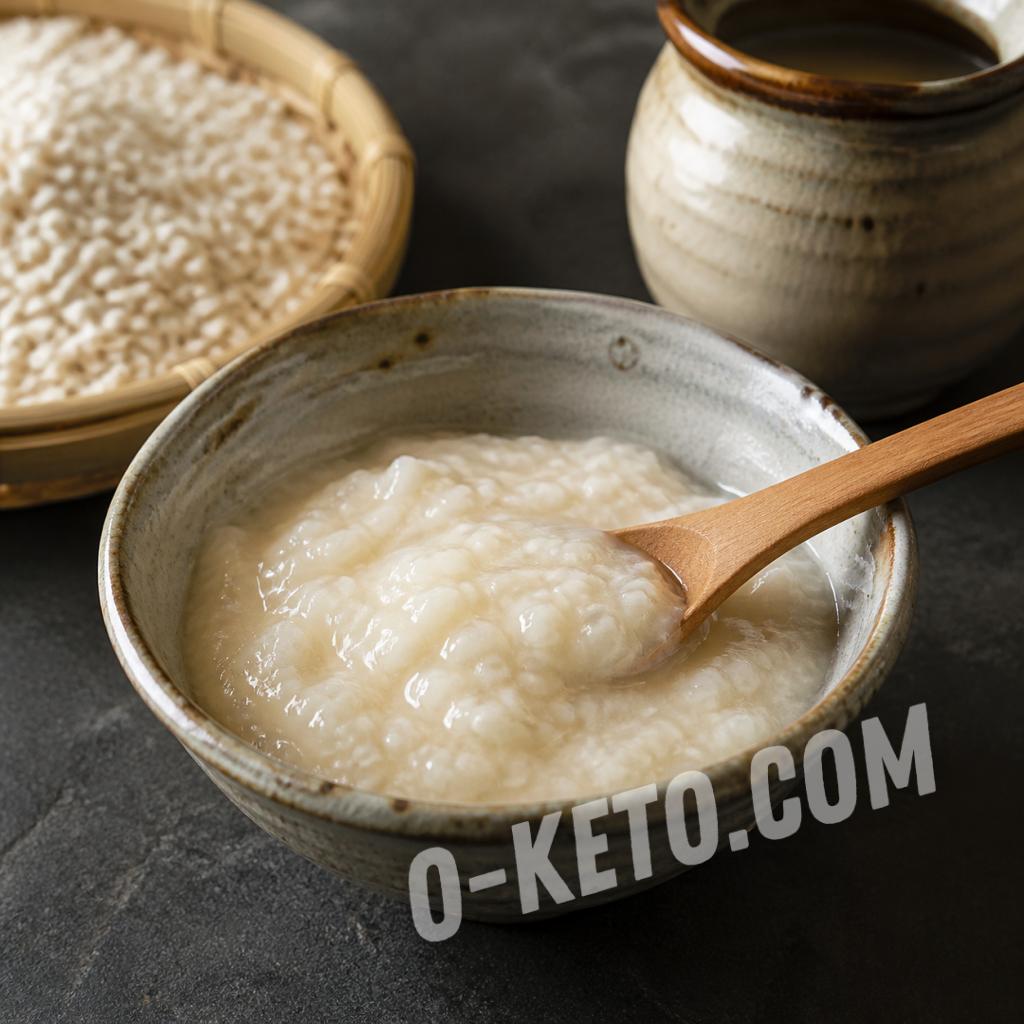

Shio koji is a Japanese fermented seasoning made from rice koji, salt, and water. It may be sold as a liquid, a smooth paste, or a mixture that still contains softened rice grains. Its flavor combines saltiness, gentle sweetness, and pronounced umami. It is not simply salt and it is not a finished sauce: fermentation creates a distinct aroma and may leave active enzymes in the product, so a small amount can noticeably affect both flavor and the surface texture of food.
What it is
Koji is grain cultivated with Aspergillus oryzae. To make shio koji, rice koji is combined with water and salt and allowed to mature. Enzymes gradually break down starches and proteins, which makes the mixture more aromatic and savory. Some products retain visible rice particles, while others are filtered into a pourable seasoning. The final nutrition profile depends on the rice-to-water ratio, salt level, fermentation time, temperature, and whether the product contains added sugar or other flavoring ingredients.
Flavor and culinary role
Shio koji is best understood as a fermented salty base. It can serve as a marinade, a finishing seasoning, or an ingredient in a dressing, soup, or sauce. Unlike plain salt, it contributes rice-derived carbohydrate, amino acids, fermentation acids, and a rounded savory aroma. It should therefore be added gradually rather than substituted gram-for-gram for salt without tasting. One bottle may smell delicate and rice-like, while another may be more yeasty, fruity, or tangy. Those differences are normal consequences of formulation and maturation.
How to use it
For fish and seafood, spread a thin layer over the food and marinate it in the refrigerator for a short period, then wipe away excess before cooking. With chicken, pork, or other meat, it can deepen savory flavor and soften the outer surface during marination. Vegetables can be tossed with a small amount before roasting or used in a warm dressing. In soups and sauces, add it near the end so that the salt level is easier to control. Heat reduces enzyme activity, but the umami character remains. Always account for the seasoning already present in the rest of the recipe.
Keto and carbohydrates
Shio koji should not automatically be treated as a zero-carbohydrate condiment. The rice base is partly converted into simpler sugars during fermentation, and labels may list both total carbohydrate and sugars. The reference values used for this card are an approximate profile for a salted fermented rice seasoning, not a universal promise for every jar. A teaspoon or a small measured spoon contains much less carbohydrate than 100 g, but strict keto users still need to count the actual serving and read the label. Added sugar, syrup, or starch can materially change its suitability.
How to choose
Check the percentage of rice koji, the salt content, and whether sugar has been added. A short ingredient list and a clearly stated net weight make home calculations easier. The label should make clear whether the product is a paste, a liquid, or a filtered seasoning because water and retained rice particles change the values per 100 g. If soy is a concern, avoid blends that also contain soy sauce or miso. People who are sensitive to fermented foods should begin with a small portion and assess tolerance before using it as a regular marinade.
Limitations
The main practical limitation is sodium. Shio koji can make a dish salty quickly when combined with soy sauce, fish sauce, cheese, cured ingredients, or salted stock. Anyone limiting sodium should evaluate the complete meal rather than the seasoning in isolation. The rice base also matters when carbohydrate intake must be tightly controlled. Fermentation does not make shio koji a medicine: it is a culinary tool that can improve flavor and texture, not a substitute for treatment or a varied diet.
Storage
Keep an unopened package according to the manufacturer’s instructions; some products are shelf-stable while others require refrigeration. Once opened, refrigerate shio koji, close the container firmly, and use a clean, dry spoon each time. If rice koji remains in the mixture, its aroma and texture may continue to evolve, becoming thicker or more tangy. Discard the product if the package swells, mold appears, the surface becomes slimy, or the smell turns putrid or sharply ammoniacal. Freezing is usually unnecessary and may separate the liquid from the solids after thawing.
Substitutes
In a marinade, shio koji can be replaced with measured salt plus a mild acid, although the characteristic rice umami will be missing. Light miso, fish sauce, or sugar-free soy sauce are closer in savory function, but they are not compositionally identical and may contain even more sodium. For a low-carbohydrate dish, choose the substitute by its label and by the nutrition of the whole recipe. If the goal is tenderness, time, temperature, and a suitable marinade can provide that result without trying to reproduce every enzymatic feature of shio koji.


