


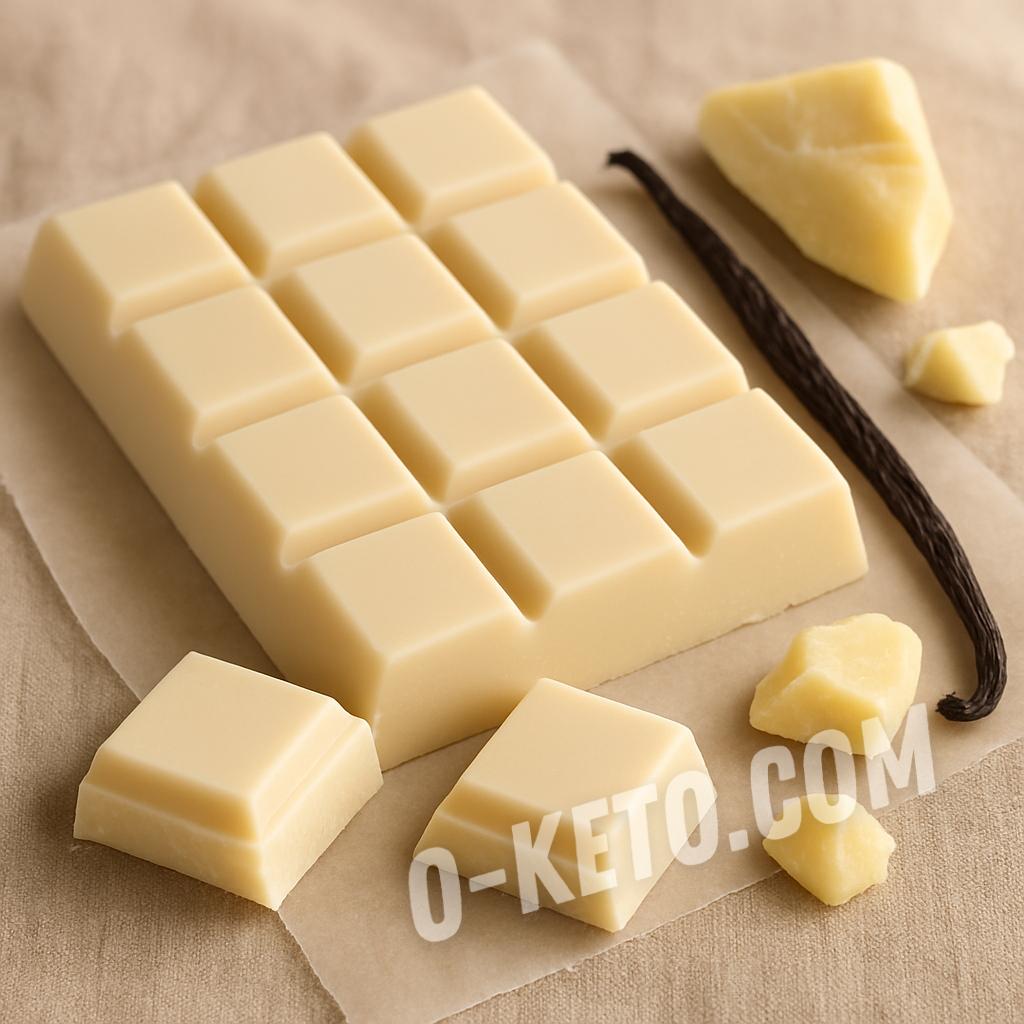

Sugar-free white chocolate is a bar or confectionery mass based on cocoa butter, milk solids, and a sweetener instead of ordinary sugar. Unlike dark chocolate, it contains no cocoa liquor, so the flavor is more creamy and vanilla-like and the color remains pale.
The phrase “sugar-free” does not automatically make it keto-friendly. Formulas may include maltitol, isomalt, polydextrose, inulin, milk powder, fiber, and fillers, so the carbohydrate profile must be judged from the label rather than front-pack marketing.
Nutrition
Sugar-free white chocolate is usually still calorie-dense and fatty because of cocoa butter, while carbohydrate load and net carbs depend strongly on the sweetener system and recipe. Some products fit moderate low-carb; others are too high in digestible carbs or poorly tolerated.
For keto, net carbs per realistic serving matter most. A few squares and a full bar are very different use cases.
How to Use
It can be used in glaze, ganache, sugar-free cheesecake, nut-butter bites, ice cream, and low-carb candy. It pairs with vanilla, coconut, almond, lemon zest, matcha, and small amounts of berries.
White chocolate is more heat-sensitive than dark chocolate, so gentle melting works best to avoid a grainy texture.
Choosing and Storage
Choose a product with a clear nutrition panel and no hidden sugar. If maltitol is the main sweetener, it is usually not the best option for strict keto.
Store in a cool dry place away from sunlight and odors. White bloom may be fat or sugar bloom and is not always unsafe, but texture and flavor worsen.


