


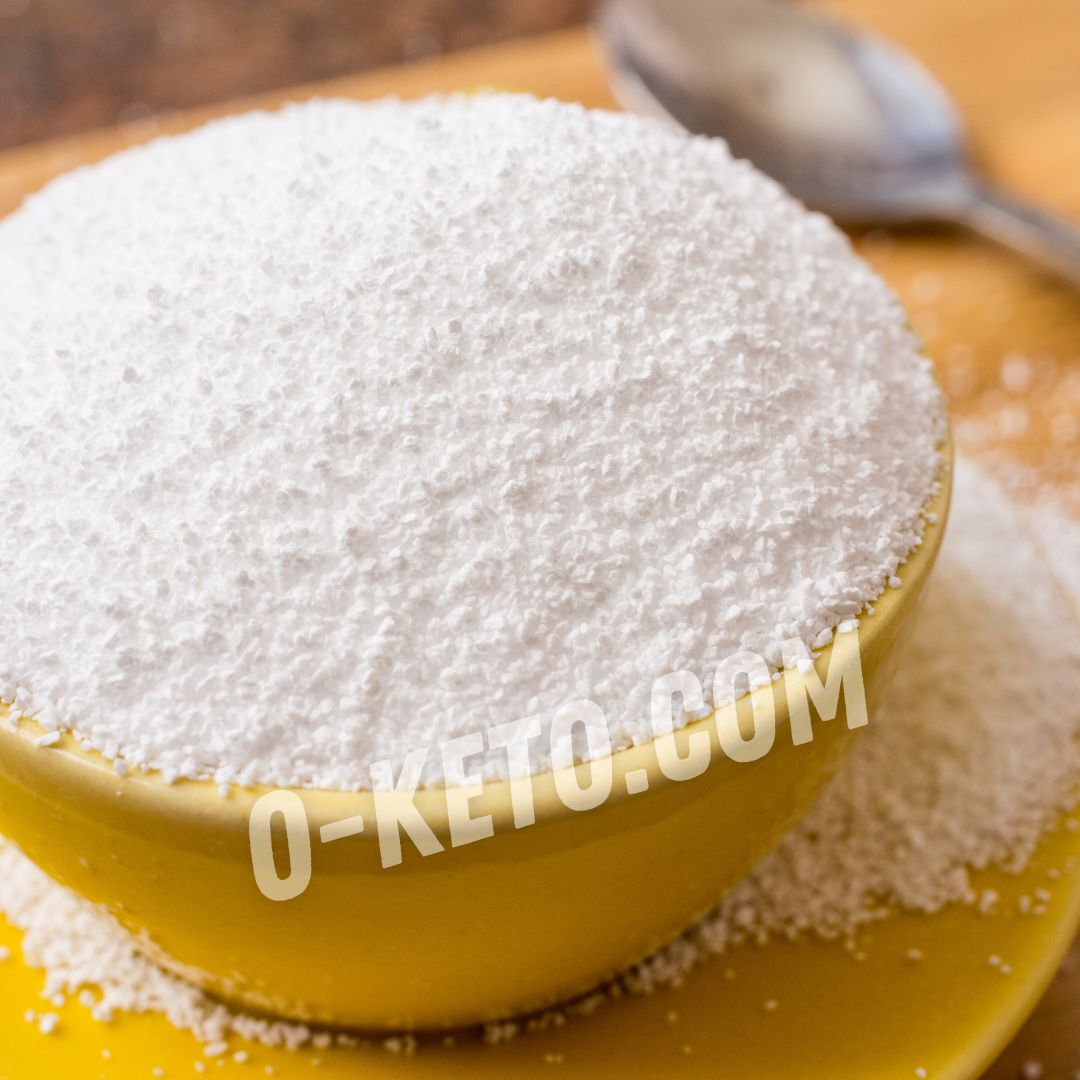

Sorbitol is a sugar alcohol, or polyol, used as a sweetener, moisture-retaining ingredient and texture additive in products without ordinary sugar. It occurs in some fruits and berries, and industrially it is often made from glucose by hydrogenation. Sorbitol is less sweet than sugar, so recipes and products may use more of it than the taste suggests.
One gram of sorbitol provides about 2.6 kcal. Its glycemic index is often listed around 9, lower than sugar but not zero. Carbohydrates on labels may be listed as polyols, and the response depends on portion, product form and individual tolerance. For keto, sorbitol needs counting, not automatic trust in “sugar-free” wording.
Nutrition
Sorbitol contains no protein or fat. Its role is sweetness, calories and technological behavior: it retains moisture, can give a softer texture, reduce crystallization and add bulk. That is why it appears in sugar-free candies, chewing gum, syrups, diabetic-style products, lozenges, sauces and some desserts.
A low glycemic index does not mean every product with sorbitol fits strict keto. If the same ingredient list includes flour, starch, fruit concentrates, maltodextrin or other sweeteners, the final carbohydrate load can still be meaningful. In addition, a large portion of polyols is often unpleasant for digestion.
Is It Keto-Friendly?
In small amounts, sorbitol may fit a low-carb diet, but it is not the most convenient sweetener for strict keto. It has calories, partly available carbohydrates and less sweetness than sugar. As a result, more may be added to reach the desired taste, increasing the total load unnoticed.
It is more practical to treat sorbitol as an occasional additive in small doses. If the goal is a more predictable keto sweetener, erythritol, stevia, monk fruit or blends without sugar and maltodextrin are often easier. Even those should be checked by ingredient list because the front label does not always show the whole formula.
How to Use It
In home cooking, sorbitol should be used carefully. It gives mild sweetness, retains moisture and can change the texture of baking or creams. It is not equal to sugar in sweetness or behavior. If sugar is replaced one to one, the taste may be weaker and the polyol portion higher than intended.
Practical options include:
- a small amount in a cold dessert without flour;
- checking sugar-free candies by the full label;
- using it in a blend with a stronger sweetener;
- testing from a small portion if digestion is sensitive;
- counting calories and polyols if the product is eaten often.
Limits
The main limit of sorbitol is tolerance. Excessive intake may cause bloating, rumbling, cramps, loose stool and general discomfort. This is especially likely after eating many sugar-free candies, cookies or syrups at once. Children and people with sensitive digestion need particular caution with such products.
Sorbitol may also be inconvenient for people who do not tolerate polyols well or follow a low-FODMAP diet. If a product causes clear discomfort, choose another sweetener or reduce the serving to a minimum. For occasional use, start with a small amount rather than the full recipe portion.
How to Choose and Substitute
On the label, check not only “sorbitol” but the full ingredient list. Sugar, syrups, starch, flour, maltodextrin, sweet fruit fillings and large amounts of other polyols are undesirable for strict keto. In gum or lozenges the amount is usually small, while desserts and candies can contain much more.
Sorbitol can be replaced with erythritol, stevia, monk fruit, allulose where available or sugar-free sweetener blends. For texture in baking, separate tools may be needed: psyllium, eggs, cream cheese, gelatin or reducing liquid. The replacement depends on the recipe because sorbitol adds both sweetness and moisture.
Practical Tolerance Threshold
With sorbitol, sweetness is not the only issue; the total daily dose matters. A few lozenges, chewing gum, a “sugar-free” dessert and syrup can add up to one large polyol portion even when each product seems small on its own. For sensitive digestion, count not only carbohydrates but also how many sorbitol-containing products appear during the day.
In recipes, it is better added gradually: start with a small part of the planned amount, then judge flavor and texture. If stronger sweetness is needed, a little stevia or monk fruit is often easier, while sorbitol can remain for softness and moisture. This reduces the chance of using too many polyols just to reach the desired taste.
Substitution options in recipes
Erythritol. Plus 0.02% stevia. Erythritol is less sweet and slightly "cools" the tongue; stevia compensates for the sweetness without increasing calories. In caramel, erythritol crystallizes—do not use for toffees.


