


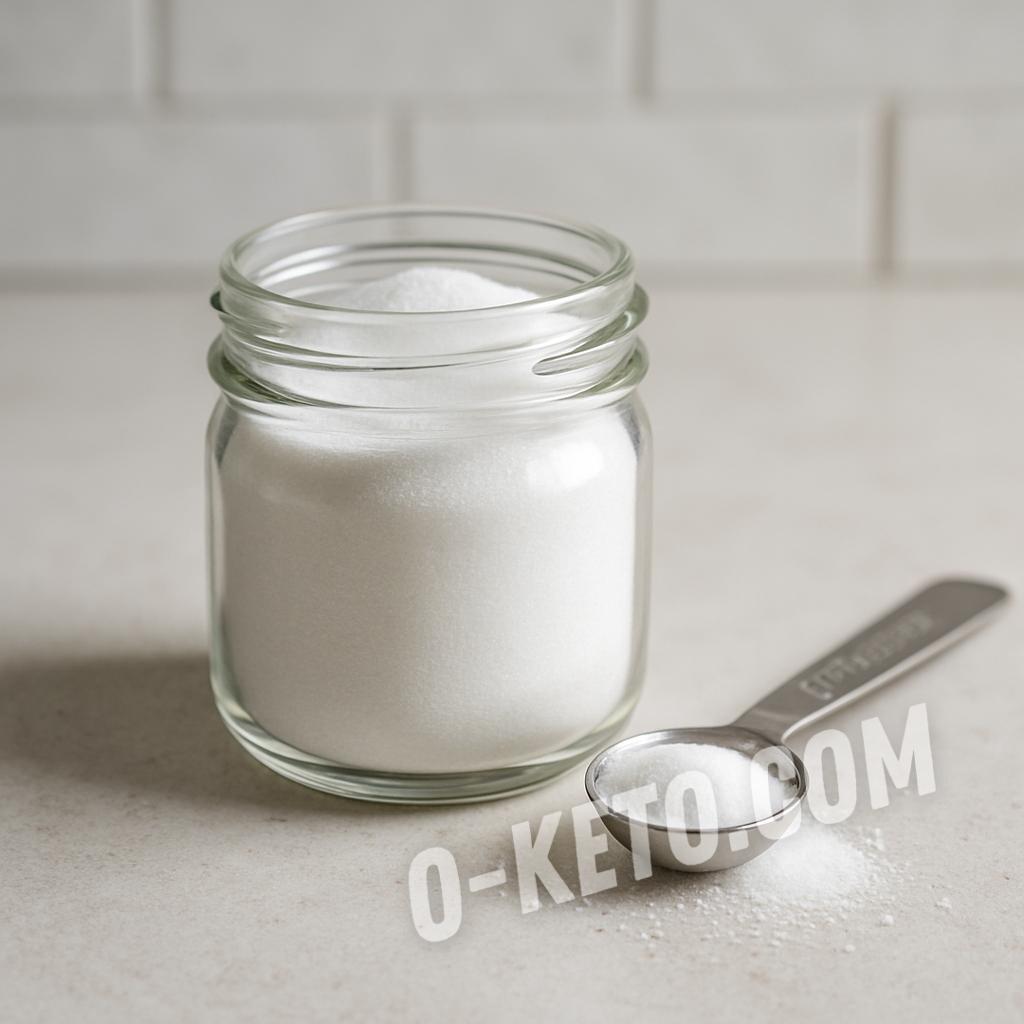

Saccharin is an intense artificial sweetener. It is far sweeter than sugar, so it is used in microdoses and contributes almost no calories. It is added to sugar-substitute tablets, drinks, desserts, some reduced-calorie products, and pharmaceutical forms when sweetness is needed without ordinary sucrose.
For keto, saccharin is interesting because it does not contain meaningful net carbohydrates by itself and is not used as the nutritional base of a dish. But the assessment should be made for the exact product, not only for the sweetener molecule: tablets, powders, and packets often contain carriers, fillers, and taste regulators that can change the final calculation.
What it is
Saccharin was discovered in the late nineteenth century and became one of the first widely used sugar substitutes. Its popularity increased during periods when sugar was expensive or limited, and later alongside the growth of reduced-calorie drinks and foods. Today it is less common than sucralose, erythritol, or stevia, but it still appears in some sweetener blends.
By sweetness, saccharin is far stronger than sugar, so a small tablet or a pinch of powder can replace a spoonful of sugar in perceived sweetness. It does not, however, provide sugar’s bulk or texture. This matters in recipes: sugar does more than sweeten; it affects mass, browning, moisture, and structure, while saccharin only solves the sweetness part.
Nutritional value
Pure saccharin provides practically no energy, protein, fat, or net carbohydrates in the amounts used. The glycemic index of the substance itself is usually treated as zero. In a cup of tea or coffee, it almost does not change macronutrient calculations if added without carbohydrate carriers.
The main trap is the finished form. Tablets and powders may contain lactose, dextrose, maltodextrin, starch-based carriers, or other auxiliary ingredients. In one tablet, the contribution is small, but with frequent use or in desserts that require a lot of sweetener, those carbohydrates may be worth counting.
Is it suitable for keto?
Saccharin itself usually fits keto and LCHF because sweetness is achieved with a microdose. It does not replace food, does not provide satiety, and does not improve the overall composition of a diet, but it can help remove sugar from a drink or recipe. For strict keto, a form with minimal carriers and a clear ingredient list is preferable.
The behavior around sweet taste also matters. Some people include intense sweeteners without any issue. For others, they keep the habit of sweet drinks and desserts alive, make snacking more tempting, or make it harder to reduce cravings. This response is individual, so saccharin is best judged not only by nutrition numbers but also by its effect on appetite.
Taste and use
Saccharin has strong sweetness and can leave a metallic or bitter aftertaste. This is especially noticeable with too high a dose, in hot drinks, and in simple water-based mixtures. To soften the taste, saccharin is often blended with other sweeteners such as erythritol, cyclamate, sucralose, or stevia.
In drinks, saccharin is convenient: it dissolves well and is needed in a very small amount. In creams, sauces, and jellies, it should be used carefully so the sweetness does not become harsh. In baking, it does not behave like sugar: it does not add bulk, brown a crust, or hold moisture. For keto desserts, it is therefore more often combined with bulk sweeteners or used only to lift sweetness.
How to choose
When choosing saccharin, look at the form and the ingredient list. Tablets are convenient for drinks but often contain auxiliary ingredients. Powder is easier to use in recipes, but it is also easier to add too much. Liquid forms are convenient for drinks and sauces, but their composition should also be checked.
For a low-carb diet, choose a product with a clear dosage and a short list of ingredients. If dextrose or maltodextrin is present, that is not always critical, but such carriers should be counted when used regularly. A “sugar-free” label does not always mean every carbohydrate additive is absent.
Limitations
Saccharin is an approved sweetener, but that is not a reason to use it without limits. Moderation matters because of taste habits, individual tolerance, and possible auxiliary ingredients in the finished product. If drinks with saccharin increase the desire for sweet foods, it may be better to reduce frequency or try another sweetener.
Pregnant people, nursing parents, children, and anyone who has been advised to limit sweeteners should discuss regular use with a clinician. For an ordinary keto menu, saccharin is not required: it is a tool for occasional sweetening, not a foundation for desserts every day.
What to use instead
If the aftertaste is unpleasant, erythritol, allulose, stevia, sucralose, or blended sweeteners can be used. For drinks, liquid forms or tablets are often practical. For baking, sweeteners that add bulk work better: erythritol, allulose, or blends. For creams and sauces, the choice depends on whether only sweetness is needed or texture as well.
There is no single universal replacement because sweeteners differ in sweetness, aftertaste, bulk, heat behavior, and tolerance. In keto recipes, it is better to adjust gradually: first reduce the sugar, then choose the sweetener, and only after that correct the texture of the dish.


