


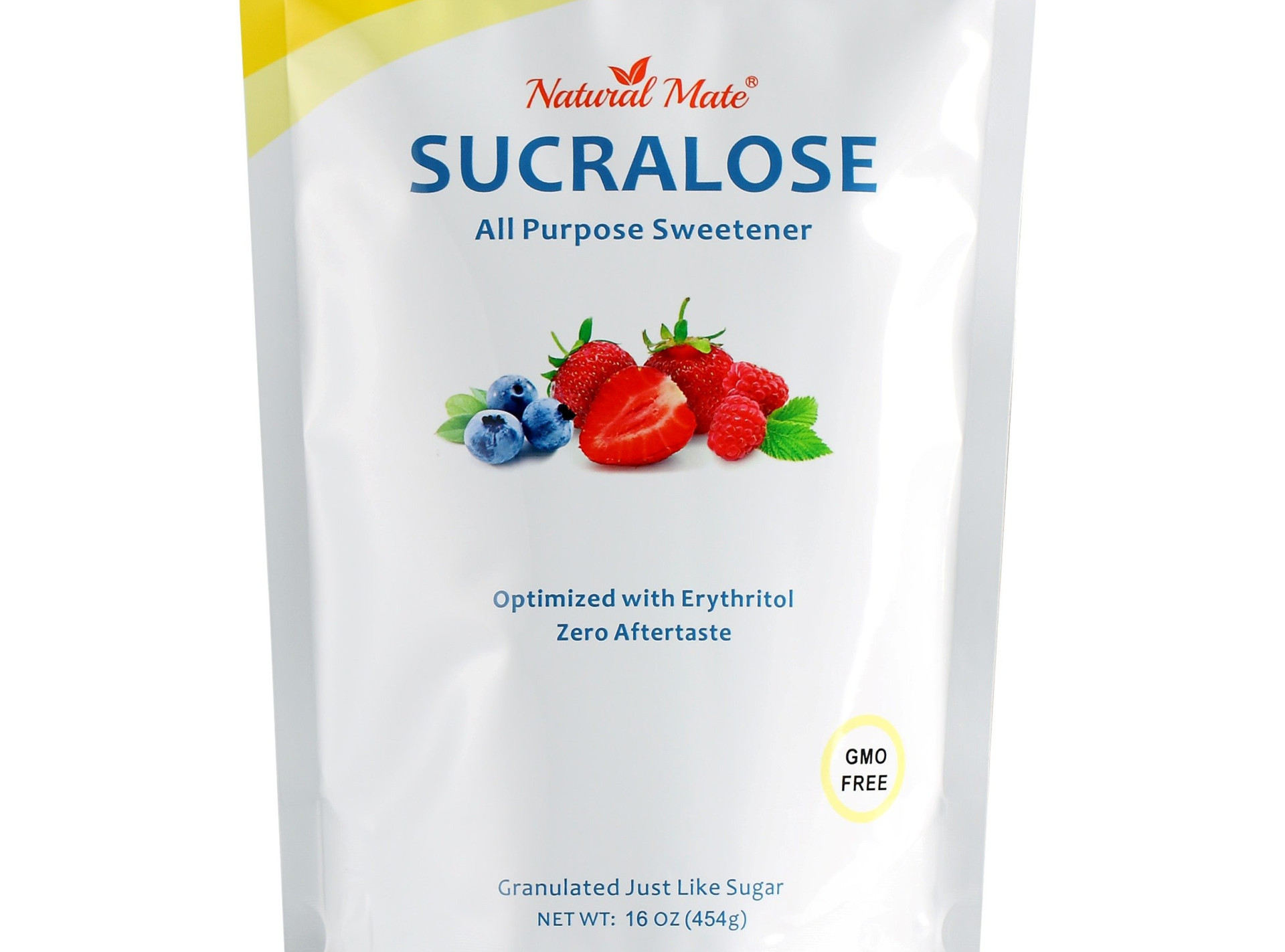

Sucralose is an intense sweetener made from sucrose by modifying the molecule: some hydroxyl groups are replaced with chlorine atoms. The substance was first discovered in 1976 and later became widely used in drinks, desserts, sauces, chewing gum, protein products, and tabletop sweeteners. Sucralose is many times sweeter than sugar, so in pure form it is used in microscopic amounts.
What is sold is usually not pure sucralose but a blend. Tablets, powders, and granules may contain erythritol, dextrose, maltodextrin, inulin, lactose, fibers, or other carriers so the product is easy to dose. For keto this is essential: sucralose itself adds almost no carbohydrates, but the carrier in the package can change the final numbers noticeably.
Nutrition
Pure sucralose is practically not used by the body as an energy source and is needed in a very small amount. In a real serving, calories and carbohydrates are therefore usually close to zero. But the table on the package may look different if the sweetener is mixed with a bulky filler. A spoon-for-spoon blend almost always contains more than sucralose.
The sweetness of sucralose is often described as close to sugar, without strong bitterness. Perception still differs: for some people the taste is clean, while others notice a flat sweet aftertaste. In dishes, this depends on dose, temperature, acidity, fat, cocoa, dairy ingredients, and combinations with other sweeteners.
Place in keto and LCHF
Sucralose can fit keto and LCHF if the product does not contain meaningful amounts of sugar, maltodextrin, or dextrose. For a drink, cream, or sauce, a very small dose is usually enough. In that format, it barely affects the carbohydrate limit and helps remove ordinary sugar from a recipe.
The main mistake is treating every product with sucralose as low-carb. A bar, yogurt, syrup, or drink may be sweetened with sucralose but still contain starch, flour, fruit concentrate, milk sugar, or other carbohydrates. Read the whole label, not only the “sugar-free” line.
How to use
Sucralose is convenient for cold drinks, coffee, tea, unsweetened cocoa, creams, jellies, yogurt sauces, and no-bake desserts. It can work in baking, but it does not replace sugar technologically. Sugar gives bulk, browning, moisture retention, and crust; sucralose gives only sweetness. The recipe therefore needs structure from almond or coconut flour, eggs, cream cheese, psyllium, erythritol, or other components.
It is better to start with less than the sugar-equivalent dose. Too much sucralose can give intrusive sweetness and an artificial profile. In desserts, it is often blended with erythritol, stevia, or allulose: the taste becomes rounder and each sweetener is used in a smaller amount.
How to choose
First check the form: drops, tablets, powder, granules, or ready syrup. Drops are usually easier to dose without carbohydrate carriers, but the ingredient list still matters. Tablets may contain lactose or other fillers. Spoon-for-spoon powders often contain a bulky component and are not always suitable for strict counting.
On the label, check carbohydrates per serving and per 100 g, the carrier list, and the presence of sugar, maltodextrin, dextrose, and flavorings. If the product is needed for heating, make sure the producer allows it. For drinks, liquid form is convenient; for creams and dry mixes, powder or a blend with erythritol is often easier.
Limits
Tolerance of sweeteners differs. Some people notice no issue with sucralose, while others may feel a stronger desire for sweet food, abdominal discomfort, or an unpleasant aftertaste. If a product makes you want more sweet food, reduce the dose or choose an unsweetened version of the dish.
Sucralose does not make the diet well built by itself. It helps remove sugar, but it does not replace real food and does not fix a dessert with a lot of flour or starch. For everyday meals, it is better kept as a tool for selected recipes rather than the main flavor in every meal.
Storage and substitutes
Store sucralose dry, tightly closed, away from steam and direct light. Keep drops according to the producer’s instructions; protect powders and tablets from humidity, otherwise they clump and become harder to dose. Do not pour the sweetener into an unlabeled jar: intense sweeteners are easy to confuse by dose.
Sucralose can be replaced with erythritol, stevia, allulose, an erythritol-stevia blend, or monk fruit if available. The replacement is not always equal: erythritol gives bulk and a cooling effect, stevia may taste bitter, and allulose behaves better for browning but has its own limits. In recipes, dose is adjusted by taste and by sugar’s role in texture.


