


E133 (a Brilliant Blue FCF)
A synthetic bright-blue dye that gives a clean blue shade; nutritionally it is most often a marker of sweet drinks, desserts and industrially designed foods.
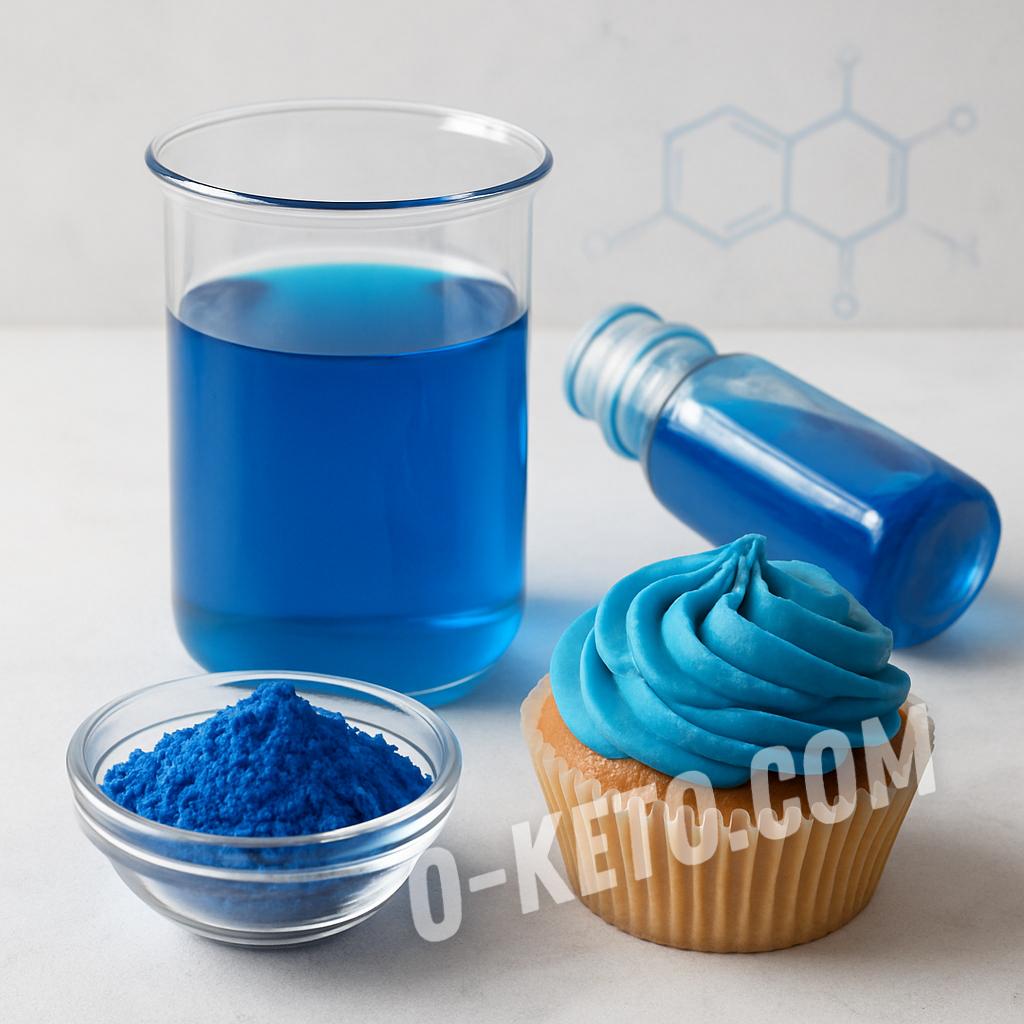
Brilliant Blue FCF, or E133, is a synthetic food colour with a clear, intense blue shade. It is used when a product needs to look blue, light blue, turquoise or green when combined with yellow dyes. Compared with many natural pigments, it behaves predictably in water-based systems and helps manufacturers obtain the same colour from one batch to the next.
Nutritionally, E133 is not a source of protein, fat, vitamins or carbohydrate. It is a technological additive for appearance. Yet appearance can influence eating behaviour. A bright blue drink, sweet, syrup, glaze or dessert looks playful and sweet before it is tasted. For someone trying to reduce cravings and move toward simpler low-carbohydrate meals, such products may be unhelpful not because of the dye alone, but because of the whole sensory design.
Where E133 is used
Brilliant Blue FCF can appear in coloured drinks, sports and energy drinks, jelly desserts, icing, candies, coated sweets, ice cream, decorative sprinkles, syrups, flavoured mixes and some pharmaceutical coatings. Sometimes it is not used to make a visibly blue product, but to create green shades together with a yellow dye. For that reason E133 may be present even in foods that do not look blue at first glance.
Simple home-cooked food almost never needs E133. When a meal is made from meat, fish, eggs, butter, vegetables, herbs, spices and natural dairy products, there is usually no technological reason to add a bright blue dye. Its presence therefore often points to industrial processing, standardised appearance and an attempt to make a product more visually attractive.
Safety assessment
EFSA established an acceptable daily intake for Brilliant Blue FCF of 6 mg per kilogram of body weight per day. This figure does not mean the additive is useful or desirable in the diet. It means an estimated level of chronic intake that, based on available data, should not pose an appreciable health risk. The assessment considered absorption, metabolism, chronic toxicity, carcinogenicity, reproductive toxicity and developmental toxicity studies.
With occasional intake of coloured foods, E133 is rarely the main nutritional issue. It becomes more relevant when children or adults drink bright beverages every day or frequently eat coloured sweets. Total exposure then comes together with acids, preservatives, sweeteners, flavourings and sometimes other dyes. The body does not respond to an isolated label code; it responds to the complete product and the pattern of use.
Relevance for low-carb eating
E133 does not raise carbohydrate content by itself. A product containing this dye could theoretically be low in carbohydrate if it has no sugar, starches or carbohydrate-heavy base. In practice, E133 is common in foods where carbohydrate or sweet taste is central: drinks, sweet syrups, jellies, dessert powders, candies and icing. Even when sugar is replaced by sweeteners, the product can keep the habit of seeking intense sweetness alive.
For LCHF, it is useful to assess not only the carbohydrate table but also the role of the product in the diet. A rare decorative detail is different from a daily sugar-free drink that replaces water, tea, mineral water or real food. In the second case the problem is broader: the person keeps training the palate toward bright sweet flavour while receiving little protein, minerals or satiety. The dye is not the main factor, but it is part of that pattern.
How it differs from natural blue colours
Blue colour in food is not automatically a problem. Blueberries, bilberries, red cabbage and some plant extracts can give blue, purple or reddish tones through anthocyanins. These pigments, however, depend strongly on pH, light and heat, so the shade may change. Brilliant Blue FCF is used because it is more stable and allows a controlled colour regardless of natural variation in raw materials.
This distinction helps when reading labels. A natural plant colour usually arrives with a food matrix: fibre, polyphenols, acids, minerals and the flavour of the plant itself. E133 adds colour only. It may be technologically convenient, but it does not make a product more nourishing and does not compensate for a sugar, syrup or starch base.
When limitation makes sense
Limiting E133 is reasonable when ultra-processed products dominate the diet, when a child consumes many bright drinks and sweets, when there is known sensitivity to food dyes or when symptoms repeatedly follow the same coloured products. This does not have to become a lifelong ban. Often it is enough to remove regular sources and observe whether cravings, skin, digestion, attention, energy or overall tolerance improve.
If a coloured product is kept in the diet, the better choice is one with a transparent ingredient list, no sugar, no syrups, no maltodextrin and no unnecessary mixture of additives. More reliably, the diet can be built around foods that do not need artificial colour: protein foods, natural fats, vegetables, herbs, fermented foods, spices and simple sauces. Then E133 becomes an occasional label detail rather than a daily part of eating.
If you have any questions about the term "E133 (a Brilliant Blue FCF)", you can ask them to AI. Please note, a low-cost OpenAI model is used. It may answer questions about disease treatment with errors!


 1 / 4
1 / 4 1 / 4
1 / 4

 1 / 4
1 / 4


