


E1422 (acetylated distarch adipate)
Acetylated distarch adipate tolerates acidity, freezing and reheating better than plain starch; for keto it signals processed starch-based texture.
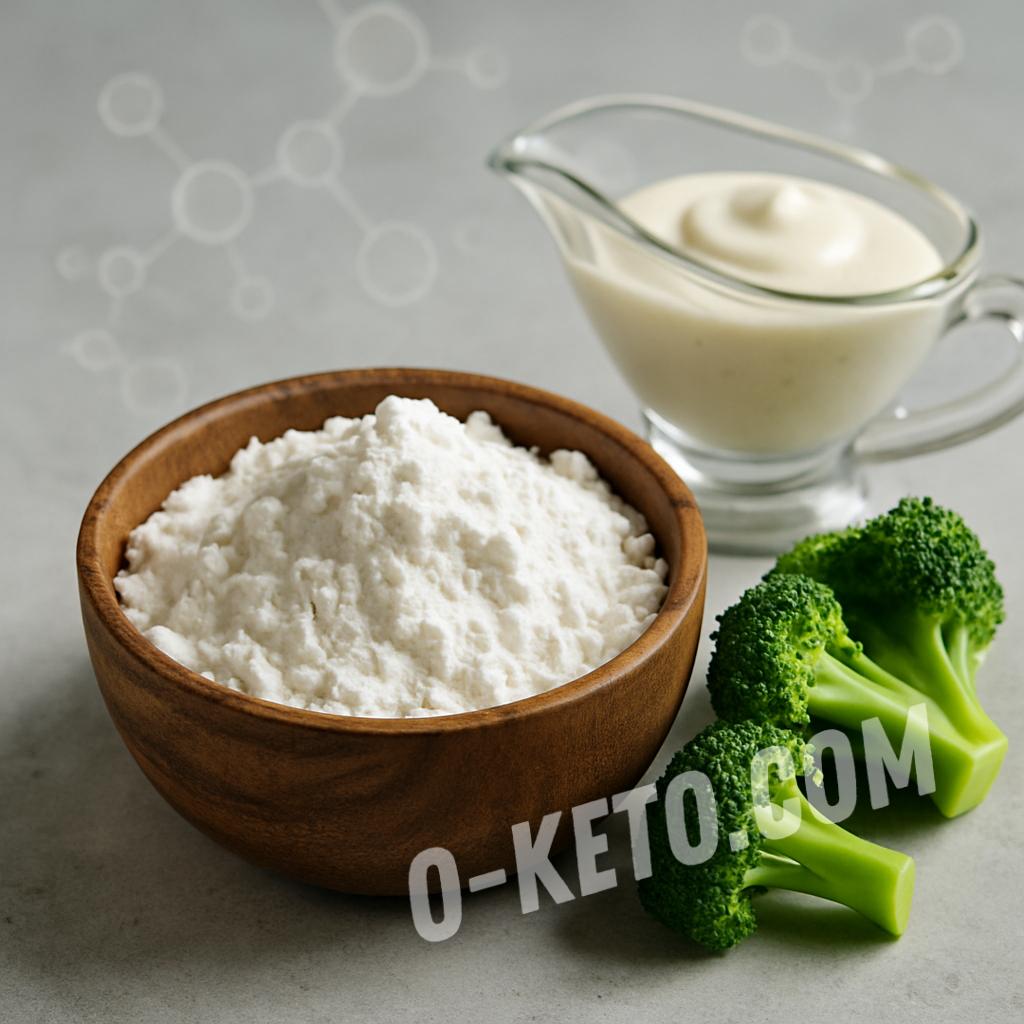
E1422 is acetylated distarch adipate. This modified starch combines two technological ideas: acetylation, which helps retain moisture and softness, and cross-linking with adipic acid, which makes the starch system more resistant to heat, acidity, mixing and freezing. E1422 is therefore often chosen for foods that must survive a complex industrial life without losing texture.
Plain starch can thicken a sauce in a pot, but it may not tolerate manufacturing, chilling, transport, freezing and reheating well. It can release water, become grainy, lose viscosity or separate. Acetylated distarch adipate is designed for these situations: it helps food remain thick, smooth and stable where ordinary starch would fail.
Why this starch is resistant
Acetyl groups reduce the tendency of a starch gel to firm up and release water over time. Adipate cross-linking strengthens the structure so it breaks down less under acidity, heat and mechanical stress. As a result, E1422 is suitable for acidic sauces, fruit fillings, frozen meals, creamy products and semi-finished foods that need to maintain quality through several processing stages.
This resistance does not make the ingredient nutritionally valuable. It is not protein, beneficial fat, a vitamin or dietary fiber. It is a technological starch that helps processed food be convenient, attractive and predictable. From a health perspective, the more important question is how often foods built on such stabilizers appear in the diet.
Where E1422 appears
E1422 may be found in frozen ready meals, sauces, mayonnaise-style and creamy products, fruit fillings, dessert bases, soups, meat and fish semi-finished foods, microwave products and some low-calorie items. It is useful where acidity, water, fat, heat and storage are present. Its task is not flavor but stable structure.
If E1422 appears near the beginning or middle of a thick product’s ingredient list, it may be responsible for a significant part of the texture. Then it is not a harmless trace line but one element of the carbohydrate construction. If the code appears at the end of a small portion seasoning, the effect may be limited. The number, position in the list, serving size and neighboring carbohydrates all matter.
Keto and LCHF context
For keto, E1422 is especially important in foods that imitate familiar starch softness without obvious sugar. The package may say sugar free or light, but texture may come from modified starches, syrups, fillers and emulsifiers. Such a product may interfere with ketosis or glucose control not because of sweet taste, but because of the total carbohydrate base.
In LCHF, trace amounts may fit if the serving is small and the diet is otherwise controlled. Daily ready-made sauces, frozen meals and creamy desserts with E1422 can quietly bring starch back into the diet. For someone with insulin resistance, diabetes or frequent cravings, this may matter more than the small line on the ingredient list suggests.
Tolerance and practical choice
Most people tolerate food-use amounts of E1422 without obvious problems, but finished foods containing it are often compositionally complex. They may contain fats, salt, acids, sweeteners, polyols, flavors and other thickeners. If heaviness, bloating, sleepiness or quick hunger appears after such food, it is better to evaluate the whole processed-food category rather than one code.
For celiac disease and wheat allergy, the starch source should be checked because E1422 does not reveal the original plant. In practical low-carb cooking, simpler stabilizers are more transparent: gelatin, egg yolk, cream, cheese, reduction or puree from low-carb vegetables. They do not always reproduce industrial smoothness, but they give a clearer ingredient list and fit carbohydrate control more easily.
E1422 is also common in microwave and frozen products, where convenience depends on a sauce, coating or creamy base. If that base forms much of the portion, modified starch is no longer a tiny technical detail. It becomes part of the food structure that should be counted as carbohydrate texture, especially when the product is eaten often.
If you have any questions about the term "E1422 (acetylated distarch adipate)", you can ask them to AI. Please note, a low-cost OpenAI model is used. It may answer questions about disease treatment with errors!


