


Follicle-stimulating hormone
FSH is a gonadotropic hormone produced by the pituitary gland that regulates follicle maturation in women and supports spermatogenesis in men, which is why it is evaluated in the context of fertility, cycle, and gonadal function. It cannot be interpreted by a single number: its value depends on sex, age, cycle phase, menopause, and neighboring hormones, primarily LH, estradiol, testosterone, and inhibin.
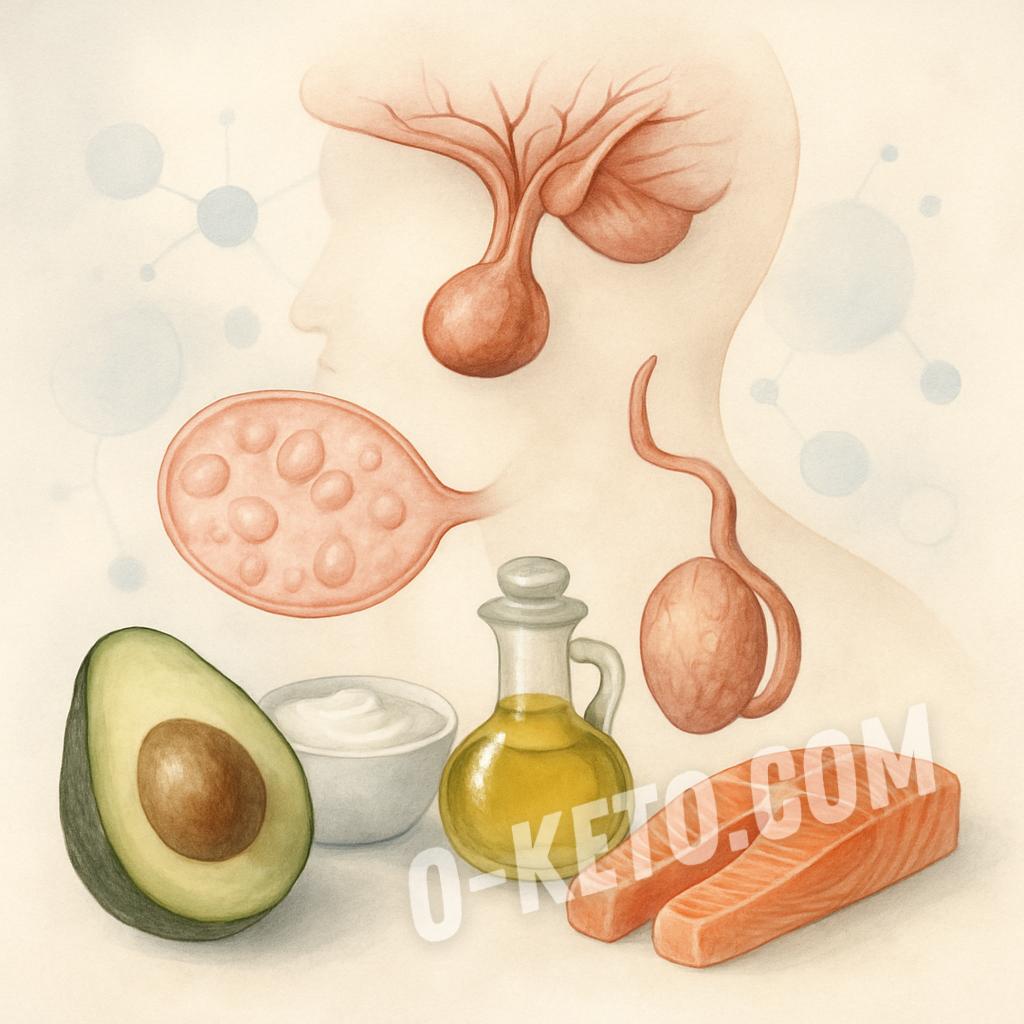
Follicle-stimulating hormone, or FSH, is a gonadotropic hormone produced by the pituitary gland that plays a role in regulating the reproductive system in both women and men. Despite its name, it is not limited to just follicles. In women, FSH is associated with the growth and maturation of follicles in the ovaries, while in men, it supports spermatogenesis through Sertoli cells. Therefore, its analysis is important not in isolation but as part of the discussion about the functioning of the pituitary gland, ovaries, or testes, and the entire hypothalamus-pituitary-gonadal axis.
The most common mistake is trying to understand the significance of FSH from a single number without considering gender, age, cycle phase, and neighboring hormones. For a woman of reproductive age, for a woman in perimenopause, and for a man, the same number can mean completely different things. Therefore, FSH is an interpretive hormone. It becomes useful when read alongside LH, estradiol, progesterone, prolactin, AMH, testosterone, inhibin, clinical picture, and the purpose of the examination.
How FSH Works in Women
In women, FSH stimulates the growth and maturation of follicles in the ovaries, especially in the first phase of the menstrual cycle. As the follicle develops, the production of estradiol changes, and then other regulatory signals, including LH, come into play. Without normal interaction between these hormones, full ovulation and an adequate cycle become less likely.
This is why FSH analysis is often prescribed for cycle irregularities, difficulties with conception, suspicion of decreased ovarian reserve, early ovarian function failure, or during the transition to menopause. However, a high or low FSH level alone does not provide a definitive diagnosis. It only suggests where the problem may lie: at the level of the ovaries, regulation by the pituitary gland, or the overall endocrine context.
How FSH Works in Men
In men, FSH affects Sertoli cells and participates in supporting normal spermatogenesis. It is not the only determining hormone of male fertility, but without it, the full maturation of sperm is hindered. This is why it is studied in cases of reduced fertility, changes in sperm analysis, suspicion of testicular damage, or pituitary disorders.
Here, as in women, it is important to avoid simplifications. One cannot look only at FSH without considering total and free testosterone, LH, sometimes prolactin, and the clinical picture. Elevated FSH in a man may suggest that the testes are not functioning efficiently and the pituitary is trying to compensate for this. Conversely, a low or unjustifiably normal level with pronounced symptoms may lead one to think of a central cause at the level of the pituitary or hypothalamus.
What Affects the Test Results
In women, the day of the menstrual cycle is crucial. The same indicator in the early follicular phase and closer to ovulation will be interpreted differently. Age, approaching menopause, hormonal medication use, significant energy deficiency, stress, rapid weight loss, and certain chronic diseases also play a role. Therefore, taking FSH “any day it works” is a bad idea if the goal is precise endocrine interpretation.
In men, there are no cycle fluctuations, but the value still depends on the overall state of the hypothalamus-pituitary-gonadal axis, medications, chronic diseases, obesity, energy deficiency, and sometimes pronounced systemic stress. Although FSH is not one of the most labile hormones throughout the day, it is still beneficial to take the test under adequate conditions and not to interpret it in isolation from other data.
When FSH is Elevated
Elevated FSH often indicates that the pituitary is trying harder to stimulate the gonads, but the ovaries or testes are responding inadequately. In women, this can occur with decreased ovarian reserve, ovarian function failure, transition to menopause, or after certain damaging factors. In men, it can occur with primary testicular damage, certain genetic conditions, or the consequences of toxic, inflammatory, or other damage to the gonads.
However, high FSH should not be automatically interpreted as an absolute impossibility of fertility or as a disaster. It requires context: age, clinical task, other hormones, ultrasound findings, sperm analysis, and medical history. Sometimes it indeed reflects a serious decrease in gonadal function, while at other times it is part of expected age-related dynamics.
When FSH is Low
Low or unjustifiably normal FSH occurs when the central regulation of the hypothalamus-pituitary-gonadal axis is not functioning actively enough. This can happen in hypogonadotropic conditions, significant energy deficiency, severe stress, rapid weight loss, hyperprolactinemia, certain pituitary diseases, and due to some medication effects. In women, this may be accompanied by infrequent menstruation or their absence; in men, by reduced libido, testosterone, and impaired spermatogenesis.
This is where it becomes clear why FSH cannot be read in isolation. A low level in a very thin woman with amenorrhea and in a man with a pituitary tumor are different stories, even though the numbers in the analysis may be formally similar. Interpretation always relies on the overall clinical scenario.
How to Read FSH Alongside Other Hormones
FSH is most useful when compared with LH, estradiol, progesterone, prolactin, AMH, and ultrasound in women or with testosterone, LH, and sperm analysis in men. For example, the combination of high FSH and low ovarian or testicular function will be interpreted differently than the combination of low FSH with low sex hormone. It is often the ratios and context that provide more meaning than a single number.
If the test is done without understanding the day of the cycle, without describing symptoms, and without neighboring hormones, it quickly becomes a source of unnecessary anxiety. However, if it is prescribed appropriately and read within the overall system, FSH becomes a very informative indicator that helps distinguish peripheral gonadal problems from central regulatory causes.
If you have any questions about the term "Follicle-stimulating hormone", you can ask them to AI. Please note, a low-cost OpenAI model is used. It may answer questions about disease treatment with errors!


