


Phylloquinone (vitamin K1)
Vitamin K1 from green leafy vegetables, required for normal blood clotting and vitamin-K-dependent proteins. In people using warfarin or other vitamin K antagonists, the key is not eliminating greens but keeping intake stable.
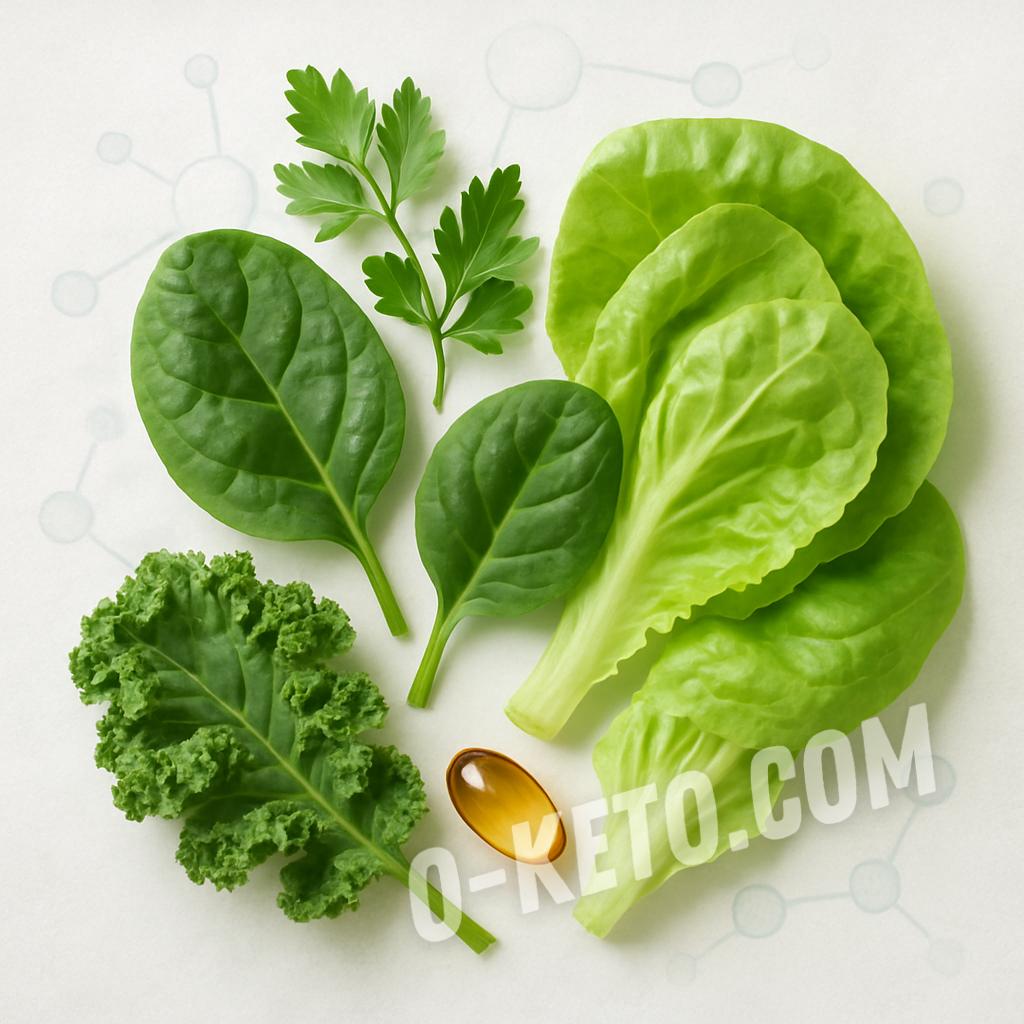
Phylloquinone is vitamin K1, the main dietary form of vitamin K from green plants. It is required for activation of blood-clotting proteins and other vitamin-K-dependent proteins. Without enough vitamin K, gamma-carboxylation is impaired, and these proteins bind calcium less effectively where they need to. Vitamin K is therefore linked not only with blood clotting, but also with bone, blood vessels, and calcium regulation.
Vitamin K exists in several forms. Phylloquinone, or K1, comes mainly from greens and vegetables. Menaquinones, or K2, are found in fermented foods, some animal foods, and are produced to a limited degree by the microbiota. K1 and K2 overlap in function, but they are not identical in sources, distribution, or circulation time.
Food sources of K1
Phylloquinone is abundant in spinach, kale, parsley, collards, lettuce, broccoli, Brussels sprouts, greens, herbs, and green vegetables. On keto and LCHF, these foods usually fit well because they provide vitamin K1, folate, magnesium, potassium, vitamin C, fiber, and polyphenols with moderate carbohydrate load. Absorption improves when greens are eaten with fat because vitamin K is fat-soluble.
This does not mean everyone should force huge portions of raw greens. In IBS, impaired bile flow, after intestinal surgery, or with poor tolerance of rough fiber, some sources can cause discomfort. Cooked vegetables, smaller portions, greens in sauces, or other tolerated options may work better than removing K1 from the diet entirely.
Clotting and anticoagulants
The most practical issue with phylloquinone is warfarin and other vitamin K antagonists. These medications work through the vitamin K system, so abrupt changes in green vegetable intake can change INR and shift bleeding or clotting risk. The goal is not to eliminate greens completely, but to keep vitamin K intake consistent so the medication dose can be adjusted to the usual diet.
If someone using warfarin suddenly starts drinking green smoothies, eating large amounts of kale, or taking vitamin K supplements, the medication effect may fall. If they abruptly stop their usual greens, risk can shift in the opposite direction. Diet, supplement, and weight changes should therefore be discussed with the clinician and INR monitored. Modern direct oral anticoagulants work differently, but medications should not be changed independently.
Bones, vessels, and calcium
Vitamin K participates in activation of osteocalcin and matrix Gla protein, which are linked with bone tissue and calcium regulation in blood vessels. K2 is often emphasized in this discussion, but K1 contributes to overall vitamin K status. No single K supplement should be promised to prevent osteoporosis or vascular calcification. Bone and vessel health also depend on vitamin D, calcium, magnesium, protein, loading, hormones, kidney function, inflammation, and medication.
With impaired bile flow, fat malabsorption, liver disease, long antibiotic use, bariatric surgery, and severe intestinal disease, the risk of low fat-soluble vitamins, including K, is higher. In those situations, diet alone is not the only question. Absorption, stool pattern, vitamins A, D, and E, liver tests, and medications also matter.
Keto and practical nutrition
Low-carbohydrate eating often makes phylloquinone easy to include. Greens and cruciferous vegetables can be combined with eggs, fish, meat, olive oil, butter, and sauces. Fat supports absorption, while vegetables improve nutrient density. Problems appear when keto becomes a menu without greens, vegetables, or fermented foods.
Vitamin K supplements should be chosen for a clear purpose. K1 may be appropriate in confirmed deficiency or poor intake, while K2 is discussed separately for bone and vascular context. Any form of vitamin K requires caution with anticoagulants. Without medication restrictions, it is usually wiser to begin with regular tolerated greens and good fat absorption rather than high-dose capsules.
Practical conclusion
Phylloquinone is the plant-food form of vitamin K, important for clotting, bone, and proteins that regulate calcium. On keto it usually fits well through greens and low-carbohydrate vegetables. The main caution is warfarin and unstable vitamin K intake. Otherwise, the practical task is simple: eat tolerated green foods with fat, pay attention to absorption, and avoid turning vitamin K into a random high-dose supplement.
More about the nutrient:

If you have any questions about the term "Phylloquinone (vitamin K1)", you can ask them to AI. Please note, a low-cost OpenAI model is used. It may answer questions about disease treatment with errors!


