


Secoisolariciresinol
A lignan from flaxseed and some whole plant foods; gut microbiota can convert it into enterodiol and enterolactone, so its effect depends on diet and gut ecology.
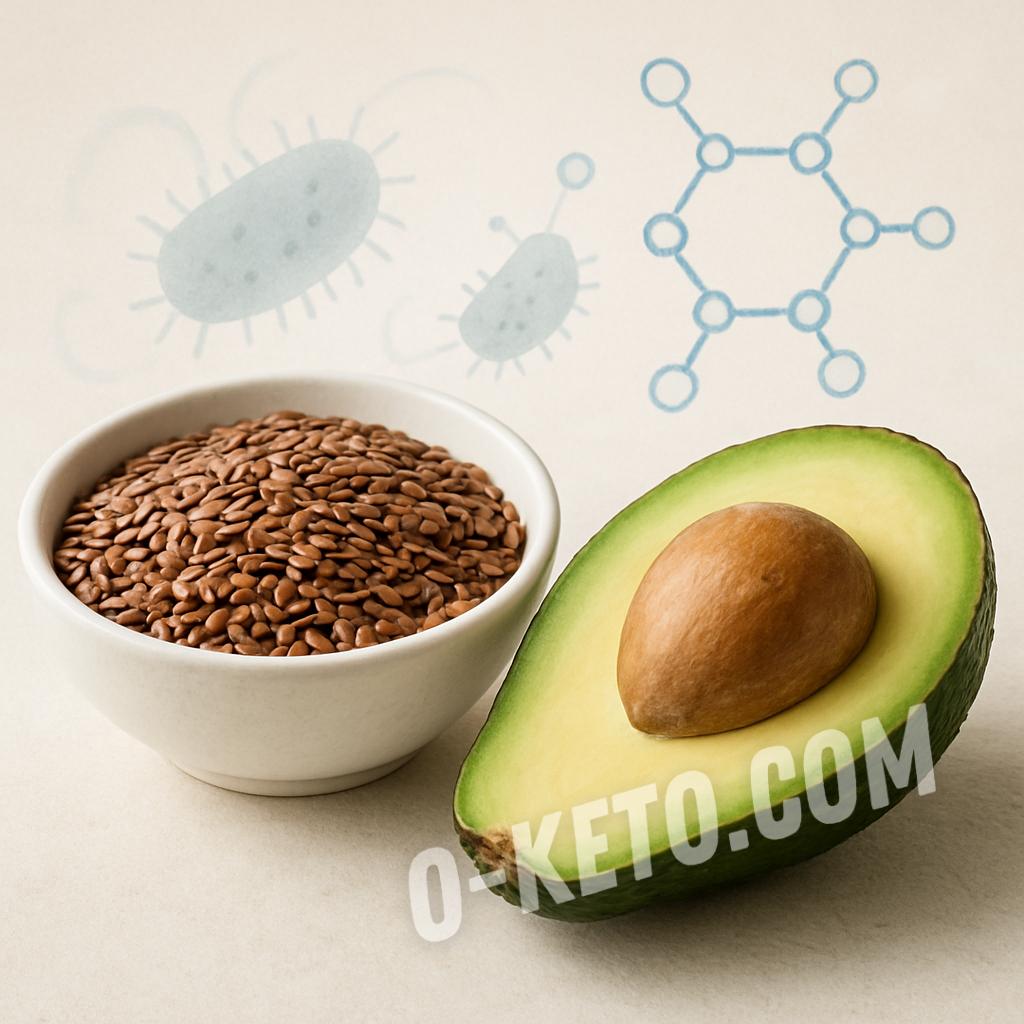
Secoisolariciresinol is a plant lignan especially characteristic of flaxseed. In foods it is often present as the diglucoside SDG, and in the intestine the microbiota can convert it into enterodiol and enterolactone. These enterolignans are often discussed in relation to hormone metabolism, inflammation, blood vessels, and metabolic health. Secoisolariciresinol therefore should not be evaluated apart from fiber, microbiota, stool regularity, and the overall diet.
Food sources
The best-known source is ground flaxseed. Whole flaxseeds often pass through the gut with little breakdown, so they are usually ground to access lignans and fats. Secoisolariciresinol may also occur in sesame, whole grains, some seeds, berries, legumes, and vegetables, but in smaller amounts. In real food it comes with fiber, mucilage, minerals, alpha-linolenic acid, and other polyphenols.
For keto and LCHF, flaxseed is convenient because it provides little digestible carbohydrate and a lot of fiber. It is used in grain-free porridges, crackers, baking, coatings, yogurt, salads, and as a thickener. But flaxseed does not suit everyone: in some people it increases bloating, discomfort, loose stool, or constipation when water intake is low. It is better to start with a small amount and assess tolerance.
Ground flaxseed should not be treated as a one-to-one flour substitute. It absorbs water strongly, forms a gel, and changes recipes. In baking this can be useful, but in the gut the same viscosity can cause heaviness when fluid is insufficient. In practice it is better to start with a teaspoon or a small tablespoon, add water, and increase gradually. Large portions taken for benefit often break tolerance faster than they add benefit.
The role of microbiota
The key feature of secoisolariciresinol is dependence on the gut microbiota. Bacteria split plant lignan forms and convert them into enterodiol and enterolactone. This process differs widely between people. Antibiotics, low dietary diversity, constipation, inflammatory bowel disease, low fiber intake, and abrupt dieting can change enterolignan production. The same spoonful of flaxseed therefore does not produce the same effect in everyone.
Enterolignans are sometimes described as weak phytoestrogenic compounds. This does not mean flaxseed acts like hormone therapy. Their activity is much softer and depends on context: endogenous hormones, microbiota, liver function, body weight, age, medication, and the overall diet. With endometriosis, hormone-sensitive tumors, anti-estrogen therapy, or complex endocrine conditions, high-dose lignan supplements should be discussed with a clinician rather than taken from advertising advice.
Metabolic meaning
Flaxseed and lignans are studied in relation to lipid markers, blood pressure, glucose, inflammatory markers, and gut health. But it is hard to separate the effect of secoisolariciresinol itself from fiber, omega-3 ALA, replacement of other foods, and general diet improvement. If flaxseed replaces sweet baked foods, the effect is one thing. If it is simply added on top of a chaotic diet, the result is different.
For a low-carbohydrate diet, the main value of flaxseed is not magical phytoestrogen activity but the combination of fiber, texture, fatty acids, and polyphenols without a large sugar load. It may support satiety and stool regularity, but only with enough water and good tolerance. If flaxseed causes persistent bloating or pain, it does not need to be kept for lignans; polyphenols can come from sesame, olive oil, greens, berries, cocoa, and spices.
Practical use and safety
Ground flaxseed oxidizes quickly, so it is best stored tightly closed in the refrigerator and not bought in huge opened amounts. Seeds can be ground in small portions. Fiber should be taken with water, especially if constipation is a tendency. Flaxseed may affect medication tolerance through fiber and viscosity, so medicines are better not taken at the same time as a large flax mass.
Flaxseed also raises the topic of cyanogenic glycosides, which sometimes creates unnecessary fear. In ordinary food portions this is not a problem for most adults, especially when flax is used moderately and not as a main food by the kilogram. Heat treatment and dietary variety reduce risk further. Still, the idea that more flax is always better is wrong. Lignans are useful in the context of dose, water, protein, and tolerance.
In practice, secoisolariciresinol is useful as part of a whole food rather than as an isolated hormonal supplement. For most people, a reasonable portion of ground flaxseed can be part of LCHF if it does not worsen digestion and does not displace protein. During pregnancy, lactation, bowel disease, hormone-sensitive conditions, anticoagulant use, or complex therapy, high-dose extracts should not be used experimentally. The strength of flaxseed is regular tolerated food, not a heroic spoonful forced through discomfort.
If you have any questions about the term "Secoisolariciresinol", you can ask them to AI. Please note, a low-cost OpenAI model is used. It may answer questions about disease treatment with errors!

 1 / 4
1 / 4


 1 / 4
1 / 4


 1 / 4
1 / 4 1 / 4
1 / 4