

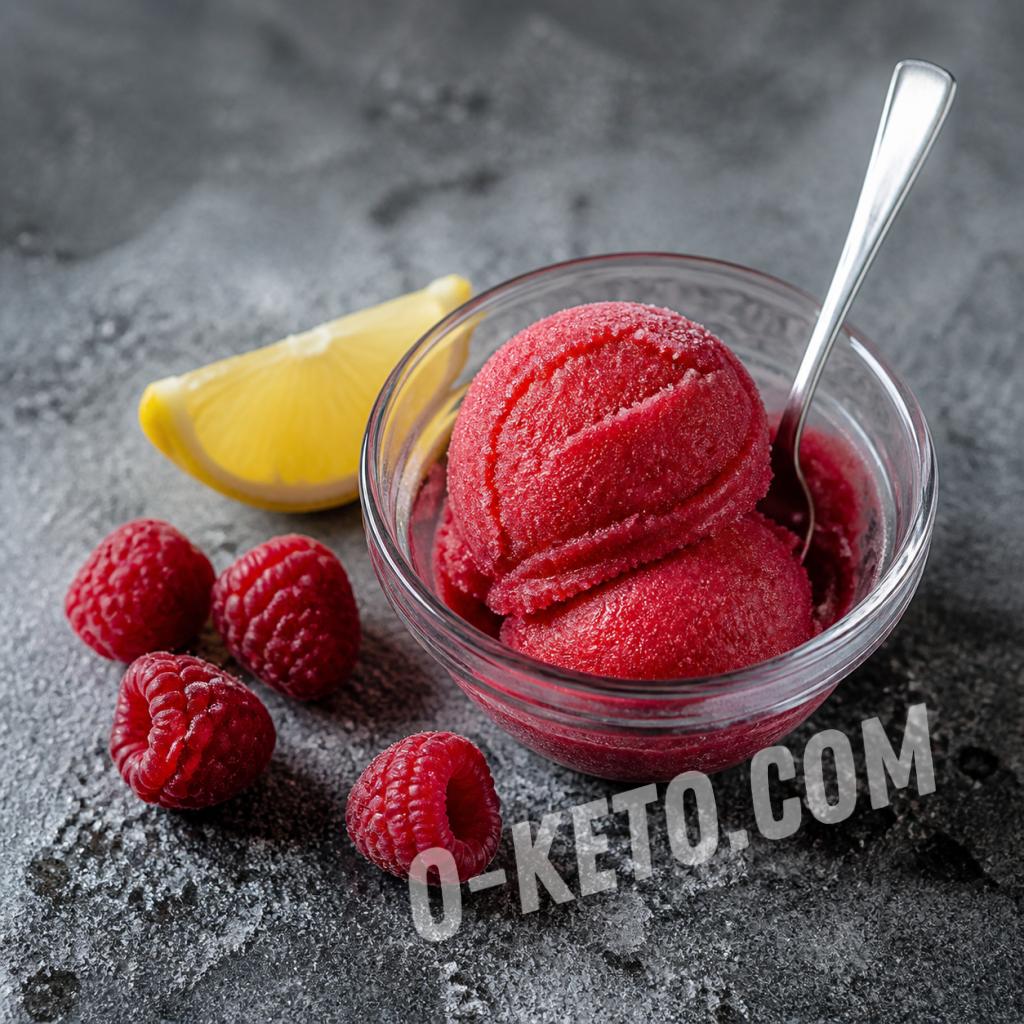

Sugar-free sorbet looks simpler than ice cream because it has no cream, egg yolks, or custard base. The water-based structure is what makes it demanding. If the mixture contains too much free water, it freezes into large crystals; if there is too little sweetener, the dessert becomes hard and brittle; if the acid is excessive, fruit flavor turns sharply sour. Good keto sorbet is not just frozen purée. It is a balanced system prepared before it enters the freezer.
The main task is to keep water dispersed as small crystals and prevent those crystals from growing during the first hours of storage. Concentration of dissolved solids, a smooth base, rapid chilling, a shallow container, and short early mixing all matter. Allulose helps control softness, but the result depends on the whole formula rather than one ingredient.
What makes up a sorbet
A basic mixture contains fruit or berry material, water, sweetener, and acid. Fruit purée supplies flavor, color, aroma, and some dry matter. Water makes the mixture fluid but also becomes the main source of ice. Allulose supplies sweetness and dissolved solids and can lower the freezing point of the solution. Lemon juice or a measured citric-acid solution brightens the flavor.
These components cannot be judged separately. Thick purée contains less free water than strained juice, so the same weight produces a different texture in the two formulas. A sweet berry and a tart lemon also need different sweetener adjustments. Start by measuring the fruit component and judging its flow, then add water, allulose, and acid in small measured portions.
Choosing water, purée, and juice
Use drinking water without a noticeable odor or taste. Its job is to loosen a concentrated purée to a workable consistency, not to increase the batch size at any cost. Excess water usually becomes obvious after freezing: the sorbet turns pale, brittle, and prone to frost.
Berries can be blended and, when needed, passed through a sieve. This removes large seeds and fibers that interfere with a uniform texture. For lemon sorbet, use juice and a little colored zest, but avoid the white pith because it adds bitterness. If you use bottled juice, read the ingredient list and avoid products containing sugar, syrup, or starch.
The sugar, acid, and astringent tannin levels in juices and sauces can vary between products and batches. The same weight therefore may not produce the same flavor balance. Before scaling a formula, check the ingredients, taste the chilled base, and adjust one variable at a time: the fruit portion, sweetener, or acid.
If berry sorbet lacks vivid fruit flavor, simmer part of the berry purée separately over low heat, then cool it completely before adding it to the chilled base. Removing water intensifies the aroma and raises the concentration of dissolved solids, so the purée can also change perceived sweetness and freezing behavior. Evaporation does not remove carbohydrates: they remain in a smaller final volume. Count the carbohydrates from the original quantity of berries and all the concentrate used, not from its reduced post-cooking weight. If the portion needs to stay within a carb limit, use less fruit or less concentrate instead of treating the reduced purée as lower-carb.
The purée should be cold before freezing. A warm fruit mixture gives the freezer more heat to remove, so it freezes slowly and has more time to form large crystals. An ice bath or several hours in the refrigerator makes the starting conditions more predictable.
Why acid matters
Acid is not a stand-alone stabilizer and does not prevent ice formation by itself. Its main job is sensory: it sharpens berry aroma, offsets sweetness, and keeps a cold dessert lively. Frozen foods taste less sweet and less aromatic, so a controlled acidic note helps the final balance.
Add acid gradually and taste the base before freezing. Cold temperatures will mute some sweetness and aroma but will not rescue a mixture that is already too sour. Lemon juice contributes both acid and water, so include it in the total liquid. For precise adjustment, dissolve a small amount of citric acid in part of the measured water and add the solution by weight.
Working with allulose
Allulose performs two useful jobs in sorbet: it sweetens the mixture and increases its dissolved-solids content. Dissolved solids make it harder for all the water to turn into large ice, so the dessert can remain softer than a mixture made from water and fruit alone. That does not mean allulose can be added without limits.
Too much sweetener may create a pronounced cooling sensation, stickiness, or recrystallization during storage. Too little leaves the flavor flat and the texture too hard. Start with a moderate amount, dissolve it completely, and evaluate the chilled base rather than judging only while it is warm. If the fruit is naturally sweet, do not calculate the sweetener as if the fruit were neutral.
Dry high-intensity sweeteners such as stevia or sucralose do not replace allulose by weight. They can provide sweetness in a tiny dose but add almost no dissolved solids and do not control freezing in the same way. Combining allulose with a small amount of an intense sweetener can help the taste, but the latter is not the structural base.
Freezing and breaking up crystals
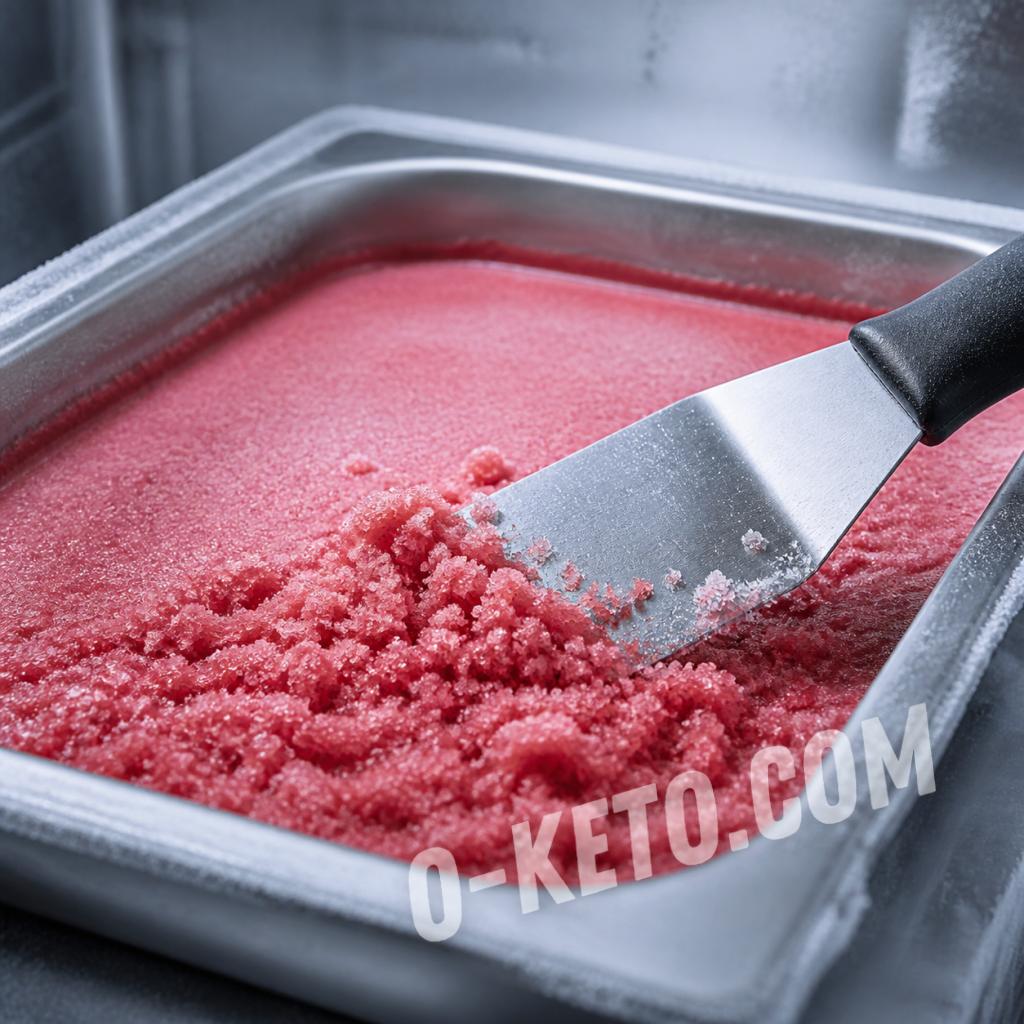
Pour the chilled base into a wide, shallow container. A thin layer freezes faster, and it is easier to combine the edges with the center. Place it in a freezer at about −18 °C and avoid leaving a large air space under the lid. After 30–40 minutes, check the mixture: the edges should be firm while the center remains soft.
Scrape the frozen areas into the center and mix thoroughly with a whisk, spatula, or immersion blender in short pulses. The goal is not to warm the mixture or whip in air. It is to break the first crystals and distribute the liquid phase evenly. Repeat two or three more times at similar intervals, adjusting to the actual texture rather than following a timer blindly.
If sorbet remains untouched until fully frozen, later processing becomes much harder. A blender may heat the outside while the middle stays icy. Short early cycles usually produce a more even texture than rare, prolonged blending of an already solid block.
An ice-cream maker freezes the base while stirring it. First blend and combine the base; if the chosen stabilizer requires heat for activation or dispersion, bring the mixture to about 85 °C, then cool it rapidly. Cover the surface with film in contact and mature the base in the refrigerator for 10–12 hours. Transfer the cold mixture to a pre-chilled machine bowl and churn until dense and uniform. A 40–60-minute run is a reference for some machines, not a universal timer, so use the texture as the endpoint. A homogenizer does a different job: it does not cool or freeze the base but processes a portion that has already frozen solid, so the freezer stage is still required.
When a stabilizer is useful
A small homemade sorbet does not always need a stabilizer. Well-strained purée, moderate water content, fully dissolved allulose, and several mixing cycles can already improve the result considerably. A stabilizer may help when the base is very watery, the product must be stored for a long time, or the dessert needs to tolerate transport.
Use a product with clear instructions and weigh it accurately. Xanthan, guar, and other hydrocolloids change viscosity, but they are not interchangeable universal powders. Too much creates gumminess and hides the fruit flavor instead of producing pleasant smoothness. Adjust water, allulose, and freezing first; use a stabilizer only as a measured correction.
Signs that the formula is unbalanced
Large icy shards usually point to excess free water, a warm start, a deep container, or skipped mixing. If sorbet is hard but not watery, check the dissolved-solids level and the amount of allulose. If it is soft, sticky, and unable to hold a scoop, the mixture may contain too much sweetener or a purée with a very high soluble-solids content.
A sandy texture can result from sweetener crystallization. Check whether the allulose dissolved completely before chilling and whether the surface dried out during storage. Bitterness is more often linked to citrus pith, scorched additions, or too much acid. Change one variable at a time so the cause remains visible.
Storage and serving
Keep finished sorbet in a tightly closed container with as little empty air as possible. Less air means less frost and less surface drying. The best texture is usually preserved during the first few days; even a well-balanced formula will develop larger crystals during long storage.
Before serving, move the container to the refrigerator for 10–20 minutes or leave it at room temperature for a few minutes so the surface softens slightly. Do not melt the whole batch into a liquid and refreeze it: water will redistribute and the crystals will become larger. If the sorbet is too hard, soften and work only the portion you plan to serve.
A practical method
First weigh the fruit component and judge how thick it is. Add the calculated water, dissolve the allulose, and adjust the acidity. Chill the base to refrigerator temperature, transfer it to a shallow container, and start freezing in a thin layer. Several short mixing cycles during the first hours matter more than trying to rescue a solid icy block later.
The smoothness of keto sorbet is determined not by the phrase sugar-free but by water management. Allulose helps soften the mixture, acid organizes the flavor, purée gives it body, and fast freezing plus early crystal disruption shape the mouthfeel. Record the actual weights and change only one variable at a time; the formula will quickly become reproducible.
Sources
- Online Ice Crystal Size Measurements During Sorbet Freezing by Means of the Focused Beam Reflectance Measurement Technology: Influence of Operating Conditions
- The Impact of ι- and κ-Carrageenan Addition on Freezing Process and Ice Crystals Structure of Strawberry Sorbet Frozen by Various Methods
- Influence of Stabilizers on the Microstructure of Fresh Sorbets: X-Ray Micro-Computed Tomography, Cryo-SEM, and Focused Beam Reflectance Measurement Analyses