


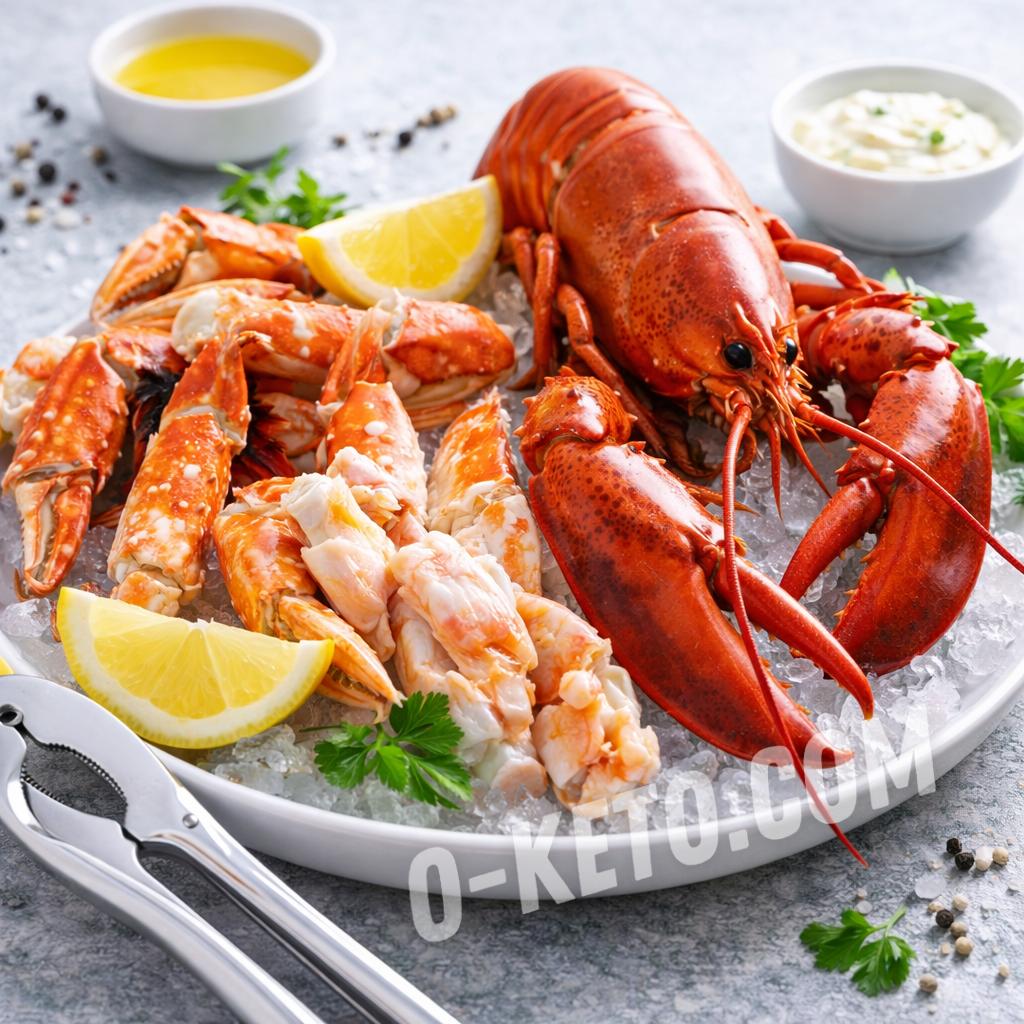

Crabs and lobsters are considered delicacies among crustaceans: they have a bright “marine” flavor and sweet, tender meat. The main difficulty is that the product is perishable, and improper cooking can quickly make the meat dry and tough.
Below is a practical algorithm for selecting and preparing different formats: live, frozen, and cooked-frozen.
What is important to know
Edible parts of crabs depend on the species: claws, legs, and meat in the shell.
For lobsters, the claws and tail are the most valued, and there is a bit of meat in the thin legs. In culinary logic, lobsters are similar to other large crustaceans that are prepared in a similar way.
How to choose crabs
Live crabs. Live crabs are valued for their juiciness and more uniform, tender texture. This is a rare option in sales because stable conditions are needed for storage.
When choosing live crabs, pay attention to:
- activity: the crab reacts to movement and touch;
- the shell is intact, without cracks or chips;
- weight is substantial for its size;
- the smell is fresh, marine, without foreign notes.
Frozen crabs. These are encountered less frequently. It is important to assess the quality of freezing and the amount of glaze:
- thin ice glaze, without “chunks” of ice;
- the shell is undamaged;
- absence of snow crumbs inside the packaging.
Cooked-frozen crabs. This is the most common format: crabs are first boiled, then frozen whole or in parts.
When choosing, pay attention to:
- even color, without gray areas or suspicious coatings;
- no ammonia or sharp smell;
- preferably buy whole limbs or large parts, not small cuts.
This product does not require long cooking — it is only gently reheated.
How to choose lobsters
Live lobsters. The tradition of cooking lobsters alive is related to safety: a spoiled lobster can cause severe food poisoning. Therefore, freshness is the main criterion:
- the lobster is active, the tail and legs move;
- the shell is firm, without damage;
- the smell is marine, without sharp notes;
- the lobster is heavy for its size.
Frozen lobsters. This format is rarely encountered. After defrosting, they should be cooked immediately, without leaving in the refrigerator for long.
Basic rules for selection and use:
- minimum glaze;
- no signs of refreezing;
- cook immediately after defrosting.
Cooked-frozen lobsters. They can be sold whole or only as tails:
- the color is even, without darkening;
- the packaging is without ice “snow coat”;
- defrosting only in the refrigerator.
This is a convenient option for salads and cold appetizers, and for hot dishes — a short reheating is sufficient.
Defrosting, tools, cutting
For juiciness, the key is the most gentle defrosting. Cooked-frozen crabs and lobsters are best defrosted slowly in the refrigerator:
- defrost in the refrigerator on a rack or in a sieve, so excess moisture drains;
- do not defrost in hot water.
For cutting, kitchen scissors and shellfish tongs are convenient: this minimizes crumbs and makes it easier to extract the meat:
- cut the shell with scissors or crack it with tongs, without crushing it too finely;
- save the juice and “marine” liquids from the shell for sauce.
Basic methods of cooking crabs
For many recipes, the first step is to bring the crab to semi-cooked state, so the meat separates more easily from the shell. Then the product can be finished in sauce, on the grill, or in the oven.
Boiling and steaming:
- suitable for live and frozen crabs;
- after boiling, it is easier to clean the shell;
- for cooked-frozen — only a short reheating.
Grilling and baking:
- it is better to use already boiled parts;
- it is important not to over-dry: cook quickly and over moderate heat;
- add sauces closer to the end.
Frying for soft-shell crabs. Soft-shell crabs are cooked whole: the shell turns into a crispy crust.
Basic methods of cooking lobsters
Even if the lobster is planned to be grilled or poached in butter, preliminary boiling remains an important step: without it, cleaning is nearly impossible.
Boiling and steaming:
- the basis for most dishes;
- after boiling, it is easier to extract the meat from the tail and claws;
- it is important not to overcook, to avoid losing juiciness.
Frying and poaching in butter:
- suitable for meat extracted after boiling;
- gentle processing, gives the most “creamy” flavor;
- do not overheat: cook briefly, over low heat.
Grilling and baking:
- convenient for cooking tails;
- salt and lemon are better added at the end;
- the idea is to emphasize the flavor of the meat, not to “overwhelm” it with spices.
The best combinations and simple sauces
Crabs and lobsters are well complemented by a minimal set of additions. The basic task is to emphasize the sweetness of the meat and the marine aroma.
Crab:
Lobster:
- butter;
- lemon juice;
- parsley;
- cheese;
- mayonnaise.
How to properly serve cooked-frozen products
Cooked-frozen crabs and lobsters are already ready. They can be served cold after proper defrosting or quickly reheated for hot serving:
- for salads: defrost, dry, dress with a light sauce;
- for hot dishes: reheat in steam or in butter for 1–3 minutes;
- do not boil again;
- do not keep in the oven for long.
Prolonged cooking here is the main mistake.
Typical mistakes
- long boiling or baking, which makes the meat dry;
- defrosting in warm water, which worsens the texture;
- excessive spices that overpower the natural flavor;
- crushing the shell “to dust,” leaving shards in the meat;
- attempting to “cook through” a cooked-frozen product instead of a short reheating.
If you choose the right format and follow gentle cooking methods, crabs and lobsters provide the most “pure” flavor and juiciness without complicated techniques.
For most home dishes, slow defrosting, careful cutting, and a minimalist sauce made of butter and lemon are sufficient.


