


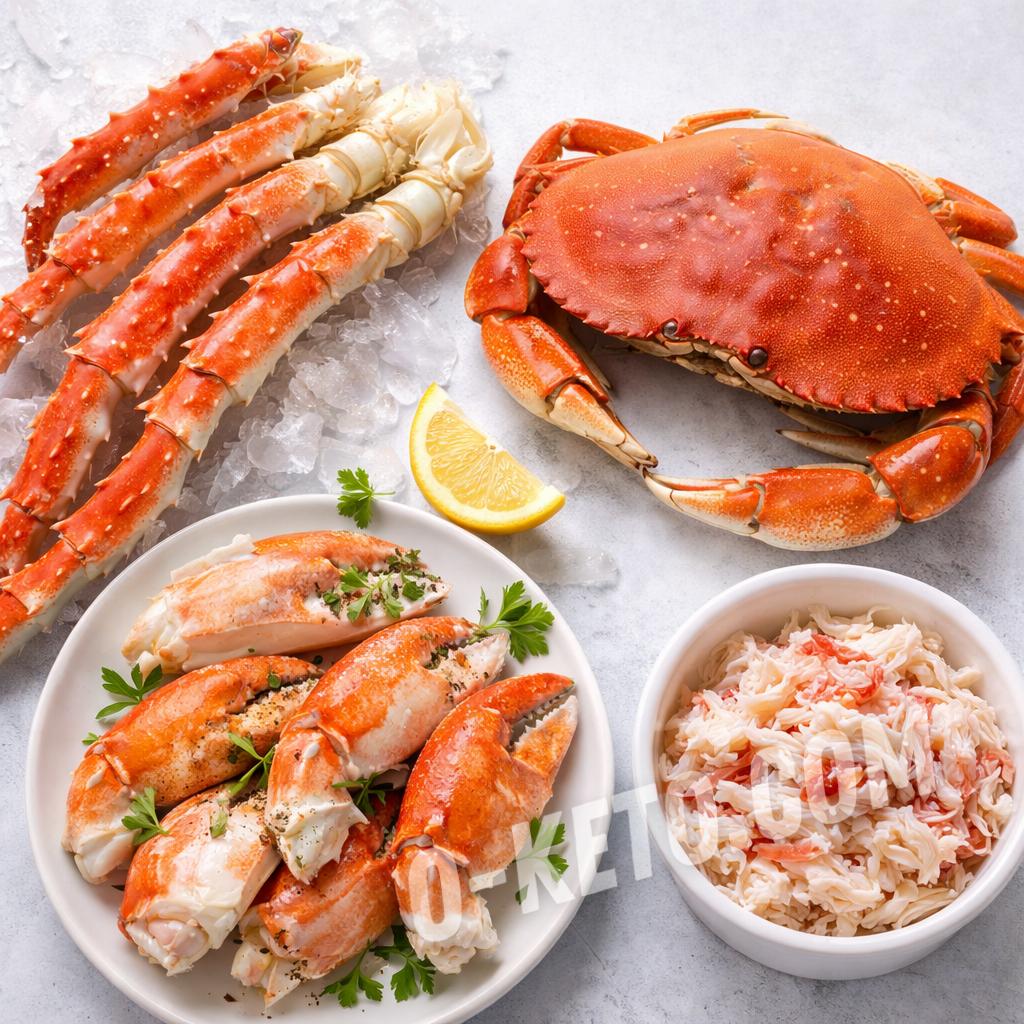

Crabs are marine crustaceans with a hard shell and sweet white meat. The edible parts are usually claws, leg sections, and body meat, while flavor depends on species, size, catch area, freezing, and cooking method. Good crab does not need heavy sauces: butter, lemon, herbs, salt, and gentle heat are usually enough.
In low-carb cooking, crab meat is convenient because it contains almost no carbohydrates and provides plenty of protein. But it is very lean, so for keto it is best paired with a fat source: butter, sugar-free mayonnaise, yolk-based sauce, avocado, olive oil, or cream cheese. This keeps the dish from feeling dry and makes it fit LCHF logic better.
Nutrition profile
In 100 g of cooked crab meat there are usually about 90–100 kcal, 18–20 g protein, 1–2 g fat, and less than 1 g carbohydrate. Exact values depend on species and processing. Crab meat contains vitamin B12, selenium, zinc, copper, phosphorus, iodine, and taurine. It is a dense marine protein food, but not a fat source.
Crab is often treated as a delicacy, which helps with portion size: 100–150 g is enough for a salad, appetizer, or main dish with sauce. If you eat crab alone, without butter or a side, the dish may be too lean and protein-heavy for a keto dinner.
Is it suitable for keto?
Crabs fit keto and LCHF when the product is real meat without sweet sauces, starch breading, or surimi. Carbohydrates usually come not from the crab itself, but from additions: imitation crab, ready salad dressings, flour, rice, sweet chili, ketchup, or cornstarch in sauce.
A keto serving can be simple: crab with melted butter, salad with avocado and cucumber, an omelet with crab, a cold appetizer with sugar-free mayonnaise, crab cakes without breadcrumbs, or a creamy soup. Because the meat is lean, adding fat is usually the right move.
Types and flavor
Kamchatka crab is known for large meaty leg sections and a sweet flavor. Blue crab is usually softer and more delicate. European edible crab has a firmer, richer taste, especially in the body. Smaller coastal species are often used locally for soups, sauces, and broths. These options are not always interchangeable: large leg pieces are good served whole, while body meat is better for salads and spreads.
How to cook it
Crab is usually boiled, steamed, or briefly reheated if the meat is already cooked. Too much heat makes the texture dry and stringy. Frozen crab legs are often sold cooked and frozen; they do not need long boiling again. Thaw them slowly in the refrigerator rather than with hot water.
Crab pairs well with lemon, dill, parsley, garlic, butter, eggs, avocado, cucumber, lettuce, celery, mild cheese, and cream. Strong smoked sauces, lots of sugar, spicy ketchup, and heavy breading can easily cover the delicate taste.
How to choose
Fresh or chilled meat should smell like the sea, not ammonia, dampness, or metal. A whole crab should have an intact shell without suspicious slime. Frozen products should not have a thick ice layer, snow crystals, or signs of thawing and refreezing. If buying picked meat, check the ingredient list: crab, salt, and water are clearer than a long additive list.
Crab sticks are not a keto replacement for crab. They are usually surimi with starch, sugar, flavorings, and color. They may look similar, but nutritionally and culinarily they are a different product.
Limits
Crabs are crustaceans and can trigger allergy. If you react to shrimp, lobster, or other shellfish, crab requires special caution. Salt also matters: cooked frozen and canned products can be quite salty. Anyone limiting sodium should check the label and portion size.
Storage
Fresh crab and picked meat should be kept refrigerated and used quickly. Cooked meat should not sit on the table for long, especially in mayonnaise salads. Frozen products should stay frozen until use, and once thawed should not be frozen again. Opened canned crab is best moved to a glass container and eaten soon.
What can replace it?
The closest replacements are shrimp, lobster, langoustine, crayfish tails, mussel meat, or firm white fish in dishes that need marine protein. For a similar salad role, use shrimp with sugar-free mayonnaise or tuna with egg and cucumber. Surimi and crab sticks only replace the look, not the composition.


