


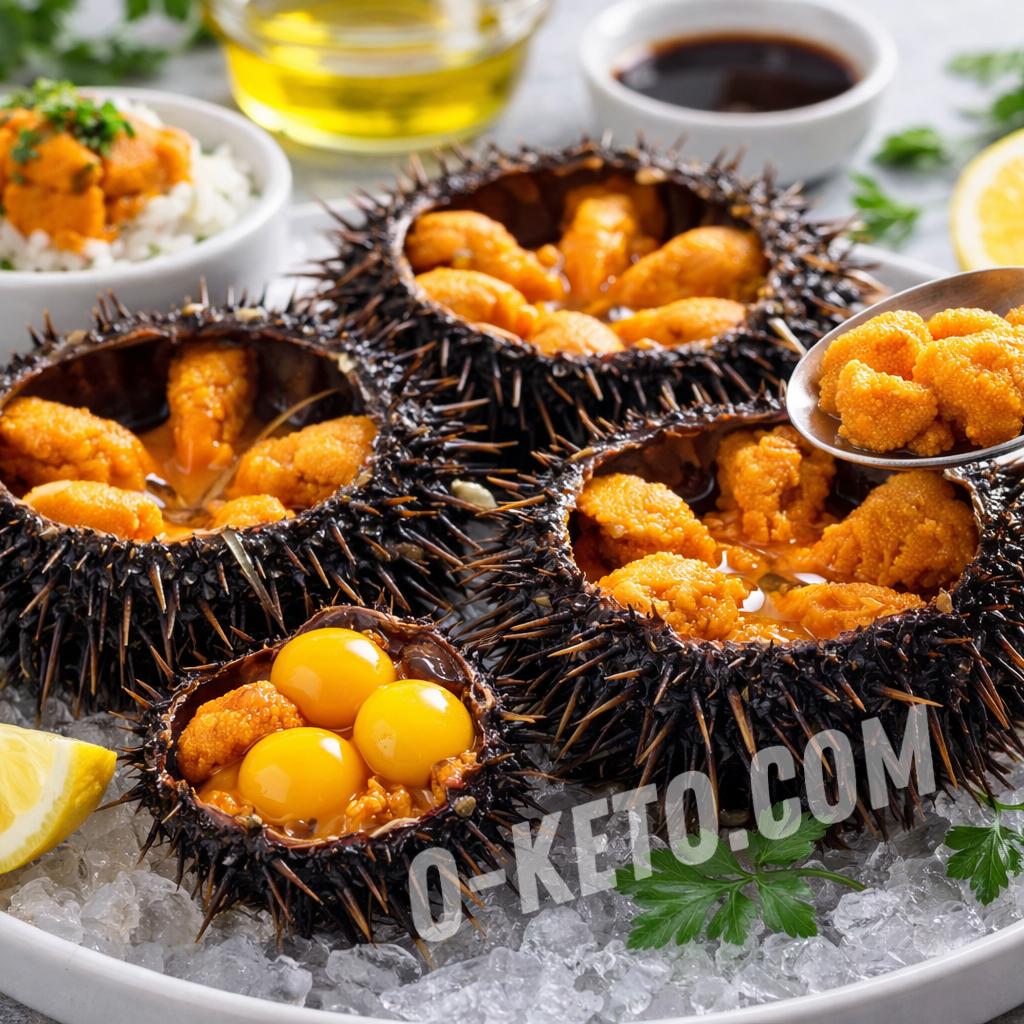

Sea urchins are a delicacy with a bright iodine-sea flavor and creamy texture. Only the roe is consumed — the orange or amber “tongues” inside the shell. It is most often eaten raw; in Japan, this product is known as “uni” and is considered one of the most valuable seafood.
The key to quality is absolute freshness and careful handling.
Choosing Sea Urchins
Which sea urchins are suitable for consumption. Not all species have roe. It is noted that black urchins usually do not have it, while colored ones do. In gastronomy, species with dense, bright orange roe without excessive wateriness are valued. Seasonality affects the fullness: out of season, the roe content is lower, and the flavor is less concentrated.
How to choose live sea urchins:
- the spines are active and respond to touch;
- the shell is intact, without cracks or chips;
- the smell is clean, marine, without ammonia notes;
- the urchin is heavy for its size.
Live urchins are the most valuable option, and they are opened just before serving. If the spines are limp and do not move, the product is not fresh.
Safety and Storage:
- store live urchins on ice, but not in water;
- do not keep for more than 24 hours without opening;
- store roe after extraction at 0–2 °C and consume within a day;
- avoid refreezing.
Like all seafood, urchins are sensitive to temperature. Even the slightest disruption in the cold chain deteriorates texture and aroma.
Frozen Sea Urchin Roe. The ratio of roe to the weight of the urchin is small, so only the roe is frozen:
- thaw slowly in the refrigerator;
- better used in sauces and baking;
- add to hot dishes at the very end;
- do not subject to prolonged heat treatment.
After thawing, the texture becomes less silky, and the taste becomes more straightforward.
How to Properly Open a Sea Urchin
- use gloves — the spines are sharp;
- cut a circle on the side without spines with scissors;
- drain the liquid, remove the insides;
- carefully rinse with salted water;
- use a spoon to extract 5 pieces of roe.
The most logical way is to eat the roe immediately in its raw form while it is as fresh as possible. It is important not to damage the pieces and not to rinse them with fresh water — it “dilutes” the flavor.
Best Cooking Methods
- without heat treatment;
- baking;
- stewing.
When heated, the texture becomes denser, so the heat treatment should be brief and gentle. In hot dishes, roe is added at the end, just to warm it up.
Culinary Applications:
- sushi and sashimi with minimal additions;
- pasta with a sauce based on butter and roe;
- risotto with roe added at the end;
- sauces for fish and seafood;
- gratin and light baking in the shell.
A classic technique is to mix roe with warm butter and a drop of lemon juice, then combine it with al dente pasta.
For a more “pure” taste, roe is placed on warm rice and served without extra spices.
Best Combinations:
- parsley;
- lemon juice;
- soy sauce;
- rice;
- quail yolks.
Additions should highlight the sweetness and iodine notes, not overpower them. White pepper and light lemon zest are acceptable spices.
Nutritional Value and Features
Sea urchin roe is rich in complete protein, omega-3 fatty acids, and marine trace elements. Due to the high concentration of flavor compounds, it provides a pronounced umami effect even in small quantities. This is a product with a high flavor density at a minimal serving volume.
Typical Mistakes
- buying limp urchins with immobile spines;
- washing roe with fresh water;
- prolonged boiling or baking;
- excessive spices and acidity;
- storage without cold.
Sea urchins are a product of minimalist cuisine. Freshness, careful opening, and delicate serving allow preserving their natural sweetness, creamy texture, and expressive marine aroma.


