


TOP-5 studies on obesity, diabetes, and insulin resistance from July 14, 2026 - July 21, 2026
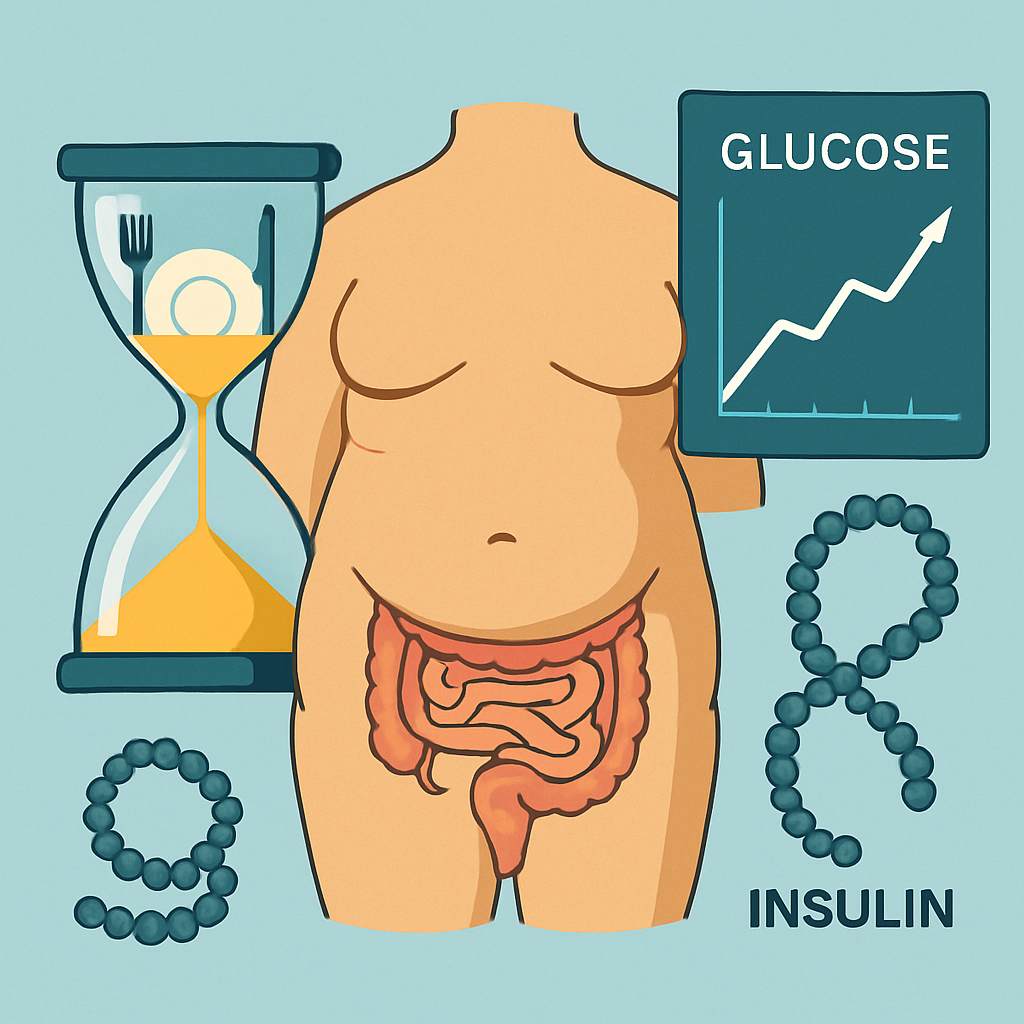

Chrononutrition and metabolic health: the impact of meal timing on obesity and metabolic risks; Intestinal gases as markers for studying the diet-microbiota-host axis in humans and their connection to metabolic health; Molecular signatures of gut microbiota affecting longevity; Molecular basis of insulin resistance and its impact on the brain: the role of physical activity; Dysregulation of steroidogenic enzymes in polycystic ovary syndrome: mechanistic aspects and new therapeutic strategies.


5. Chrononutrition and metabolic health: the impact of meal timing on obesity and metabolic risk.
About the work.
The study examines the influence of meal timing on obesity and metabolic health, as well as the relationship between individual chronotype and the duration of the eating window with these conditions.
Results.
Evening chronotypes are associated with higher levels of overweight, poorer eating habits, and greater irregularity in eating patterns. Late dinners and prolonged eating windows may be linked to metabolic disorders such as increased insulin resistance, greater abdominal fat mass, and poorer lipid profiles.
4. Intestinal gases as markers for studying the diet-gut microbiota-host axis in humans and their connection to metabolic health.
About the work.
This review focuses on the study of gut microbiota and its impact on human metabolic health through the analysis of intestinal gases. It discusses methods of measuring gases and their role in metabolism.
Results.
Intestinal gases can serve not only as metabolic byproducts and biomarkers of microbial activity but also as active signaling molecules that influence gut transit, satiety, and systemic inflammation.
3. Molecular signatures of gut microbiota affecting longevity.
About the work.
The study aims to analyze gut microbiota and its metabolites related to longevity. It evaluates the relationships between microbiota composition and lifespan.
Results.
Metabolites of gut bacteria that positively influence health and contribute to longevity have been identified.
2. Molecular basis of insulin resistance and its impact on the brain: the role of physical activity.
About the work.
The study focuses on the molecular mechanisms of insulin resistance and its impact on the brain, emphasizing the role of physical activity. It discusses differences in insulin resistance between men and women and the impact of different types of training on these mechanisms.
Results.
Physical activity improves insulin signaling, glucose uptake, and mitochondrial function in skeletal muscle, liver, and adipose tissue. In the brain, factors induced by physical activity, such as PGC-1α and irisin, promote neuroplasticity, neuroprotection, and energy metabolism, enhancing cognitive functions and reducing the risk of neurodegenerative diseases.