


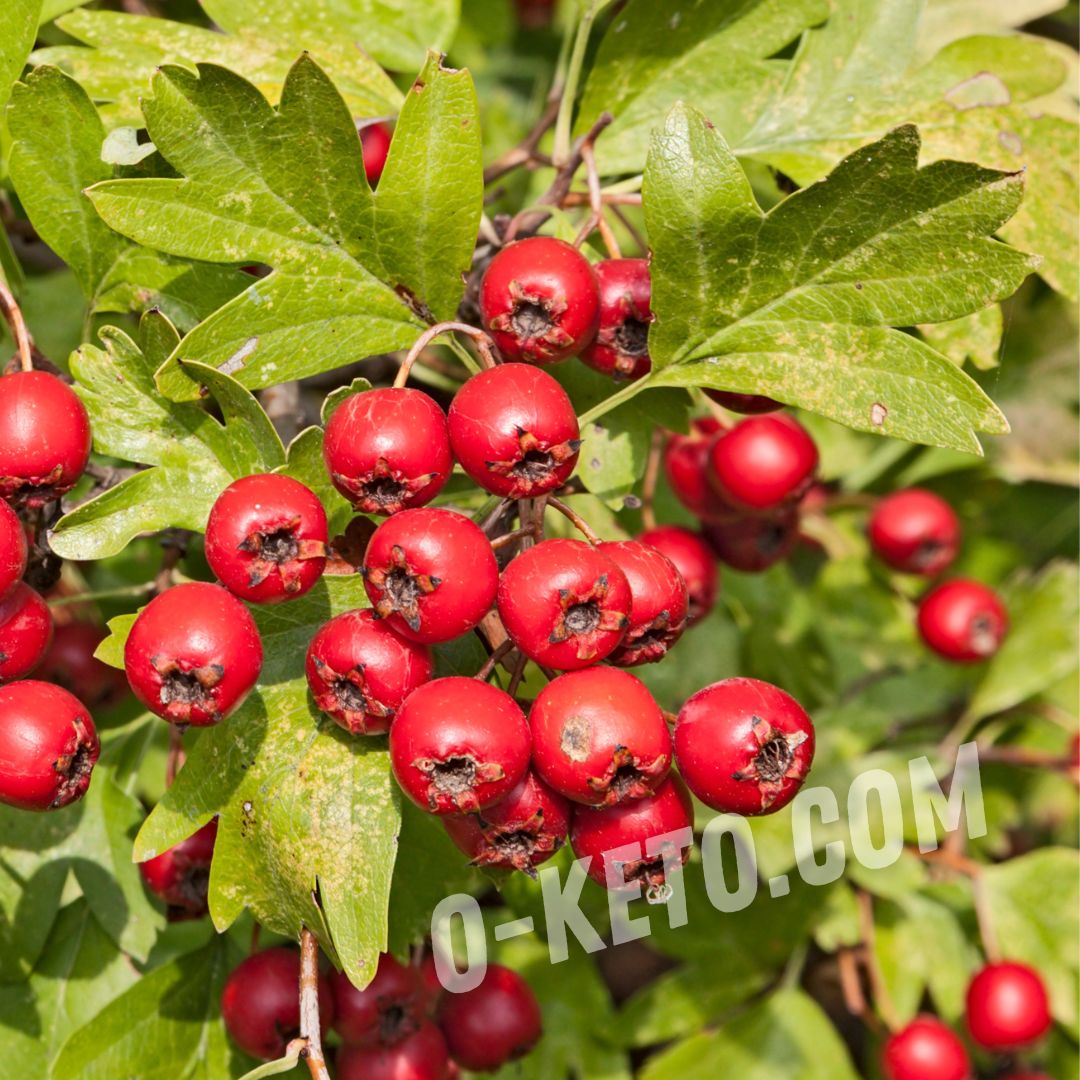

Hawthorn is a shrub or small tree from the Crataegus genus. Its ripe berries are used for food and infusions, and sometimes the flowers and leaves are used as well. Fresh berries are usually tart, sweet-sour, and somewhat mealy in texture, not juicy like common berries. They are dried, infused, added to sugar-free compotes, tart sauces, teas, and sometimes homemade preserves.
Hawthorn has a long history of traditional use, especially around heart, blood pressure, and calmness. In a product article, however, berries should not be presented as a substitute for examination or prescribed care. Hawthorn is better viewed as a tart plant addition to the diet, a source of flavor, organic acids, tannins, and flavonoids, while regular concentrated forms should be treated separately from ordinary food.
Nutrition
In 100 g of fresh hawthorn berries, values are often around 50-60 kcal, about 1 g of protein, very little fat, and roughly 13 g of carbohydrates. Exact numbers depend on species, ripeness, and moisture. Dried hawthorn is much more concentrated: water is removed, while acids, fiber, and sugars remain in a smaller weight, so the same grams of fresh and dried berries are not equivalent.
The berries contain fiber, vitamin C, potassium, organic acids, tannins, and flavonoids. These compounds create tartness, dense flavor, and good performance in infusions. But minerals and flavonoids are not a reason to eat large portions. In a low-carb diet, the amount, product form, and absence of sugar in drinks or preserves matter more.
Place in keto and LCHF
Fresh hawthorn can fit keto and LCHF only in small portions. A practical amount is a few berries or 20-40 g as a flavor accent, not a bowl of fruit. A 50 g serving of fresh berries already adds noticeable carbohydrates, and 30 g of dried berries may bring a much denser load than the volume suggests.
The riskiest forms for keto are syrups, jams, fruit leather, sweet tinctures, compotes with sugar, and liquid preparations with sweeteners. An unsweetened infusion made from a small amount of dried berries is easier to fit, but it should not be sweetened with honey. For a mild tart flavor, hawthorn can be paired with tea, a small amount of rosehip, lemon zest, or sugar-free spices.
How to use
Fresh berries can be added in small amounts to unsweetened sauces for poultry, duck, pork, or cheese when a tart note is needed. Dried berries are more often used for an infusion: rinse them, cover with hot water, and let them steep. The taste is mild, woody-berry, and slightly sour. For a low-carb menu, the important point is not to turn the drink into a sweet compote.
In cooking, hawthorn pairs well with cinnamon, clove, ginger, lemon zest, black tea, meat sauces, and fatty poultry. Because of the seeds and firm skin, the berries are not always convenient fresh. For sauce, they are often warmed, strained, and used as a small amount of puree, with acidity adjusted by vinegar or lemon instead of sugar.
How to choose
Fresh berries should be ripe, dry, and free from mold, fermentation, and sticky moisture. Color depends on the species: red, dark red, orange, and almost black berries exist. Very soft, fermented, or sharply smelling fruit is better avoided. If you gather hawthorn yourself, you must be sure of both the plant and the place where it grows.
Dried hawthorn should smell clean, without mustiness or smoke unless smoking is clearly intended. The package should not contain insects, dust, damp clumps, or dark mold. Whole or coarsely cut berries are convenient for infusions, while powder is harder to judge for quality and easier to overuse.
Limits
Hawthorn may be inappropriate with products prescribed for the heart, blood pressure, rhythm, calming purposes, and other regular regimens unless discussed with a professional. This matters especially for extracts, tinctures, and strong daily infusions rather than a few berries in food. If there are heart or blood-pressure symptoms, berries should not delay proper evaluation.
Because of acids and tannins, large portions may irritate the stomach or leave an unpleasant dry mouthfeel. Pregnant or breastfeeding people and children should not use concentrated forms without specific guidance. In a keto diet, hawthorn should not become a daily sweet drink just because the fruit seems “natural.”
Storage and substitutes
Keep fresh berries dry in the refrigerator and sort them before use. Store dried hawthorn in a tightly closed jar or pouch in a dark dry place, away from steam and strong smells. If the berries become damp, change smell, or develop a coating, discard them.
For a tart berry accent in dishes, hawthorn can be replaced with cranberry, lingonberry, red currant, or a small amount of lemon with spices. For infusions, a similar role can be played by a little rosehip, hibiscus, black tea, cinnamon, and zest. The right substitute depends on the goal: flavor, color, tannic grip, or a dense berry note.


