


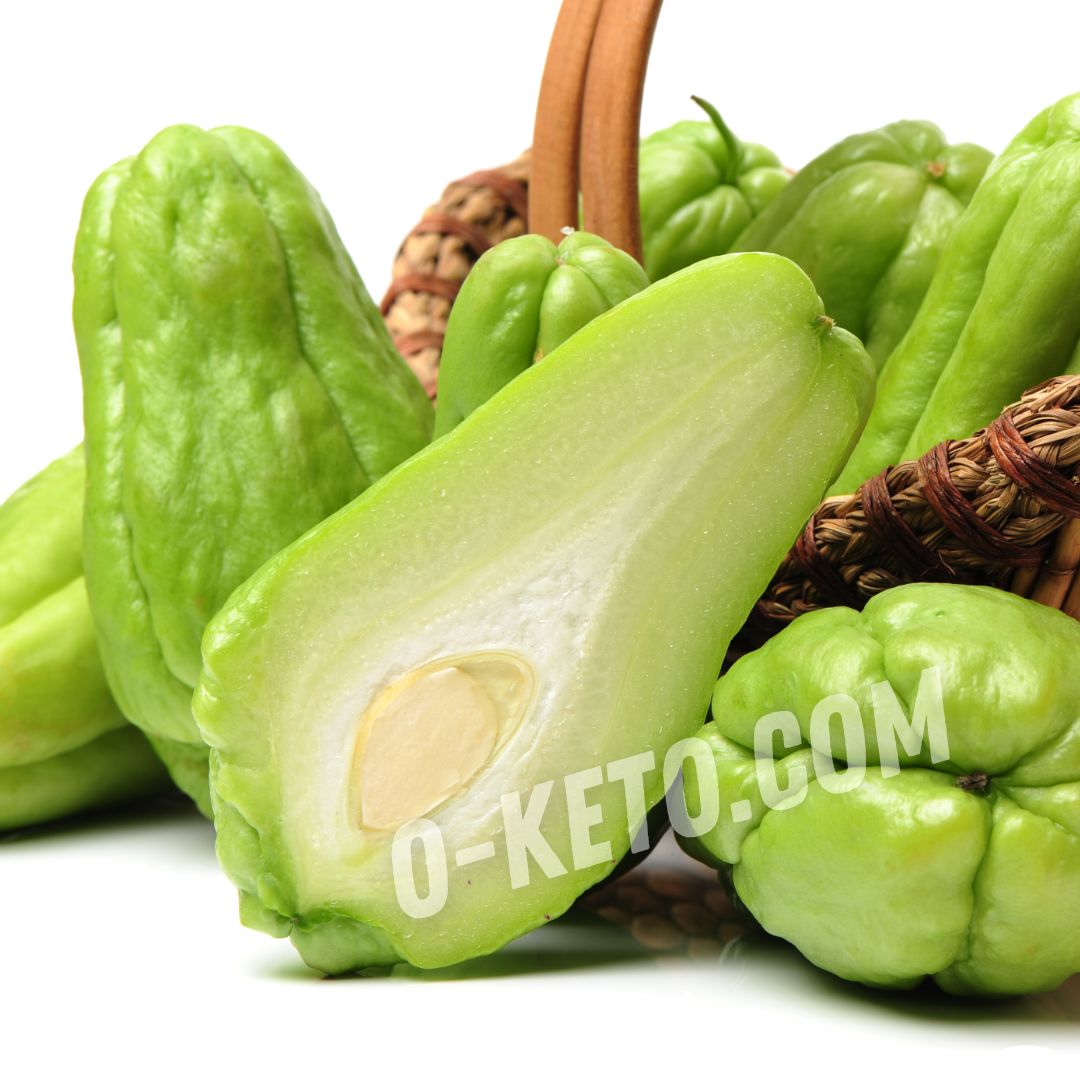

Chayote is a pale green fruit from the gourd family, shaped somewhat like a ridged pear. It is also called mirliton or vegetable pear. The flesh is juicy, mild and neutral, with a light flavor between zucchini, cucumber and young pear without strong sweetness. It can be eaten raw, sautéed, baked, added to soups, salads and side dishes.
For keto, chayote is useful as a low-carb vegetable fruit: it adds volume, water, fiber and soft texture without much starch. It does not have a strong flavor, but it absorbs spices, fat, cheese, meat juices and acidic dressings well.
Nutrition
Per 100 g, chayote contains about 19 kcal, around 0.5 g of protein, 0.1 g of fat and about 4.5 g of carbohydrates, with roughly 1.7 g as fiber. Net carbohydrates are about 2.8 g per 100 g, which is convenient for low-carb eating.
Chayote contains vitamin C, some B vitamins, potassium, magnesium, phosphorus and soluble fiber. These components are useful as part of the diet, but chayote should not be promoted as a treatment or weight-management tool. In keto practice, its low carbohydrate content and flexible texture matter most.
Is Chayote Keto-Friendly?
Yes, chayote fits keto and LCHF well. It can replace part of potato, zucchini, apple in savory salads or a neutral vegetable side. The flavor is mild, so spices and sauce define the dish.
The keto profile depends on preparation. Chayote with butter, cheese, meat, eggs or sour cream fits better than chayote in sweet syrup, breading, flour or starchy sauces.
How to Use It
Young chayote can be eaten raw: thinly sliced into salad, grated or added to fresh salsa. For hot dishes, it can be sautéed, fried, baked or added to soups. Some fruits have tougher skin, which can be peeled. The soft seed inside is often removed or eaten if tender.
Practical options include:
- salad with lime, salt, avocado and herbs;
- sautéed chayote with butter, garlic and cheese;
- a side dish for chicken, fish or pork;
- an addition to soup instead of potato;
- baked slices with spices and no breading.
How to Choose and Store
Good chayote is firm, without soft wet spots, mold or deep damage. Small folds and grooves are normal. Very old fruits may be fibrous. Store chayote in the refrigerator or a cool place and avoid cutting it in advance.
Portion and Pairings
Chayote can be used fairly freely, but other foods provide satiety. It pairs well with eggs, chicken, fish, pork, beef, cheese, cream, sour cream, avocado, olive oil, lime, chili, cilantro and garlic.
If using it as a potato replacement, remember the difference: chayote is more watery and less starchy. For a thick mash, combine it with cauliflower, cheese or cream, and let excess moisture evaporate.
Limitations and Substitutes
Chayote is usually well tolerated, but raw fiber may bother sensitive digestion. In that case, cook it. Substitutes include zucchini, cucumber in cold dishes, cauliflower, pattypan squash or young kohlrabi, though texture will differ.
Common Mistakes
Chayote is often cooked like zucchini, but it is denser and may need a little more time. If cut too large, it can soften outside while staying watery and crisp inside. For even texture, use thin slices, cubes or matchsticks.
Another mistake is expecting a strong flavor. Chayote is a neutral base, almost like zucchini or cucumber. It needs salt, acidity, fat and spices: lime, lemon, garlic, chili, cilantro, butter, cheese or meat juices.
If the fruit releases sticky sap while peeling, oil your hands or peel it under water. This is not necessarily spoilage, but it can feel unpleasant.
Raw and Cooked Chayote
Raw chayote is closer to cucumber and young kohlrabi: it is crisp, releases water quickly after salting and works best with an acidic dressing. For salad, thin strips or ribbons are better than large cubes. If the fruit is mature and the skin is firm, peel it, otherwise the skin can interfere with the texture of a cold dish.
After heating, chayote becomes softer and more neutral. It works well when stewed with butter, cheese, spices and meat juices, but excess moisture should be cooked off. If a denser base is needed, combine it with cauliflower or fry it over high heat in small batches.


