


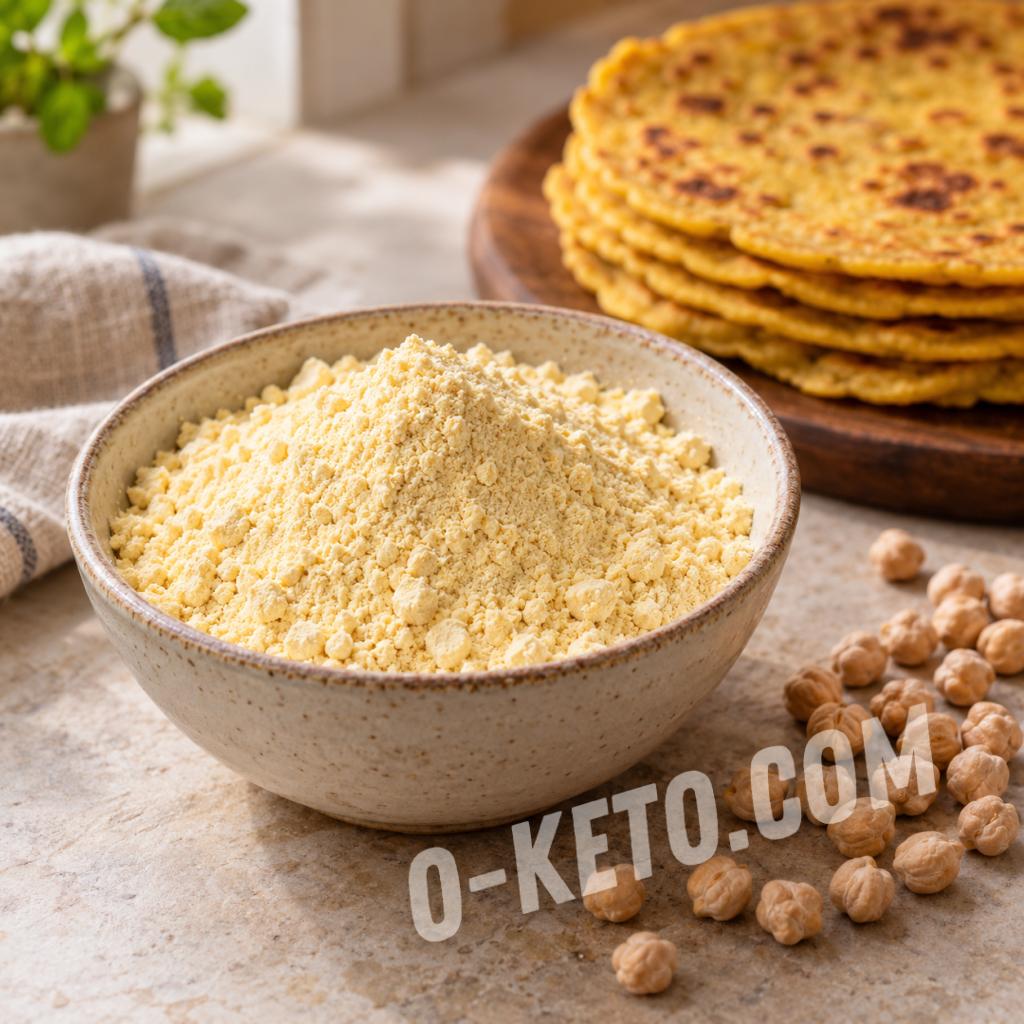

Chickpea flour is made by finely milling dried chickpeas. Known as besan in India, it is used for flatbreads, pancakes, crisp coatings, and thickened sauces; Mediterranean cooking also uses it for thin baked breads. Its flavor is nutty and legume-like, and it behaves differently from wheat flour: it contains no gluten-forming wheat proteins, while supplying substantial protein and dietary fiber.
Color and texture depend on the chickpea variety and milling method. Besan is often made from smaller brown desi chickpeas, while flour may also be milled from larger pale kabuli chickpeas. The powder can range from cream to golden yellow, and from very fine to slightly coarse. The label “chickpea flour” does not always reveal whether the seed coat was removed or whether the chickpeas were heat-treated before milling.
How it is made and how varieties differ
For ordinary flour, chickpeas are dried, cleaned, and ground. In some culinary traditions the seeds are roasted first, producing a warmer aroma and a less raw-bean taste. Roasting is not consistent across all products, so the ingredient list and the aroma of the actual flour are better guides than the product name alone.
Besan and flour made from whole chickpeas are closely related, but they are not always interchangeable gram for gram. Besan is usually very fine and readily thickens liquid into a smooth batter. A coarser flour may remain more noticeable in the finished food and absorb water differently. Chickpea flour contains no gluten as an ingredient, but people with celiac disease should still check whether the package describes controls for contact with wheat, barley, or rye during milling and packing.
Unlike purified starch, chickpea flour retains protein, fiber, minerals, and the seed’s naturally occurring sugars. Unlike a protein isolate, it includes much of the original seed. It is also different from pea, lentil, or soy flour: each legume has its own flavor, moisture absorption, and tendency to form a dense batter.
Nutrition
The USDA FoodData Central reference entry for dry chickpea flour lists about 387 kcal, 22.39 g protein, 6.69 g fat, 57.82 g carbohydrate, and 10.8 g dietary fiber per 100 g. The calculated net carbohydrate amount is about 47 g per 100 g. These are values for one reference flour, not a guarantee for every brand; roasting, defatting, sieving, and added ingredients can change the label values.
A 30 g portion calculated from the same entry provides about 116 kcal, 6.7 g protein, 2 g fat, 17.3 g carbohydrate, 3.2 g fiber, and roughly 14.1 g net carbohydrate. This estimate helps show what a modest amount contributes to a recipe, but a finished dish will have a different nutrition profile once oil, eggs, vegetables, sauces, and serving size are included.
The reference composition also includes folate, copper, manganese, magnesium, potassium, phosphorus, and iron. It lists approximately 437 μg folate, 0.91 mg copper, 1.6 mg manganese, and 166 mg magnesium per 100 g. These figures describe the raw flour rather than the amount absorbed by the body. Absorption depends on the wider diet and preparation, while the exact values of a retail package may differ.
How chickpea flour works in cooking
Chickpea flour absorbs water readily and forms a thick batter after hydration. It is used for flatbreads, pancakes, vegetable fritters, breading, crisp coatings, and thickening soups or gravies. For some legume flatbreads, resting the mixed batter helps the particles hydrate evenly; the appropriate time depends on the grind and recipe.
Substitution for wheat flour requires attention to the lack of gluten. Chickpea batter does not stretch or trap gas like wheat dough, so replacing all the wheat flour in a loaf usually requires a redesigned formula. That difference is not a drawback in pancakes or flatbreads: eggs, psyllium, other flours, or binders should be added only when the texture of a particular recipe calls for them.
The raw powder has a stronger aroma and taste than the cooked product. Cook chickpea flour thoroughly in the dish rather than tasting raw batter. When frying flatbreads, use moderate heat so the center sets before the outside becomes too dark. Its legume flavor is especially noticeable in breading, where salt, cumin, coriander, garlic, and tangy dairy sauces can complement it.
Carbohydrates and keto use
Chickpea flour is not a low-carbohydrate flour: the reference composition contains about 47 g net carbohydrate per 100 g. A small amount may be distributed through a larger recipe, but 30 g contributes roughly 14 g net carbohydrate before any other ingredients are counted. It is therefore not a staple flour for strict keto; on a flexible low-carbohydrate plan, the decision depends on the actual portion and daily limit.
Its higher protein and fiber content compared with refined wheat flour does not remove its carbohydrate load. When blood-glucose management matters, assess the portion of the finished dish rather than judging the flour only by its protein content or the word “whole.” Chickpea flour can be blended with almond, coconut, or another flour, but the nutrition of the full mixture should be calculated as a whole.
Choosing and storing it
Check that chickpea flour is the only ingredient if a single-ingredient product is needed. Blends may contain starch, sugar, salt, leavening agents, or other legumes. For a gluten-free diet, look for clear information about cross-contact controls and check that no wheat ingredients are included. An even color without damp clumps or a musty smell is a practical sign of sound storage.
Keep an unopened package in a cool, dry cupboard away from sunlight, the stove, and moisture. After opening, transfer the flour to an airtight container and use a clean, dry spoon; clumping or an unusual odor can signal moisture exposure or declining quality. For longer storage, a sealed container may be refrigerated. Let it warm to room temperature before opening so condensation does not form on the powder.
Sources
USDA FoodData Central, SR Legacy: Chickpea flour (besan), FDC ID 174288 — reference nutrient values per 100 g.
USA Pulses, Chickpeas — background on chickpeas and culinary use of chickpea flour.


