


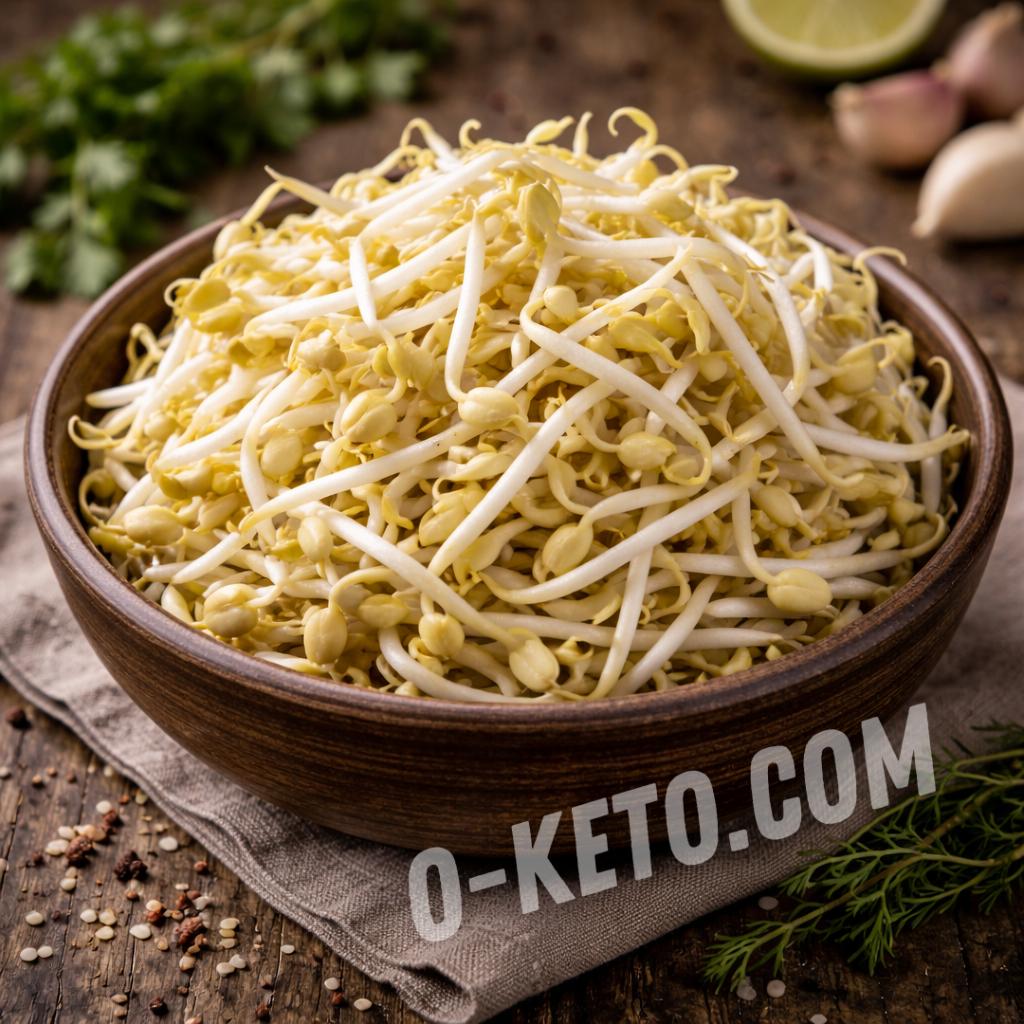

Soy sprouts are young soybean sprouts with a crunchy white stem and a small yellowish head. They are common in Asian cooking: stir-fries, soups, salads, side dishes, rolls, and quick vegetable mixes. The taste is mild, slightly nutty, and fresh, so the sprouts easily take on sauces, spices, and sesame oil aroma.
They are not the same as mature soybeans, tofu, or soy milk. During sprouting, the texture, moisture, and culinary role of the product change. Sprouts provide volume and crunch but do not need long cooking. Their role in a dish is freshness, lightness, and contrast with meat, eggs, noodles, mushrooms, and vegetables.
Nutritional value
Per 100 g, soy sprouts usually provide about 30–40 kcal. On average, they contain 3–5 g protein, about 0.5 g fat, 5–6 g carbohydrates, and around 1.5–2 g fiber. Most of their weight is water, so a serving feels bulky without being heavy in calories.
Soy sprouts contain vitamin C, B vitamins, potassium, magnesium, iron, phosphorus, and plant compounds typical of soy. Values depend on freshness, sprouting length, and whether the sprouts are raw or blanched. For a practical menu, it is more useful to count carbohydrates in the portion and look at the serving style than to focus on individual micronutrients.
Fit keto and LCHF
Soy sprouts can fit LCHF and moderate keto eating, especially when used as a crunchy addition rather than the huge base of a dish. They contain more carbohydrates than leafy greens, but less than rice, noodles, or sweet sauces. A 50–100 g serving is usually convenient for a salad, soup, or stir-fry.
The main source of extra carbohydrates is often not the sprouts themselves, but the surroundings: rice noodles, sweet chili sauce, sugar in marinade, starch for thickening, and a large portion of rice. For keto, they are better paired with meat, egg, shrimp, tofu, mushrooms, cabbage, cucumber, and sugar-free soy sauce.
Raw or cooked
Sprouts can be eaten raw only when their freshness and quality are reliable. The moist sprouting environment is not only convenient for the plant, so the product needs careful handling. For a calmer option, blanch or stir-fry the sprouts briefly for 1–2 minutes: the crunch remains, and the flavor becomes softer.
Before use, rinse sprouts with cold water and remove darkened, slimy, or unpleasant-smelling parts. If the package is swollen, contains a lot of liquid, or smells sour, it is better not to use it. For warm dishes, add sprouts at the end so they do not become soft and watery.
How to use
In a wok, soy sprouts are quickly fried with garlic, ginger, green onion, sesame oil, and sugar-free soy sauce. They go well with chicken, beef, pork, shrimp, eggs, and mushrooms. In soups, add them just before serving to preserve crunch.
In salads, mix sprouts with cucumber, radish, cilantro, mint, chili, lime, sesame, and a protein ingredient. In low-carb bowls, they can replace part of the noodles or rice, adding volume without a starchy base. The dressing should be bright but not sweet.
Pairings
The best partners are garlic, ginger, green onion, cilantro, mint, sesame, lime, sugar-free soy sauce, fish sauce, a small amount of rice vinegar, chili, eggs, chicken, beef, pork, shrimp, mushrooms, and cabbage. For a softer taste, avocado, cucumber, and a creamy sugar-free peanut dressing work well.
Very heavy cream sauces usually cover the freshness of the sprouts. Sweet Asian sauces should also be used carefully: they can quickly turn a light vegetable component into a high-carbohydrate snack.
How to store
Soy sprouts lose quality quickly. Keep them in the refrigerator, in a closed container or a bag with slight ventilation, and use them as soon as possible, usually within 1–2 days after purchase. Do not wash them in advance: excess moisture speeds spoilage. Freezing damages the crunch, so it is not suitable for salads and stir-fries.
For meal prep, keep sprouts separate from sauce and hot ingredients. If mixed with a salty dressing in advance, they quickly release water and lose crunch. Add them to a bowl or salad just before serving, and do not keep leftovers for long even in the refrigerator.


