


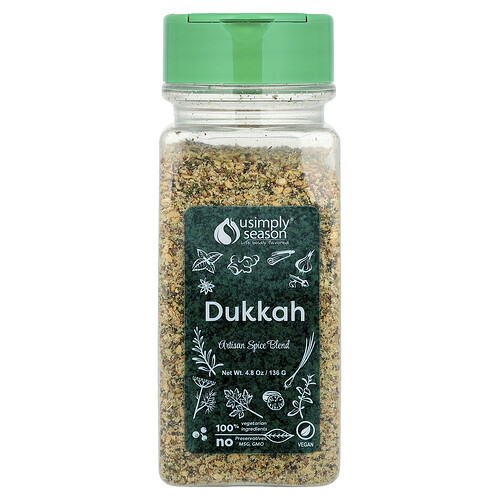
Dukkah is an Egyptian mixture of toasted nuts, seeds, and spices. Its name is linked to the Arabic word duqqa: “to pound”, “to grind”, “to crush”. That describes the idea of the seasoning well: the ingredients are not turned into a smooth paste, but crushed into a coarse aromatic crumb.
Classic dukkah often includes sesame, coriander, cumin, salt, pepper, and nuts. Different versions use almonds, hazelnuts, pistachios, walnuts, sunflower seeds, dried mint, thyme, or chili. In Egypt it is traditionally served with bread and olive oil, but for low-carb cooking the more useful pairings are vegetables, meat, fish, eggs, cheese, and salads.
Nutritional value
Exact numbers depend on the recipe. In 100 g of dukkah there may be about 450–550 kcal, 15–25 g of protein, 35–45 g of fat, and 20–35 g of carbohydrates. Part of the carbohydrates comes from fiber in nuts and seeds, but the finished mix is still best counted by its actual ingredients. Sesame, chickpea flour, breadcrumbs, sugar, and the amount of nuts change the numbers most noticeably.
The fat profile also changes by recipe. Nuts and sesame provide mostly unsaturated fats, but the share of omega-6 can be high if the mix contains a lot of sesame, sunflower seeds, or walnuts. This is not an issue for a small portion, but dukkah is usually used as a seasoning, not as a separate dish.
Is it suitable for keto?
Dukkah can fit keto and LCHF well if it contains no sugar, breadcrumbs, starch, or flour. A usual portion is small: 1–2 teaspoons are enough to add nutty crunch, spice, and salt to a dish. In that amount, the carbohydrate load is usually moderate.
The main risk is store-bought and restaurant versions. They sometimes contain breadcrumbs, sugar, sweeteners, fried onion with flour, or cheap fillers. For strict keto, it is better to read the ingredient list or make the mix at home: then the carbohydrates, salt, and degree of roasting are clear.
How to make it
The basic method is simple. Nuts and seeds are lightly toasted in a dry pan to release aroma, then cooled. Coriander and cumin can also be warmed briefly separately. Everything is then crushed in a mortar, pulsed in a coffee grinder, or processed in a blender until it becomes a coarse crumb.
It is important not to turn the mix into paste. If the nuts are too warm or the blender runs for too long, they begin to release oil and the dukkah becomes heavy and sticky. Salt is better added gradually because the seasoning is often used on already salted meat, cheese, or sauce.
How to use it
In low-carb dishes, dukkah is convenient on roasted cauliflower, eggplant, zucchini, salad leaves, avocado, eggs, chicken, lamb, fish, shrimp, or cream cheese. It works well with olive oil, lemon juice, unsweetened yogurt, tahini, and herbs.
To keep the Egyptian style without bread, pieces of cucumber, celery, pepper, boiled egg, or cheese can be dipped in oil and then in dukkah. For breading, use it carefully: nuts and seeds darken quickly, so it is better to add the mix near the end or bake at moderate temperature.
For salads, dukkah is best added at the very end, after oil and acid. This keeps the crumb from softening immediately and leaves the texture noticeable. In warm dishes, it can be split: add part when serving, and mix part with oil or yogurt for a thick sauce.
For a homemade mix, it is convenient to start with a neutral base: sesame, almonds or hazelnuts, coriander, cumin, and salt. After that the flavor is easy to adjust: smoked paprika for meat, mint for yogurt sauce, chili for shrimp, or more pistachios for a salad. This keeps dukkah recognizable while fitting the specific dish.
How to choose and store it
Good dukkah smells of fresh nuts and spices, without rancidity, dampness, or mustiness. The crumb should be dry and loose. If the mix feels oily, tastes bitter, or smells like old oil, it is better not to buy it.
Dukkah is stored in a tightly closed jar in a dark cool place. Because of the nuts and seeds, it gradually oxidizes and loses aroma, so small batches are better than large reserves. For longer storage, part of the mix can be kept in the refrigerator or freezer, especially if it contains a lot of walnuts.
What can replace it?
The closest replacements depend on its role in the dish. For crunch, sesame, chopped pistachios, almond crumbs, or pumpkin seeds can work. For a spiced profile, use za’atar, coriander with cumin, dry harissa, or a nut topping with paprika. There is no full replacement: dukkah gives nut fat, spice aroma, salt, and texture at the same time.
Substitution options in recipes
Hazelnut. Roasted hazelnuts 40% + sesame 40% + cumin 10% + coriander 10%. Egyptian spice blend is easy to make at home; crush all the ingredients warm, so the essential oils are released better.


