


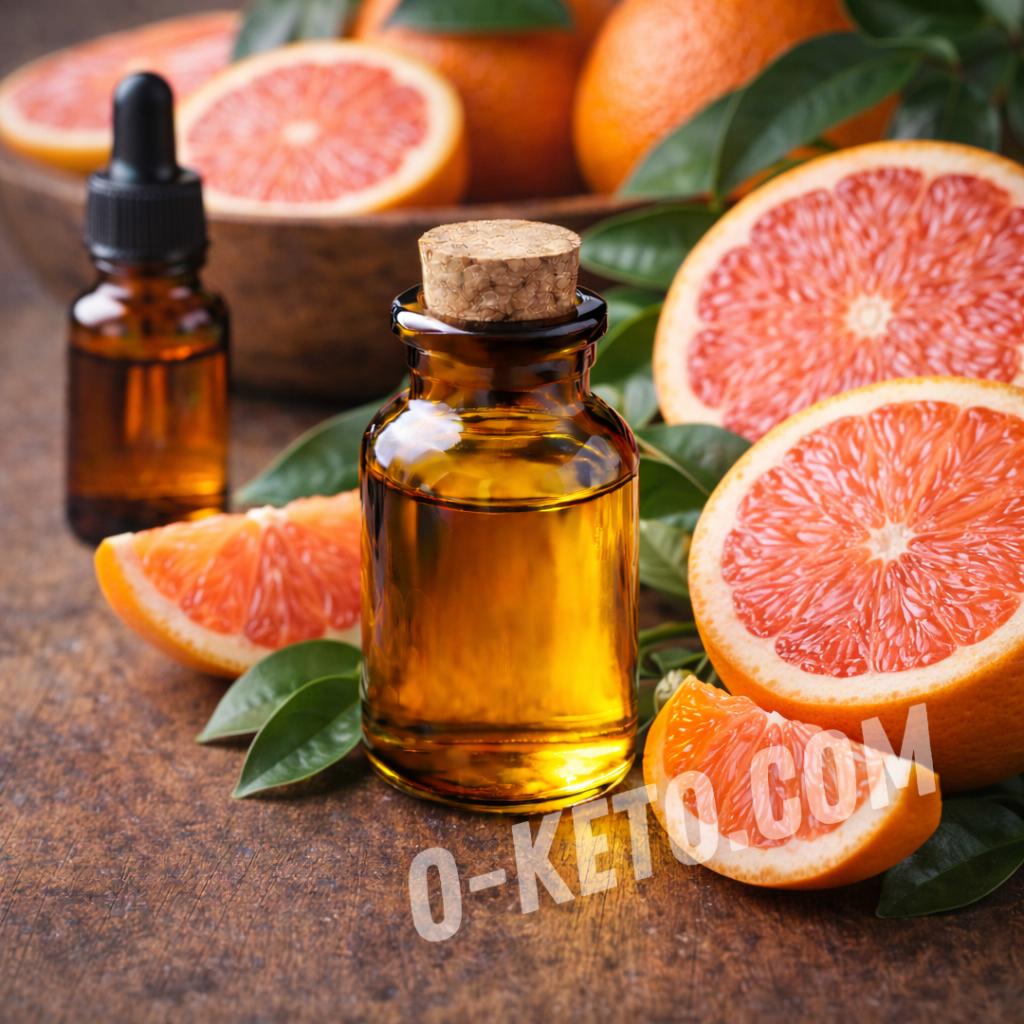

Grapefruit essential oil is obtained from the peel of Citrus paradisi fruit, most often by cold pressing. It is a concentrated aromatic product with a bright citrus scent, light bitterness, and a fresh zest note. It should not be confused with grapefruit juice, drink extract, or ordinary edible oil: essential oil provides almost no acidity and is used in drops.
Grapefruit is linked to hybridization between pomelo and sweet orange, and its oil belongs to citrus oils rich in volatile compounds. It is used for room scent, cosmetic blends, and sometimes culinary tasks, but only when the bottle is clearly marked for food use. For keto and LCHF, it has almost no carbohydrate impact because the dose is tiny.
Composition and aroma
The main component of grapefruit oil is limonene; in different batches its share can be very high, often around 85–95%. Myrcene, pinene, linalool, citral, and other monoterpenes may also be present. These compounds create the fresh peel smell, but they also make the oil sensitive to air, light, and heat.
Good oil smells clean, dry-citrusy, with the recognizable bitterness of grapefruit zest. If the aroma becomes flat, heavy, rancid, or solvent-like, do not use the product in food or on skin. Citrus oils often age faster than many dense spice oils.
Is it suitable for keto?
From a macronutrient perspective, grapefruit essential oil does not interfere with keto, but it is not a fat source and does not replace the fruit. In sweet low-carb recipes it can add a zest scent to mousse, cream, jelly, coconut dessert, or a sugar-free drink. In savory dishes it is less common, but it can give a citrus accent to fish, shrimp, creamy sauce, or dressing.
Remember that oil does not replace juice. If a recipe needs acidity, fruit bitterness, or liquid, use juice, vinegar, citric acid, or fresh zest. If only aroma without extra moisture is needed, a microdose of oil can be convenient.
How to use it
For food, essential oil should not be dropped straight into a small serving. Dilute it first in a fatty base, alcohol extract, or another suitable carrier, then use part of that dilution. One drop can be too strong for a home cream or drink, so it is safer to start with the smallest amount.
In a diffuser, a few drops per room are usually enough. On skin, use only in strong dilution with a carrier oil or a finished cosmetic formula. After applying it to exposed areas, avoid sun and UV lamps for the period indicated by the producer because cold-pressed citrus oils can increase skin sensitivity to light.
How to choose
The label should show the Latin name Citrus paradisi, plant part, extraction method, country of raw material, shelf life, and intended use. For cooking, a separate food-use indication is needed. A dark glass bottle with a tight cap and dropper is preferable. Cloudiness, sticky cap, suspiciously low price, and missing producer data are weak signs.
If the oil is bought for recipes, a small bottle is more practical than a large one because citrus aroma fades faster after opening. For cosmetics, check allowed concentrations and photosensitivity separately rather than relying only on the pleasant smell.
Limits
Grapefruit essential oil is concentrated and may irritate skin, eyes, and mucous membranes. Do not use it undiluted, give it to children, add it to food without proper labeling, or store it near food without a clear note. Pregnancy, childhood, citrus allergy, sensitive skin, and regular medication use are reasons to discuss use with a qualified professional.
Storage
Keep the bottle tightly closed in a cool dark place, away from the stove, window, and damp bathroom. After use, wipe the neck so the cap closes evenly. If the oil is used rarely, write the opening date on the bottle. Blends with carrier oil are better made in small portions rather than stored for months.
What can replace it?
For food, the closest substitutes are fresh grapefruit zest, a little juice, lime zest, lemon zest, or orange zest. For room scent, sweet orange, lemon, lime, or bergamot essential oil can work, but each citrus has its own bitterness profile and its own skin and sun limits. In cocktails and desserts, zest is often simpler because it is softer to dose and clearer in taste.


