


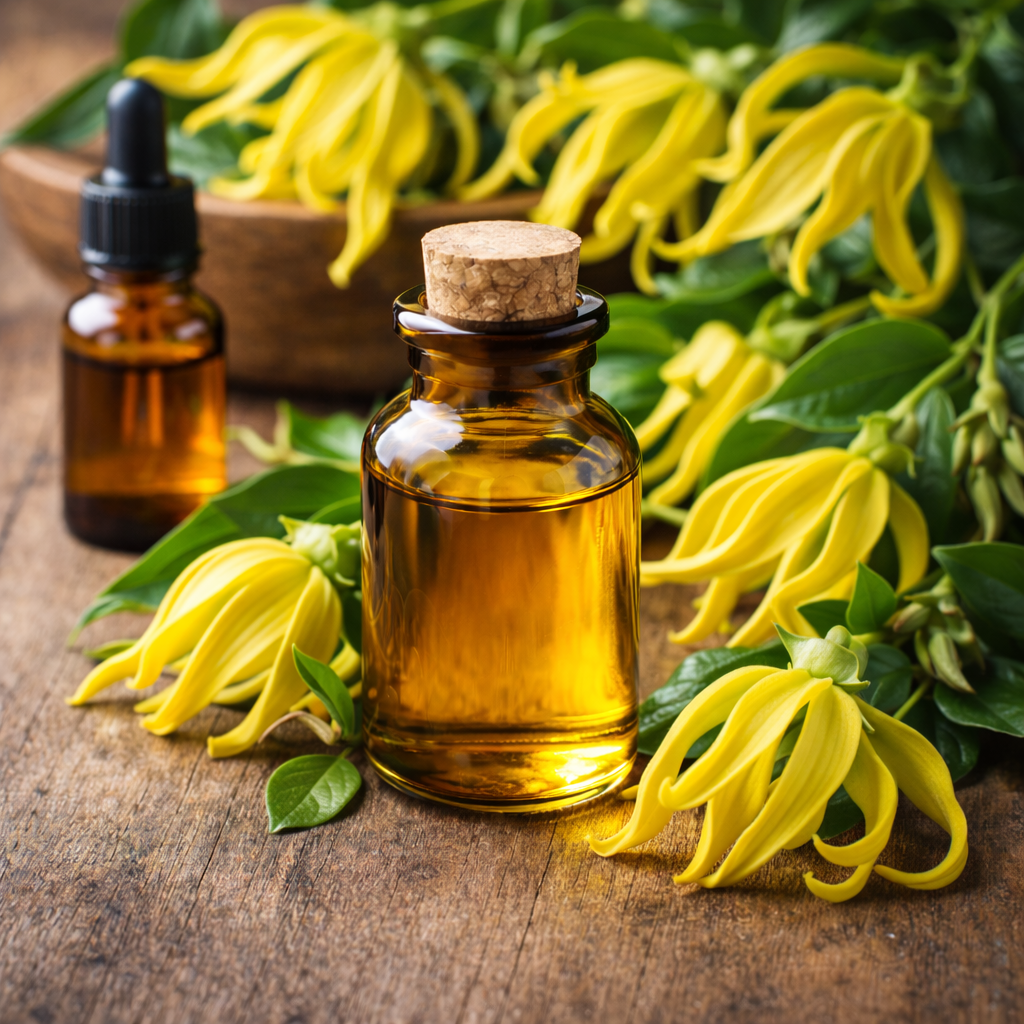

Ylang-ylang essential oil is obtained from the flowers of the tropical tree Cananga odorata. Its aroma is dense, sweet, floral, with fruity, creamy, and slightly spicy nuances. It is one of the most recognizable perfume oils: even a small amount quickly moves to the foreground, so ylang-ylang is used carefully and usually as part of a blend.
Ylang-ylang flowers are traditionally associated with Southeast Asia, the Philippines, Indonesia, Madagascar, and the Comoros. The oil is obtained by fractional distillation, so Extra, I, II, III, and Complete are sold. These versions differ in intensity, price, and perfume profile. For keto and LCHF, this is not a dietary fat or seasoning, but a concentrated aromatic product.
Aroma And Composition
The oil may contain linalool, benzyl acetate, geranyl acetate, benzyl benzoate, farnesene, caryophyllene, and other volatile components. The profile depends on fraction, raw material, and distillation. Extra is usually brighter, with a more floral top; Complete is softer and rounder because it combines several fractions.
Good oil smells rich, sweet-floral, and clean, without rancid, sour, or solvent-like notes. If the aroma feels oppressive, too heavy, or causes headache, it is better to use a lower dose or choose a lighter blend.
How To Use
In a diffuser, ylang-ylang is added minimally: one drop is often enough for a small room or a citrus blend. It combines with bergamot, orange, grapefruit, lavender, sandalwood, patchouli, jasmine, neroli, cedarwood, and vanilla-like accords.
For skin, the oil is first diluted in a carrier oil, cream, or another suitable base. In hair and scalp products, it usually works as an aromatic component. Undiluted use on the face, mucous membranes, around the eyes, or irritated areas is not appropriate.
In perfume blends, ylang-ylang can connect floral, citrus, and woody notes. If too much is added, the composition becomes heavy and sweet. It is more practical to make a small test blend, let it stand for 10-15 minutes, and only then decide whether another drop is needed.
In cosmetics, ylang-ylang is best treated not as a performance active but as a strong aromatic component. It can completely change the scent of a cream, body oil, or shampoo. If the base already has a fragrance, the result may become sharp or overly sweet, so a neutral base is usually easier to control.
How To Choose
The label should include Cananga odorata, plant part, extraction method, country of origin, fraction or Complete, expiry date, and intended use. Choose a dark glass bottle with a dropper and tight cap. “Ylang fragrance” may mean fragrance oil rather than natural essential oil.
For perfumery, the fraction matters. For home cosmetic blends, Complete is often easier because it is softer and more predictable. If a bright floral top note is needed, Extra may be chosen, but dosage becomes especially important.
When buying, also pay attention to how dense the aroma feels. Old or poorly closed oil may smell heavier than it should and sometimes loses the attractive floral top. For a first bottle, a small volume is sensible because ylang-ylang is used very slowly.
Limits
The oil is concentrated and may irritate skin, eyes, and airways. A patch test is needed before first use. Pregnancy, childhood, sensitivity to rich aromas, low blood pressure, and regular medication use are reasons to discuss application with a qualified professional.
If diffusion causes headache, nausea, or heaviness from the scent, ventilate the room and reduce the dose. For skin, burning, itching, or redness means the blend should be washed off and not used again at that concentration.
How To Store
Keep the bottle tightly closed in a cool dark place, away from the stove, window, and damp bathroom. After opening, it is convenient to write the date on the bottle. Sweet floral oils can change their scent nuance when exposed to air, so a small bottle is often more practical than a large one.
Do not touch the dropper with fingers or the edge of a cream jar. If moisture or base residue gets into the oil, the aroma will change faster. For blends with ylang-ylang, note the number of drops as well as the date, so a successful composition can be repeated.
What To Use Instead
There is no exact replacement, but similar floral sweetness can come from cananga, jasmine absolute, neroli, geranium, palmarosa, or a blend of lavender with orange and a drop of patchouli. For a less sweet profile, bergamot, lavender, and sandalwood are better. In cooking, the essential oil does not replace vanilla, floral waters, or food flavorings.


