


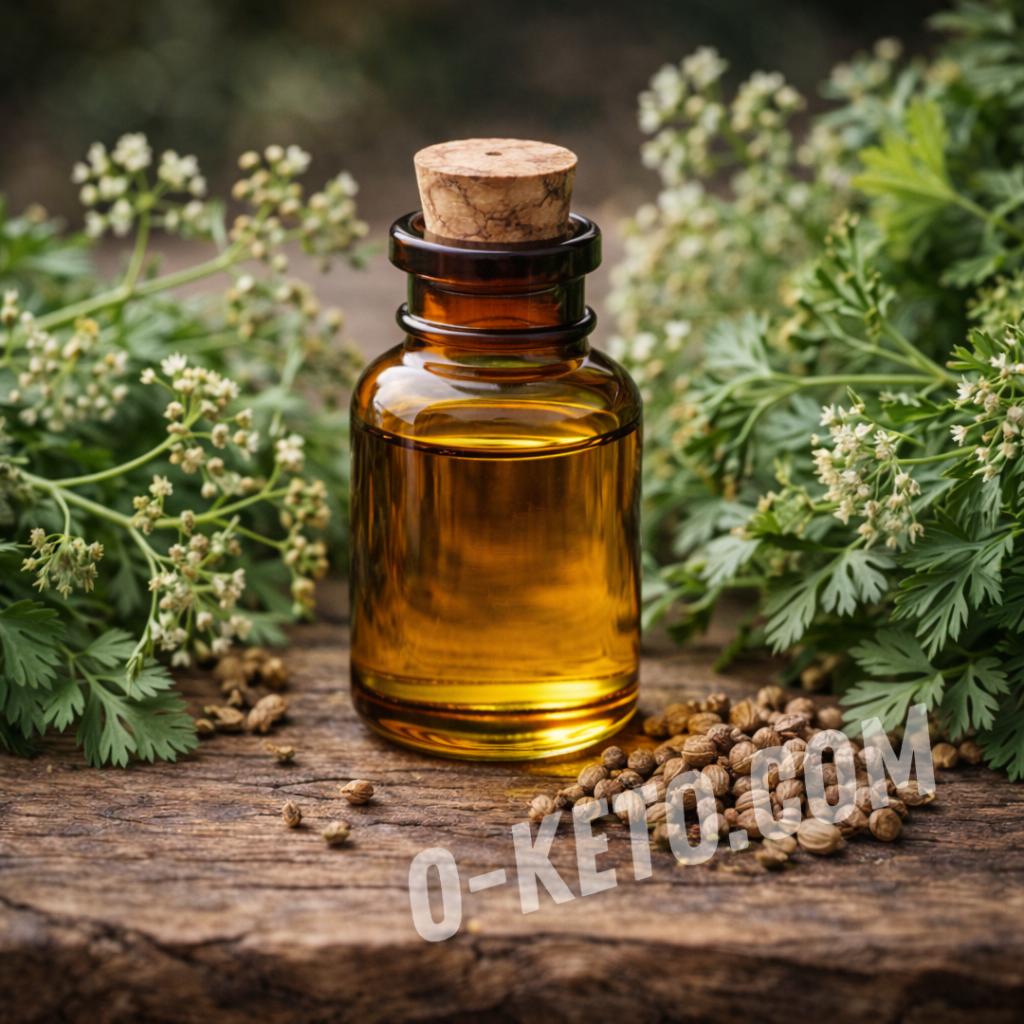

Coriander essential oil is obtained from the seeds of the plant Coriandrum sativum. This essential oil belongs to the category of mild spicy oils with a pronounced regulatory effect on the digestive and nervous systems. Its aroma is warm, slightly sweet, spicy, with a characteristic rounded note that creates a sense of comfort and bodily relaxation. Unlike sharp stimulating oils, coriander acts deeply yet physiologically, without causing overstimulation.
Historically, coriander has been used as a medicinal plant since ancient Egypt, India, and Mediterranean countries. It was used to improve digestion, relieve spasms, support during infections, and for recovery after stress. In modern aromatherapy, coriander essential oil is valued for its combination of antispasmodic, antiseptic, and gently sedative effects.
Chemical Composition and Action Features
Coriander essential oil is characterized by a high content of linalool, which can make up to 70 percent of its composition. This component determines its mild aroma and pronounced relaxing effect. Smaller amounts of alpha-pinene, gamma-terpinene, borneol, and other monoterpenes are also present.
Main properties of coriander essential oil:
- antispasmodic action;
- support for the digestive system;
- antiseptic and antimicrobial influence;
- gentle sedative effect;
- reduction of nervous tension.
Due to the dominance of linalool, the oil is well tolerated and suitable for long-term use in therapeutic and restorative protocols.
Effect on the Digestive System
One of the key areas of application for coriander essential oil is working with the gastrointestinal tract. It helps relieve functional spasms, reduce bloating, and the feeling of heaviness, especially in stress-induced digestive disorders.
It is used:
- for flatulence and bloating;
- for spasmodic pain;
- for reduced appetite due to stress;
- for gentle stimulation of digestion.
In practice, the oil is applied externally—in massage blends for the abdominal area.
Influence on the Nervous System
Coriander essential oil has a pronounced calming effect, especially in cases of bodily tension, anxiety, and internal “tightness.” It helps reduce stress levels without causing drowsiness or sluggishness.
The oil is used:
- for nervous tension;
- for emotional fatigue;
- to improve sleep quality;
- in evening aromatherapy practices.
Coriander pairs well with lavender, German chamomile, orange, marjoram, and rosewood.
Application in Aromatherapy and Body Care
In aromatherapy, coriander essential oil is used in diffusers, massage blends, and body practices. Its aroma promotes relaxation and a sense of inner warmth.
Main methods of application:
- diffusion for stress relief;
- massage blends for the abdomen and back;
- aromatherapy in the evening.
Use in Household and Culinary Practices
In everyday life, coriander essential oil is sometimes used as an aromatic additive in minimal doses. However, due to its high concentration, its use requires special caution and professional understanding.
It is important to note that essential oil is not equivalent to a spice and is used exclusively in microdoses and only with experience.
Precautions
Coriander essential oil is classified as an active essential oil and requires adherence to standard safety rules.
Recommendations:
- use only in diluted form;
- conduct a skin test before first use;
- avoid use during pregnancy without consulting a specialist;
- do not use internally without professional supervision.
Coriander essential oil is a gentle yet effective tool in aromatherapy. It is particularly beneficial for digestive disorders, stress states, and bodily tension, helping to restore inner balance and a sense of comfort.


