


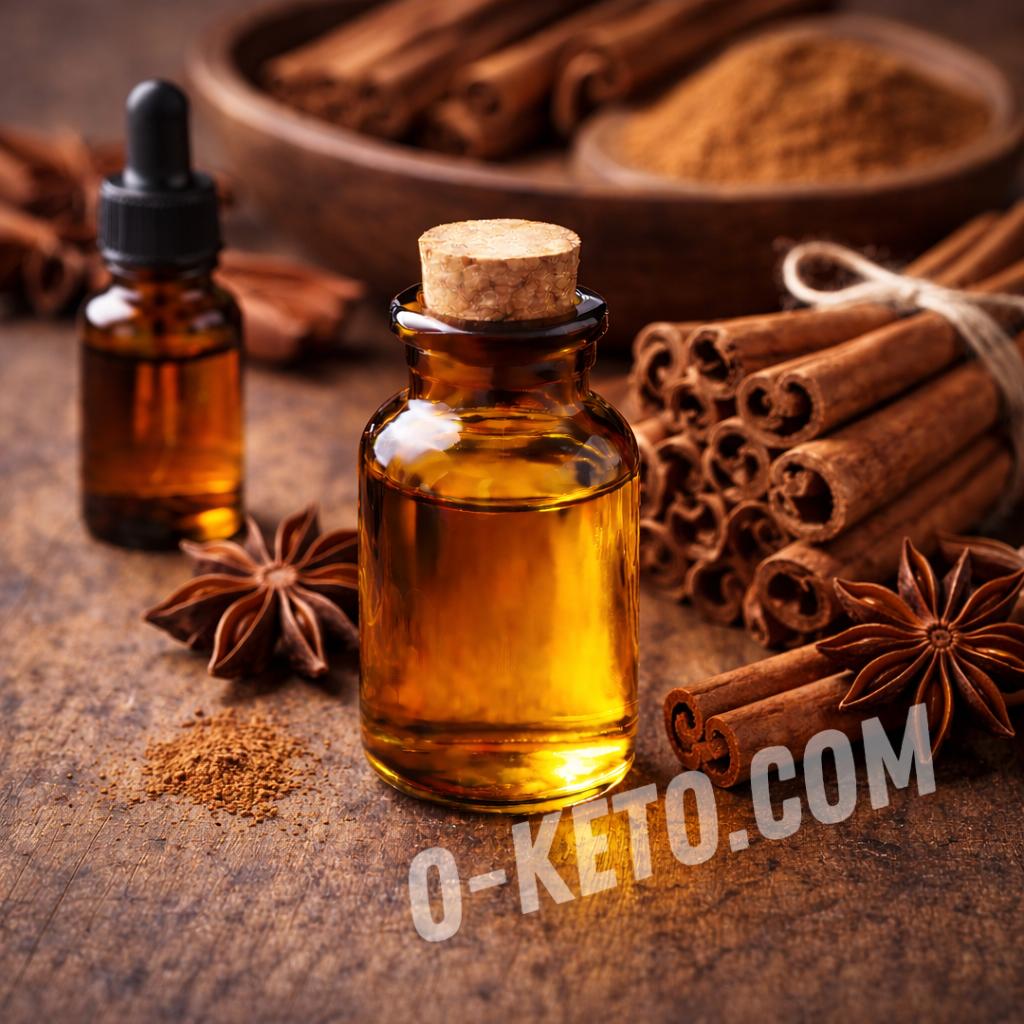

Since ancient times, cinnamon has been valued not only as a spice but also as a medicinal remedy, symbolizing warmth, energy, and vitality.
Cinnamon essential oil is obtained from the bark of the Cinnamomum zeylanicum tree through steam distillation. It has a rich, warm, sweet-spicy aroma and is among the most active and concentrated essential oils.
Cinnamon oil has been widely used in traditional medicine in Asia and the Middle East, as well as in ritual practices. Today, it is used in aromatherapy, cosmetology, and natural health approaches, but it requires particularly careful handling due to its high biological activity.
Composition of Cinnamon Essential Oil
The main active component of cinnamon essential oil is cinnamaldehyde, which can comprise 60–75%. It is responsible for the characteristic aroma and most of the therapeutic properties of the oil.
Additionally, the composition includes:
- eugenol — has antiseptic and analgesic properties;
- limonene — has antioxidant effects;
- benzoates and phenolic compounds — enhance antimicrobial activity.
The high concentration of phenols makes cinnamon oil one of the “strongest” essential oils, comparable in activity to clove oil.
Beneficial Properties of Cinnamon Essential Oil
Cinnamon essential oil has a pronounced stimulating and warming effect on the body.
- has powerful antibacterial and antifungal properties;
- improves peripheral circulation;
- supports digestive processes;
- helps increase tone and concentration;
- provides warming and activating effects.
In aromatherapy, cinnamon oil is used for fatigue, feelings of cold, lethargy, and decreased motivation. Its aroma is perceived as “energetically dense” and stimulating, making it unsuitable for relaxing evening practices.
Use of Cinnamon Essential Oil in Aromatherapy
In aromatherapy, cinnamon oil is used strictly in minimal dosages.
- for diffusion — no more than 1 drop per room;
- in stimulating blends with orange or mandarin;
- in cold weather to create a feeling of warmth;
- for mental fatigue and apathy.
Cinnamon oil is not used for prolonged diffusion and should not be used in spaces with children or individuals with heightened sensitivity of the respiratory tract.
Use in Cosmetology and Body Care
In cosmetology, cinnamon essential oil is used sparingly and only in heavily diluted forms.
- in anti-cellulite and warming blends;
- to stimulate microcirculation;
- in products for local application.
For facial care, cinnamon oil is generally not used due to the high risk of skin irritation.
Precautions and Contraindications
Cinnamon essential oil is classified as an aggressive essential oil and requires strict adherence to safety rules:
- always use only in dilution;
- always conduct a sensitivity test;
- do not apply to sensitive and damaged skin;
- do not use during pregnancy and breastfeeding;
- avoid use in cases of hypertension and skin diseases.
Internal use of cinnamon essential oil is only permissible under the supervision of a specialist and in strict therapeutic protocols.
Cinnamon essential oil is a powerful tool that works at the level of energy, metabolism, and microcirculation. When used wisely and cautiously, it can become a valuable element of aromatherapy practice, but it is not suitable for everyday and universal use.


