


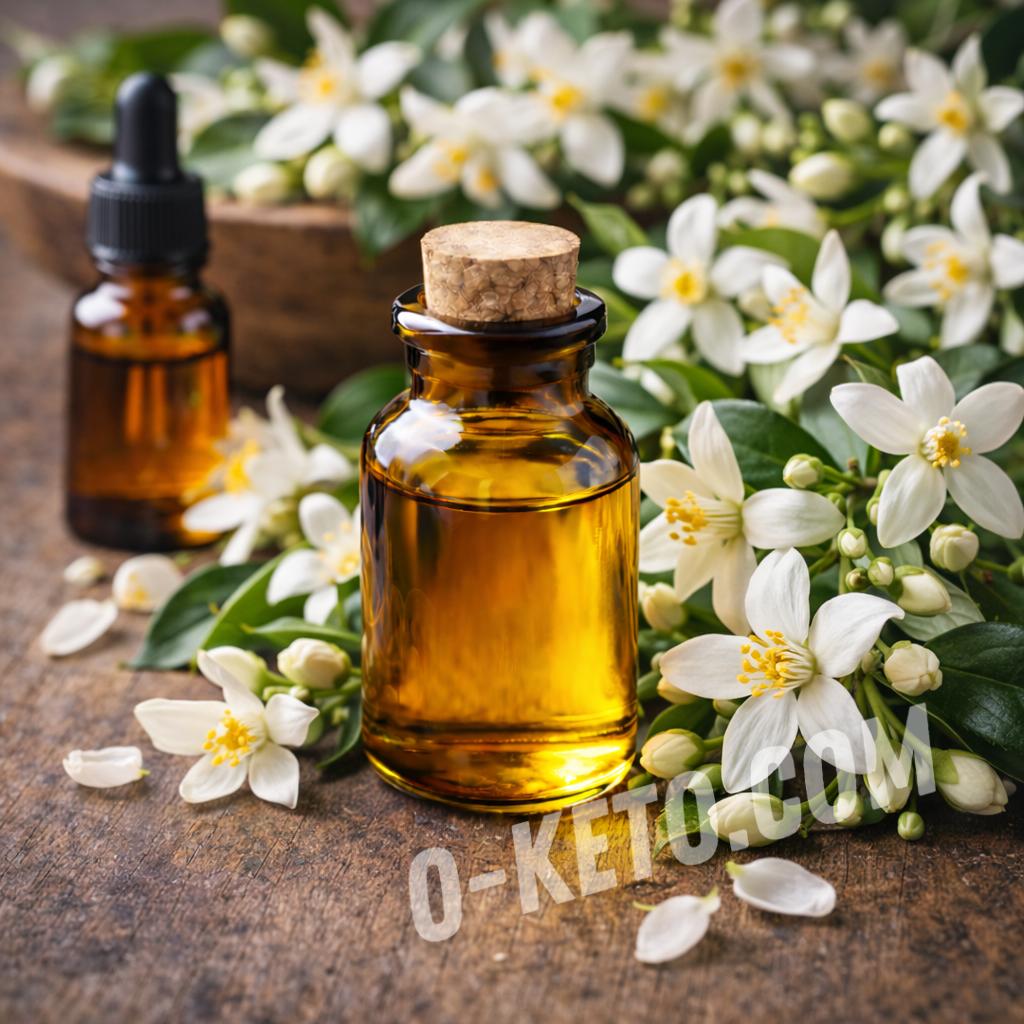

Neroli essential oil is obtained from the flowers of the bitter orange Citrus aurantium ssp. amara. It has a delicate, sweet-floral aroma with light citrus notes and is considered one of the most exquisite essential oils.
Neroli is traditionally used to support the nervous system, restore emotional balance, and care for the skin. Due to its gentle yet profound effects, this oil is valued in both aromatherapy and natural cosmetology.
History and Origin
The name neroli is associated with the Italian princess Anna Maria de la Tremaille, Duchess of Neroli, who in the 17th century used the aroma of bitter orange flowers to scent clothing and rooms. Since then, the fragrance gained wide recognition in Europe and became a symbol of sophistication and nobility.
Bitter orange has long been cultivated in the Mediterranean countries, North Africa, and the Middle East. The flowers were used in rituals, medicine, and for creating incense. In the 18th and 19th centuries, neroli essential oil occupied an important place in French perfumery and became one of the classic components of aromatic compositions.
Today, the main regions for producing neroli oil are Tunisia, Morocco, Italy, and Egypt. The oil is obtained through steam distillation of freshly harvested flowers, which helps preserve its delicate aroma and therapeutic properties.
Composition and Physiological Properties
Neroli essential oil has a complex and balanced chemical composition. It is rich in aromatic alcohols and esters, which determine its gentle effect on the nervous system and skin.
Neroli has a pronounced calming and harmonizing effect, helps reduce levels of nervous tension, and supports the body’s adaptation to stress. The oil also exhibits antiseptic and anti-inflammatory properties, making it beneficial for skin care.
Main Effects of Neroli Essential Oil
- reduction of anxiety and emotional tension;
- support for sleep and relaxation;
- gentle regulation of emotional background;
- anti-inflammatory and antiseptic action;
- support for skin health and tone.
Application in Aromatherapy
In aromatherapy, neroli essential oil is used for recovery after emotional overloads and prolonged stress. Its aroma helps create a sense of safety, inner peace, and emotional stability. The oil is suitable for evening use and relaxation practices.
Neroli blends well with lavender, Roman chamomile, ylang-ylang, rose, and sandalwood. It is used in diffusers, personal inhalations, and aromatic blends.
Use in Skin Care
Neroli essential oil is highly valued in cosmetology, especially for sensitive, dry, and mature skin. It helps improve microcirculation, supports skin regeneration, and helps reduce inflammatory reactions.
The oil is used in creams, serums, oil blends, and masks in minimal concentrations. It helps even out skin tone, improve its texture, and give a fresher and more well-groomed appearance.
Main Areas of Application in Cosmetology
- care for sensitive and reactive skin;
- anti-aging care programs;
- reduction of redness and irritation;
- support for skin elasticity and tone.
Application in Body Practices
In massage blends, neroli essential oil is used for deep relaxation and tension relief. It helps restore balance between the body and psycho-emotional state, especially in cases of chronic fatigue and nervous strain.
Usage Recommendations
- use only in diluted form;
- conduct a sensitivity test before first use;
- use moderate dosages;
- avoid prolonged continuous use without breaks.
Contraindications and Precautions
Neroli essential oil is not recommended for individuals with intolerance.
Use with caution during pregnancy and breastfeeding.
The oil is not recommended for use in children without consulting a specialist. If there are chronic diseases, use should be coordinated with a doctor or aromatherapy specialist.
Neroli essential oil is a gentle, harmonizing, and deeply calming remedy that combines emotional support with pronounced cosmetic properties. When used mindfully, it helps restore inner balance, improve skin condition, and support overall well-being.


