


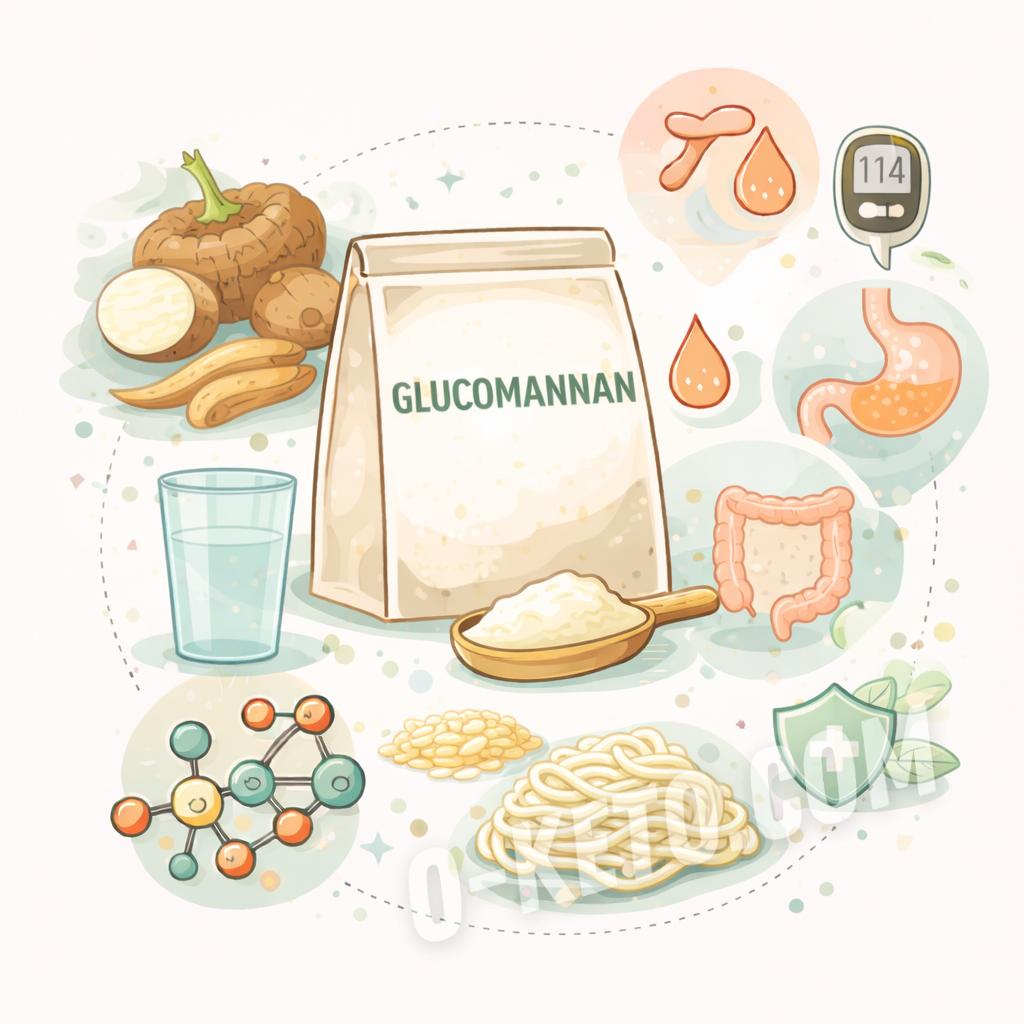

Glucomannan is a water-soluble polysaccharide derived from the roots of the konjac plant. It belongs to the category of soluble dietary fibers and is widely used as a technological thickener, as well as an additive that affects the volume of stomach contents.
In the context of nutrition, glucomannan is of interest not as a nutrient, but as a mechanical component capable of binding water.
What is glucomannan and its physical properties
Glucomannan consists of chains of glucose and mannose and has extremely high hygroscopicity. Upon contact with liquid, it quickly swells and forms a viscous gel. This property underlies all its effects—both potentially beneficial and undesirable.
From a metabolic perspective, glucomannan is not a source of energy, is not absorbed in the small intestine, and has little direct effect on glucose and insulin levels.
Effects on digestion and satiety
The primary action of glucomannan is mechanical. It increases the volume of stomach contents and slows down the evacuation of food, which for some people can create a subjective feeling of fullness. This effect is not related to hormonal regulation of appetite and is not universal.
However, for sensitive individuals, glucomannan can cause bloating, a feeling of fullness, slowed digestion, and discomfort, especially with insufficient fluid intake or impaired gastrointestinal motility.
Glucomannan and blood sugar levels
By slowing gastric emptying, glucomannan may reduce the rate of carbohydrate absorption in a mixed diet. However, this effect is mainly significant in high-carbohydrate diets and does not play a substantial role in low-carbohydrate or ketogenic diets.
Glucomannan in a keto diet
Within the framework of a ketogenic diet, glucomannan is not a necessary component. It does not support ketosis, does not improve bile secretion, and does not address the fundamental tasks of adapting to a high-fat diet.
Its use may only be justified in specific cases:
- as a technological thickener in low-carbohydrate recipes;
- as a temporary mechanical tool for individuals with pronounced overeating;
- in a mixed diet with residual carbohydrate intake.
Recommendations and limitations
Glucomannan requires cautious use. It should always be taken with sufficient amounts of liquid. Exceeding dosages or using it against a background of slowed gastrointestinal motility can exacerbate constipation and cause discomfort.
Typical dosages in supplements range from 1 to 3 grams per day, but even these amounts are not physiologically necessary.
Practical conclusion
Glucomannan is an optional mechanical component of nutrition, not an essential element of the diet. It is not needed for the normal functioning of the gastrointestinal tract, is not a source of gut health, and does not replace adaptation to fat metabolism.
Its appropriateness is determined individually and depends on the type of diet, the condition of the gastrointestinal tract, and the goals that a person is trying to achieve. In ketogenic and carnivore approaches, glucomannan does not play a key role and is not required in most cases.


