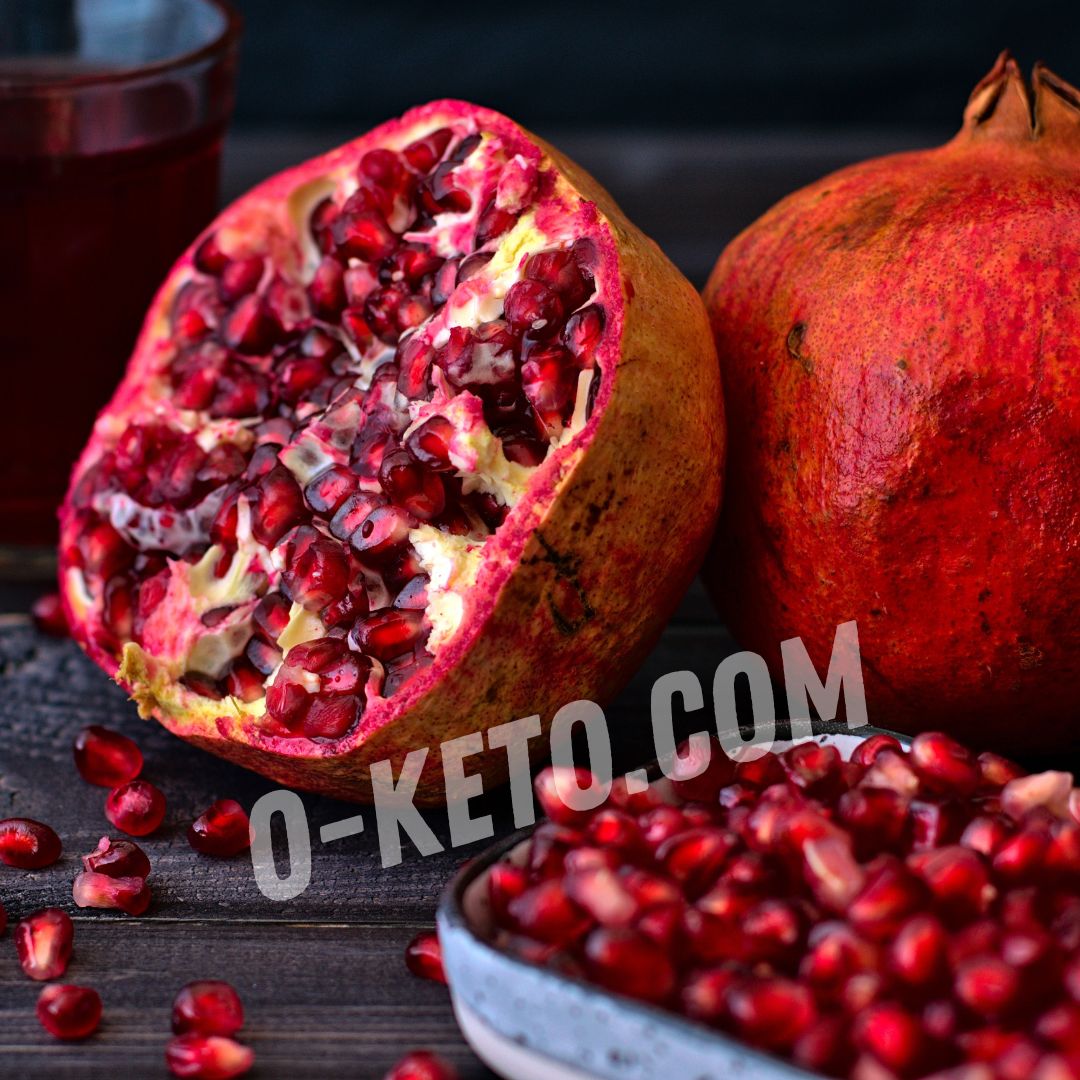

Pomegranate is a large fruit with a firm skin and many juicy arils. Its flavor is sweet-tart, tannic and sometimes almost wine-like. In food, the arils, juice and small amounts of pomegranate molasses or sauce are used, but for low-carb eating these forms are very different. Whole arils give flavor and texture, while juice and thick sauces concentrate sugars much more strongly.
Pomegranate works well as an accent in salads, meat dishes, sauces, cheese snacks, eggplant, herbs and nuts. It looks striking and quickly makes a dish feel festive, but on keto it should not be treated as a neutral addition. It is a fruit with a noticeable carbohydrate amount, so portion weight and product form matter.
Nutrition
Per 100 g of pomegranate arils, tables usually list about 83 kcal, 1.7 g of protein, 1.2 g of fat and 18.7 g of carbohydrates, including about 4 g of fiber. The glycemic index is often given around 35. These numbers make pomegranate easier to use than sugary desserts, but not a low-carb base food.
A 50-100 g portion, mentioned in the older text, may be too large for strict keto if the day already includes vegetables, nuts, berries or dairy. A more cautious option is 10-30 g of arils as a topping or sweet-tart accent. The flavor remains noticeable, while carbohydrates are easier to fit.
Is It Keto-Friendly?
Pomegranate can fit keto only in small portions. Arils are better than juice: they are harder to eat too quickly, they keep their fiber and they add crunch. Pomegranate juice, syrups, sweet sauces and thick molasses need separate counting because sugars are much more concentrated in them.
In moderate LCHF, pomegranate is easier to use, especially in a salad or meat dish divided into several servings. Even there, it is better to add it by spoonfuls, not by half a fruit. For a bright flavor, a few arils can be combined with lemon juice, herbs, olive oil and spices.
How to Use It
Pomegranate arils pair well with lamb, duck, chicken, beef, eggplant, cauliflower, cucumber, herbs, walnuts, feta, goat cheese and unsweetened yogurt sauces. In salads they add acidity and crunch, while in meat dishes they contrast with fat and spices.
Practical options include:
- 1-2 teaspoons of arils in a salad with greens and cheese;
- a few arils with duck, lamb or chicken;
- an accent in a sauce with unsweetened yogurt, mint and spices;
- an addition to eggplant, cauliflower or zucchini;
- a sweet-tart note on a cheese plate.
Arils, Juice and Sauce
Arils are the easiest form for portion control. Juice is consumed quickly and gives little sense of volume, so carbohydrates accumulate less visibly. Pomegranate sauce can be even denser, especially if it contains sugar or has been reduced for a long time.
If pomegranate flavor is needed in a sauce, a large amount of arils is not always necessary. Often a teaspoon of arils, lemon juice, spices and good oil are enough. For a meat sauce, a few arils can be added at the end, while the main acidity comes from vinegar or lemon.
How to Choose and Store
A good pomegranate is heavy for its size, with firm skin and no soft wet spots or fermented smell. A slightly dry-looking peel is not always a bad sign: ripe fruit often does not look smooth like display fruit. If the fruit is very light, the arils may be dry.
A whole pomegranate can be kept in a cool place or in the refrigerator. Removed arils should be kept covered and eaten within the next few days. They can be frozen, but after thawing the texture becomes softer, so they are better for sauces than garnish.
Limits and Substitutes
The main limit of pomegranate is sugar content relative to the eaten portion. The tart flavor can be misleading: the product may feel lighter than it is by carbohydrates. For people with a sensitive stomach, acidic arils or juice may not be comfortable in large amounts.
Pomegranate can be replaced with red currants, a small portion of cranberries, lemon juice with a few berries, a micro-dose of narsharab or a mixture of vinegar, oil and spices. If only a decorative sweet-tart point is needed, a few berries or arils are better than juice.
Portion and Cleaning
To avoid eating more than planned, it is better to separate the arils in advance, weigh the needed amount and put the rest into a closed container. When pomegranate sits on the table already cleaned, it is easy to keep eating it automatically. For salad or meat, 1-2 teaspoons are usually enough: they give color, crunch and sweet-tart flavor without a large fruit portion.