


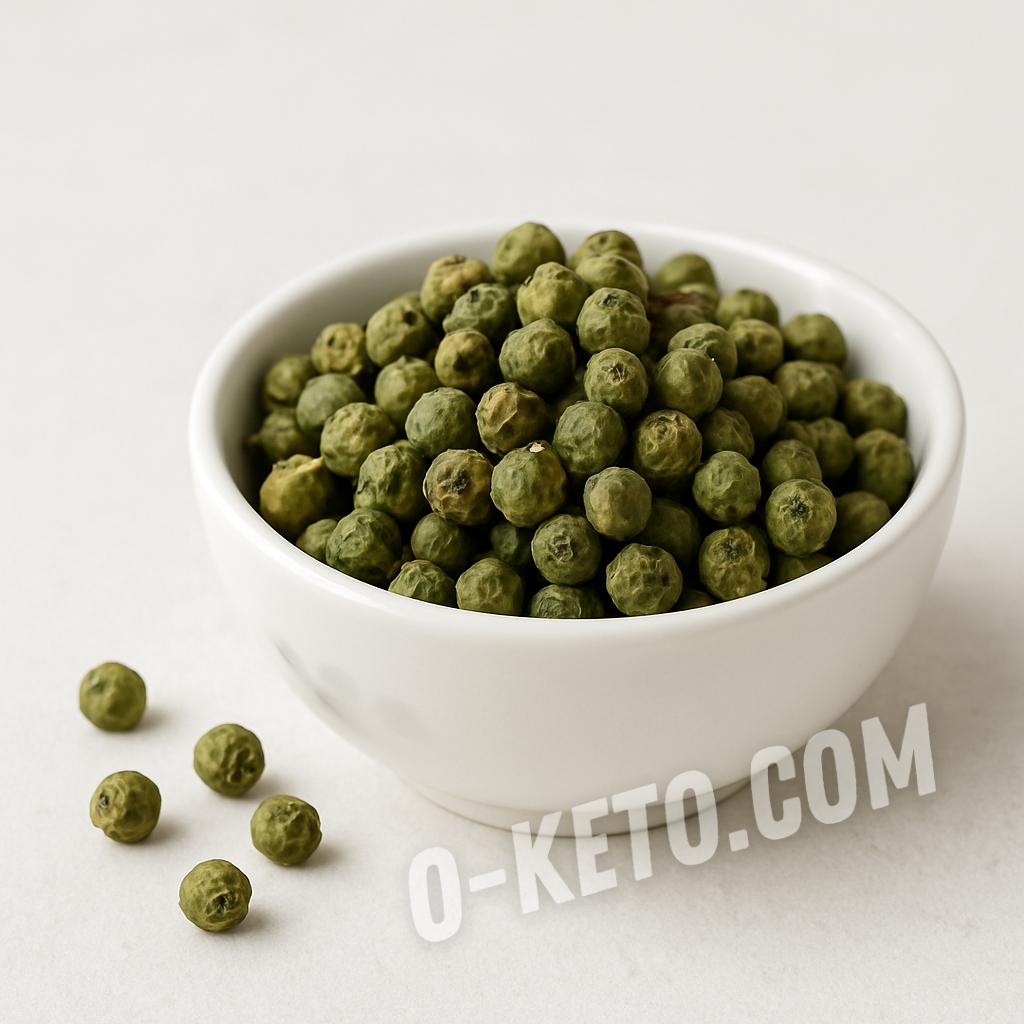

Green peppercorns are unripe berries of Piper nigrum, harvested before they turn red and fully mature. Black and white pepper come from the same plant, but green pepper tastes softer: more fresh, grassy, and fruity-spicy, with less sharp heat. It is used in sauces, marinades, pâtés, meat dishes, fish, and dry-cured products.
Several forms are used in the kitchen: dried green peppercorns, freeze-dried, frozen, preserved in brine, or preserved in vinegar. Dry peppercorns are convenient as a long-storing spice, while brined ones give a juicier texture and work especially well in creamy steak sauces.
Nutritional value
Like other spices, green pepper is used by grams. In 100 g of dry peppercorns there are carbohydrates, fiber, minerals, and essential oils, but a normal portion is 1–3 g. So the contribution to calories and carbohydrates is usually small when it is used as a spice, not as a ready sweet sauce.
Aroma comes from piperine and volatile compounds. In brined peppercorns, salt matters more: sodium can be high, and the product tastes softer and wetter. If pepper comes in a marinade, the ingredient list should be checked for sugar, starch, and the vinegar base.
Is it suitable for keto?
Green peppercorns fit keto and LCHF well as a seasoning. A small portion hardly affects the carbohydrate limit, while it makes fatty dishes brighter: cream sauce, steak, duck, pork, fish, pâté, terrine, or omelet.
Caution is needed with ready pepper sauces. Restaurant and store-bought versions may contain sugar, flour, starch, sweet alcohol, or thickeners together with green pepper. For a homemade keto sauce, it is simpler to use cream, butter, broth, brined peppercorns, and reduce without flour.
How to use them
Dry green pepper can be lightly crushed in a mortar before adding to release aroma. It works well in marinades for poultry and fish, dry meat rubs, minced meat, pâtés, and homemade sausages. Unlike black pepper, it dominates less and is better where a soft spicy background is needed.
Brined green peppercorns are often added whole to creamy sauce. They are added closer to the end to keep their shape and fresh aroma. The liquid from the jar can be salty and sour, so it is added carefully or not used at all.
For steak sauce, green pepper is usually lightly crushed, warmed in butter or cream, and allowed to flavor the base. If a brighter taste is needed, some peppercorns are left whole. Cream is better reduced gently, without hard boiling, so the sauce does not split.
In marinades, green pepper is softer than black pepper, so it can be combined with lemon zest, garlic, thyme, rosemary, sugar-free mustard, and olive oil. For fish, it is used moderately: too many peppercorns can cover a delicate taste.
In pâtés and terrines, green pepper is often left as whole dots inside the mass. This gives not even heat, but separate fresh bursts of flavor. If a calmer spice is needed, part of the peppercorns can be crushed and part left whole.
Dry green pepper opens more slowly than brined pepper. In a hot sauce it needs time, while in a cold dressing it is better crushed in advance and mixed with oil or an acidic base. This keeps the aroma from staying locked inside hard peppercorns.
It is better to start with a small portion.
How to choose
Dry peppercorns should keep a greenish shade and fresh pepper aroma. Gray, dusty, tasteless, or musty peppercorns are usually old. Freeze-dried pepper often has brighter color, and its aroma opens faster after contact with moisture.
For the brined version, clear liquid, whole peppercorns, and a short ingredient list matter. It is better to choose a product without sugar, starch, or unnecessary flavorings. If the brine is cloudy, the lid is swollen, or the smell is unpleasant, the pepper should not be used.
How to store them
Dry green pepper is stored in a tightly closed jar, away from light, heat, and moisture. It is better not to grind it in advance because the aroma leaves quickly. After opening, brined pepper is kept in the refrigerator and taken with a clean spoon so sauce or oil residues do not get into the jar.
Limitations and replacements
Limitations are connected with sensitivity to hot spices, irritated mucosa, and the amount of salt in brined products. If a similar but sharper taste is needed, black pepper works. For a softer spice, pink peppercorns, white pepper, capers in sauce, or a little green chili can be used, but none of them fully copies green peppercorns.


